Terracotta Rugs
Terracotta is the softer, more orange side of madder red, the color of fired clay. It turns up across village and tribal weaving, often in the field with a darker border holding it in.
These are vintage pieces, so the tone has already mellowed. What is left is warm without being loud, and it sits well next to wood, brick and unglazed pottery.
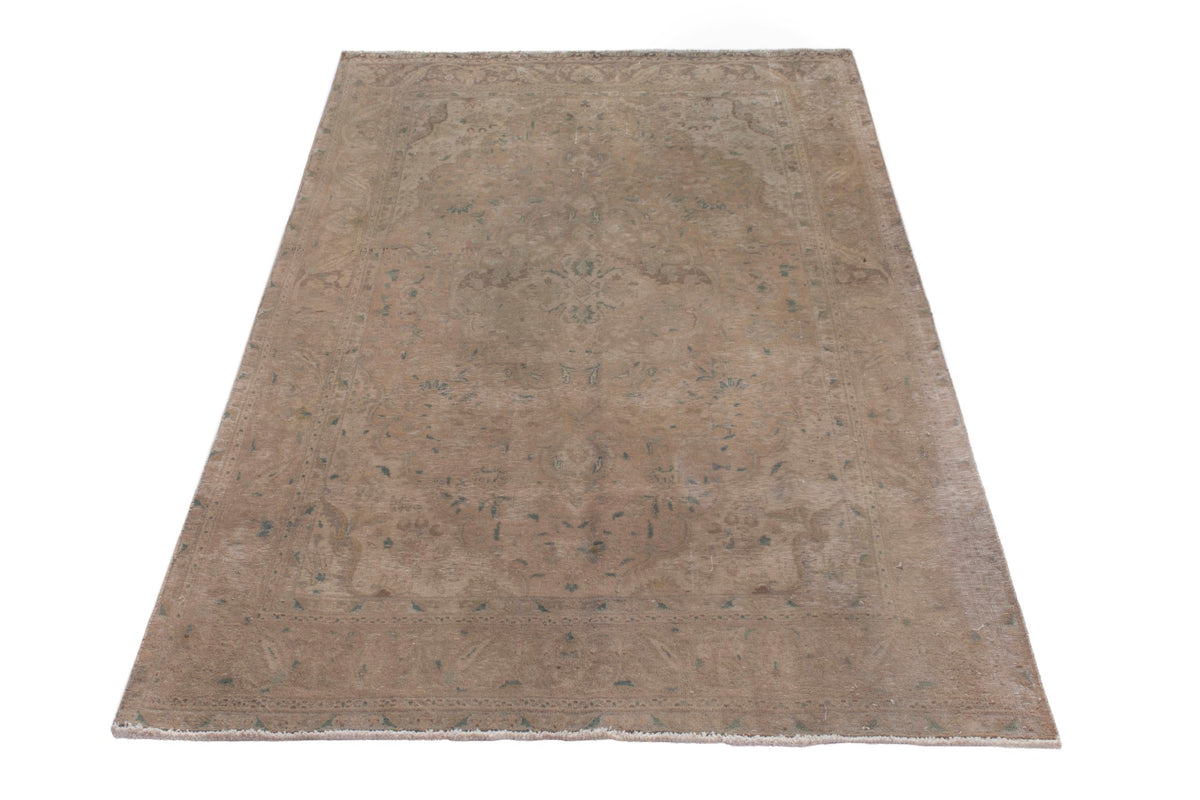


Terracotta, the warm middle of the madder range
Terracotta is madder root caught early. Where a long dye bath pushes toward burgundy and oxblood, a shorter one leaves the color in the range of clay, apricot and warm brick, and that is the range village and tribal weavers worked in most often. It is the most sunlit color in Persian and Turkish weaving, and the one that changes most with the hour of the day.
Why village rugs are full of it
Madder grows readily and a light dye bath is cheap in both root and time, so terracotta was within reach of a weaver working at home with a small clip of wool. City workshops used it too, but usually as a secondary color, in a border or a spandrel. When you see a rug with a full terracotta field it is usually a village or tribal piece from Hamadan, Isparta, Malayer or the Kurdish weaving areas, and the drawing is likely to be bold rather than fine.
The variation is the point
No two batches of madder yield the same terracotta, and a weaver working from several small batches produced a field that shifts across the rug in soft horizontal bands. Collectors call this abrash and value it. It is why a vintage terracotta rug looks alive across a large floor where a single flat orange would look printed.
Building a room around it
Terracotta is warm without being loud, and it does something unusually good with materials that share its origin: unglazed clay, brick, oak, linen and leather. It also holds its own against green and deep blue, which is exactly how the weavers used it. Against cool grays it can look out of place, so if a room is built on gray, treat terracotta as an accent rather than a foundation.
Living with it
A mid-tone warm field is among the most practical grounds you can put on a floor, forgiving of dust and daily traffic in a way pale rugs are not. Vacuum without a beater bar, rotate the rug once or twice a year, and blot spills rather than rubbing them.