Isparta Rugs
Isparta, in Turkey's south-west, weaves large, decorative room rugs, soft, often pastel palettes, flowing floral designs and a wool that wears well underfoot.
They are an easy way into Turkish rugs for a calm interior. Each one here is a genuine vintage Isparta, cleaned, restored and entirely its own.
Isparta sits in the lake district of south-western Turkey, and from the late nineteenth century it became one of the largest carpet-weaving centres in Anatolia. Workshops there wove to order for the Ottoman court and later for export, so Isparta rugs tend to be more disciplined than village pieces: symmetrical layouts, a central medallion or an all-over floral repeat, and a finish that reads as calm rather than tribal.
The wool is heavy and the pile is usually cut medium to low, which is why fifty-year-old Isparta rugs still feel dense underfoot. Colours run to soft reds, salmon, cream and pale blue, often lightened further by decades of sun. Many pieces carry a Persian-inspired design vocabulary, which makes them an easy match for both traditional and pared-back interiors.
In our collection Isparta is the largest single Turkish group, and it is where most of the room-sized area rugs come from. If you want a hand-knotted rug in a 5×8 or 6×9 footprint without the price of a Persian city piece, this is usually the place to start.
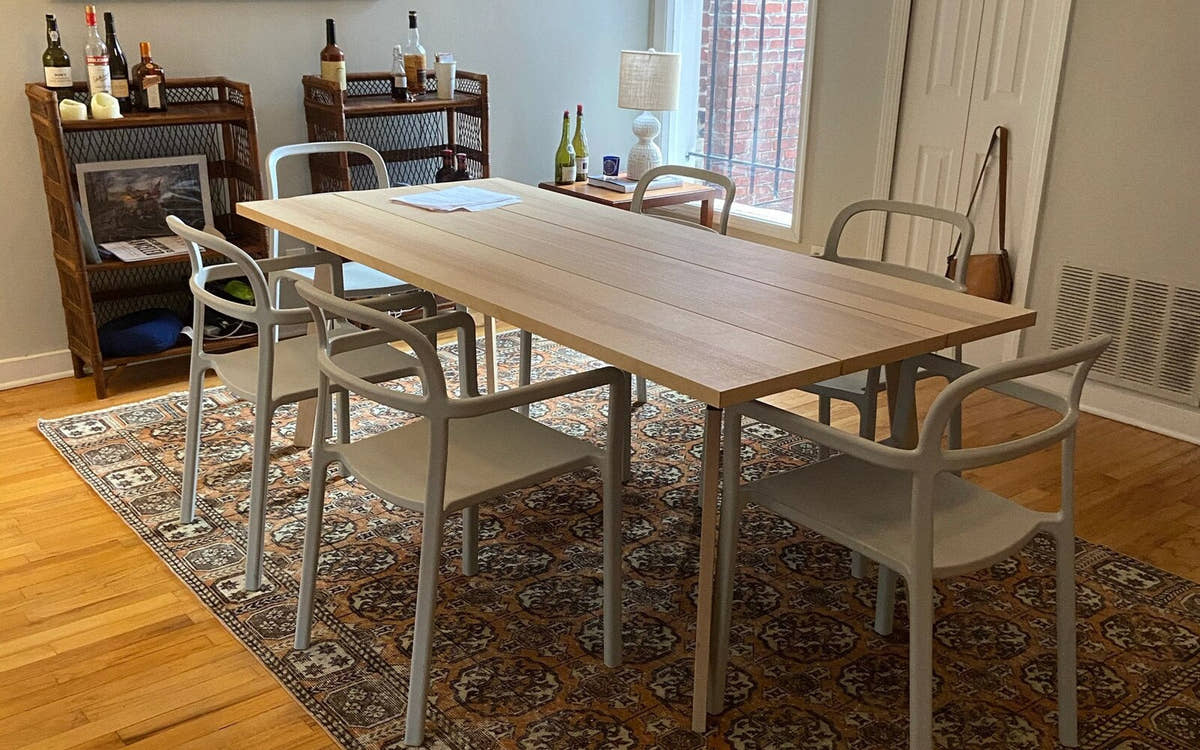


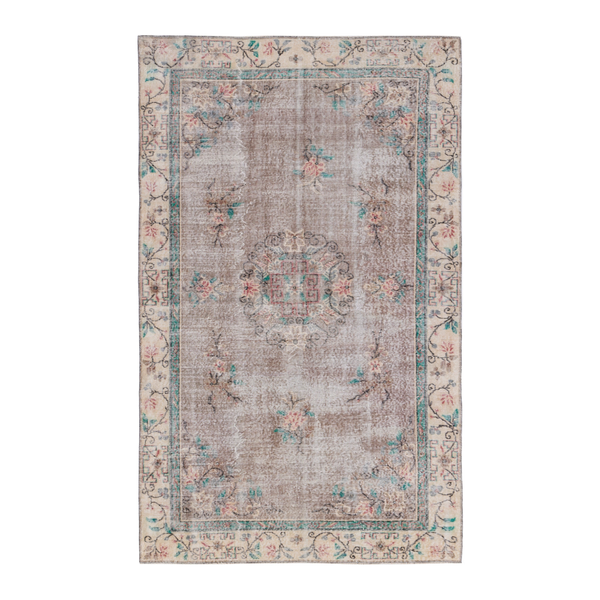


Isparta: the soft, open face of Turkish weaving
Isparta sits in the lake country of south west Turkey, inland from the Mediterranean coast, and it became one of the country's most productive carpet towns in the twentieth century. Isparta weaving was built for large rooms and for European taste, which is why so many of these carpets have an openness you do not find in tribal Anatolian work. The drawing is generous, the fields are often uncluttered, and the palettes tend toward soft rose, faded gold, sage and cream.
That gentleness is exactly why Isparta rugs have become so sought after. A great many of the pale, washed vintage carpets people now look for are Isparta, and they sit in contemporary rooms with almost no friction.
What an Isparta usually looks like
- Palette: soft and light; rose, apricot, sand, sage, cream, with occasional deeper accents.
- Drawing: large scale florals and medallions, often with plenty of open ground around them.
- Pile: generally low to medium, wool on cotton.
- Scale: Isparta produced a lot of genuinely large carpets, which is unusual and useful.
Where they work
Isparta is the answer when a room needs a rug that will not fight anything. In an open plan space, a large Isparta can define a seating area without introducing a strong color argument. They are especially good in rooms with a lot of natural light, where a saturated Persian red would feel heavy and a pale Turkish weave simply glows.
They also layer well. Because the palette is quiet, an Isparta can sit under a smaller, bolder rug or beside one in a connecting room without either piece competing.
Why the colors look the way they do
Some of the softness is original and some of it is time. Isparta wool takes dye gently to begin with, and decades of light do the rest, opening reds toward rose and golds toward straw. Many of these carpets have also been washed, which is a normal and traditional part of finishing a Turkish rug and settles the surface further. The result is a floor that reads as sun warmed rather than pale.
Isparta rug questions, answered
Are pale rugs impractical with children or pets?
Less than people expect. A patterned vintage wool rug in soft tones is far more forgiving than a plain modern one, because the drawing breaks up any mark before your eye finds it. Wool is also naturally resistant to spills. The genuinely difficult floor covering is a plain pale carpet, not a patterned vintage rug.
How is an Isparta different from a Persian rug?
Turkish weaving generally uses a symmetrical knot and reads slightly more graphic; Persian work more often uses an asymmetrical knot that suits curved, flowing drawing. In practice the clearest difference is temperature. Isparta runs cooler and lighter; most Persian city weaving runs warmer and denser.
Can I find an Isparta large enough for a big living room?
Yes, and this is one of the areas where Isparta genuinely outperforms. Large vintage carpets are hard to find in most origins; Isparta produced them in quantity, so oversized pieces come through here regularly.
Choosing your Isparta
Start with size, because that is where Isparta gives you options other origins do not. Then decide how warm you want the floor to read: apricot and rose lean warm, sage and cream lean cool. Every piece is one of a kind and will not repeat.