Runners
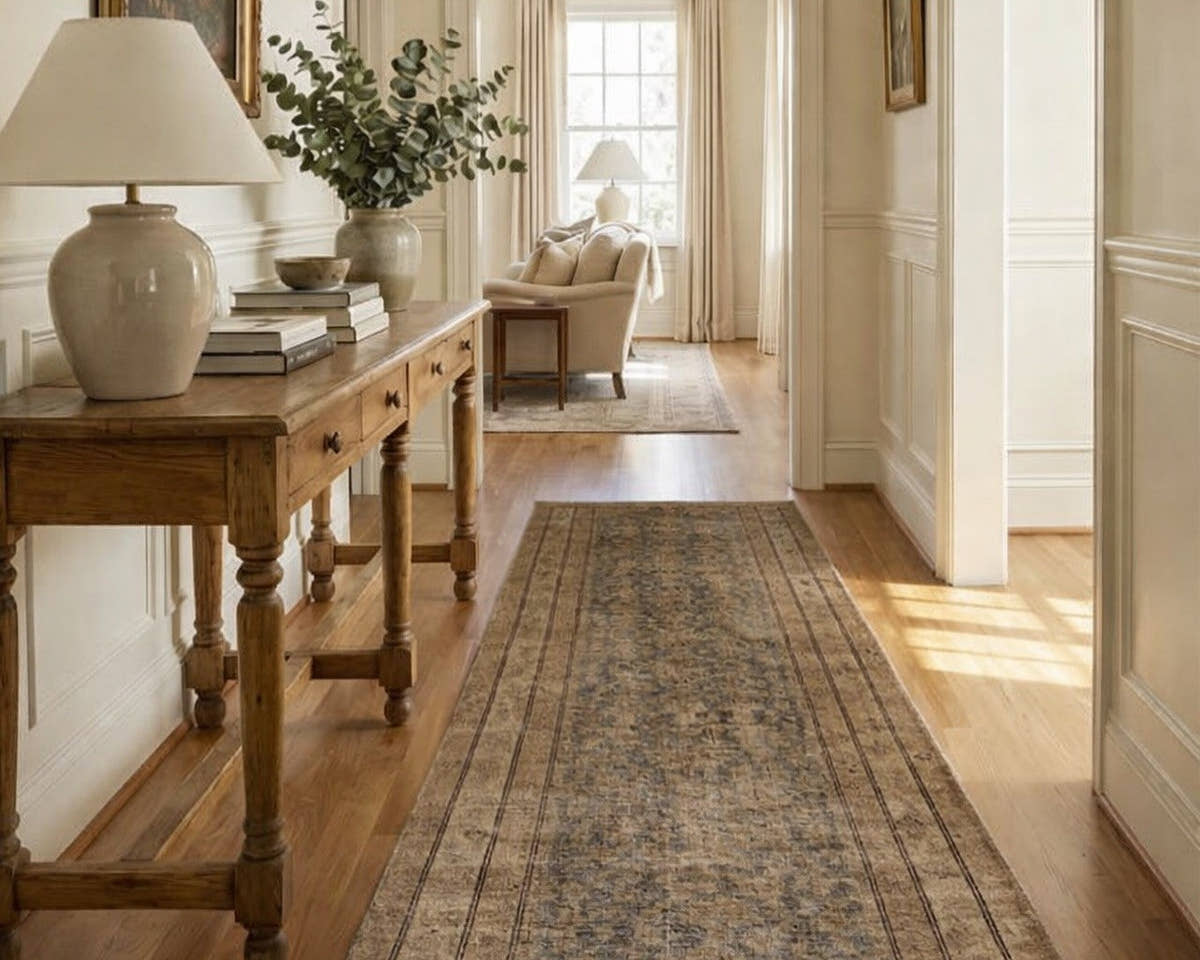
A runner is a long, narrow rug for the strips of floor other rugs miss, the hallway, the entry, a galley kitchen, the length of a bed. Leave a little bare floor at each end and along both sides, and the runner frames the space instead of filling it.
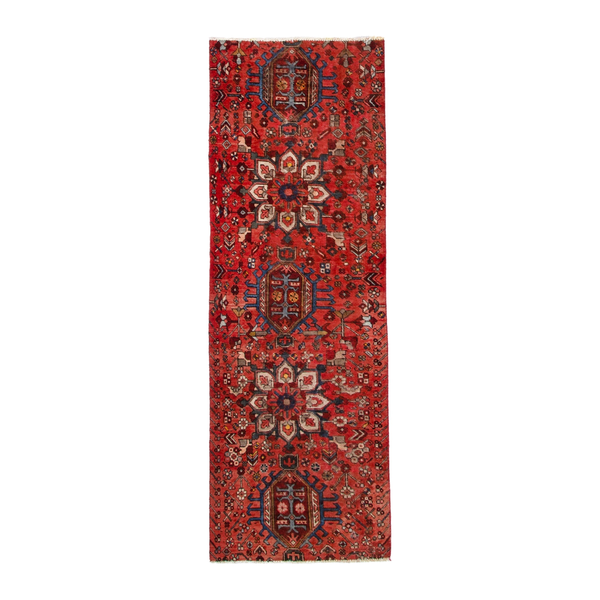
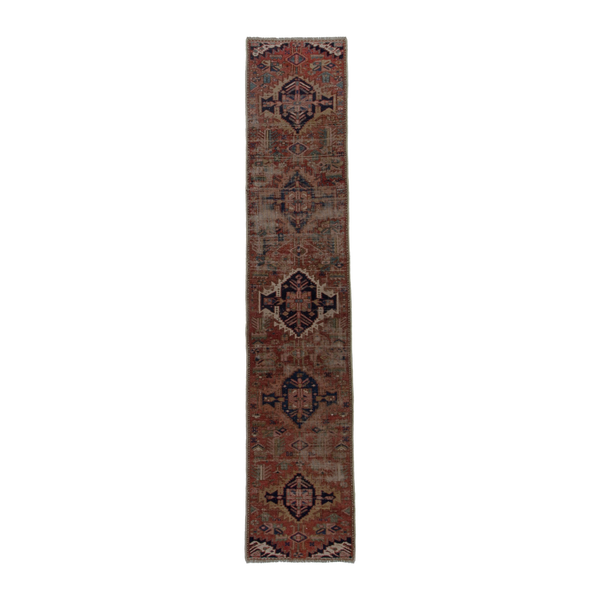
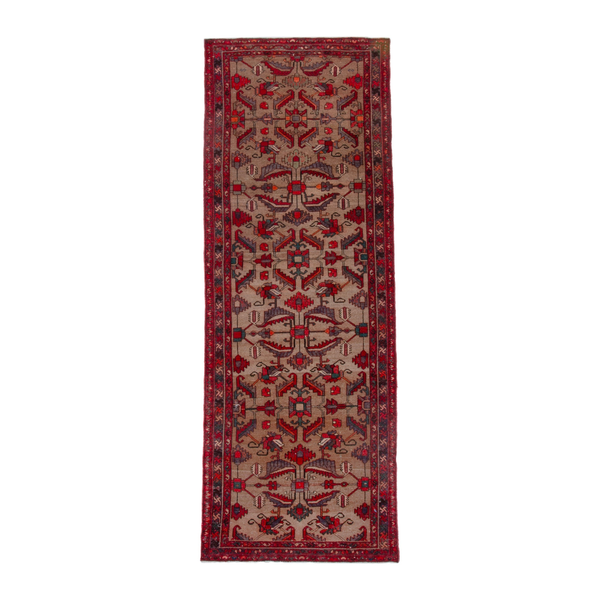
Wool on cotton, hand-knotted, and woven narrow on a village loom rather than cut down from something larger. Measure the corridor first; with a runner the fit is everything.

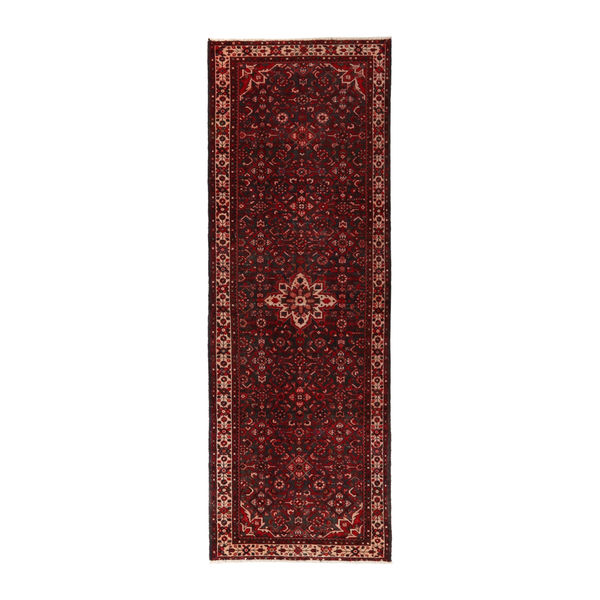


Runners: measuring for a long, narrow floor
A runner is a long, narrow rug, usually somewhere between 6 and 20 feet in length and about 2 to 3 feet wide, made for the parts of a home no square rug fits. Hallways, entries, galley kitchens and the side of a bed all take one naturally. Weavers across Persia and Turkey made runners in the exact proportions old houses needed, which is why vintage examples turn up in such a spread of lengths.
Working out the length
Start with a tape measure down the corridor. As a rule, leave a margin of roughly 10–20cm (4–8in) of bare floor at each end, and a similar strip along both long sides, so the runner sits centered with a frame of floor around it rather than butting up to the skirting. A runner that reaches wall to wall looks like fitted carpet; one that stops a little short at both ends looks intentional. Our listings give every length in feet and inches, so you can match a piece to your hall precisely.
When one runner will not reach
Very long or interrupted hallways do not always have a single rug to fit them. Two shorter runners laid end to end, with a small gap between, is a long-established fix, and it reads as deliberate, especially when the pair share a palette. Around a doorway, or at the bend of an L-shaped hall, breaking the run is usually better than forcing one long piece past the obstacle.
Room by room
- Hallways and entries: the classic home for a runner, warming a cold corridor and shielding the floor from traffic. The hallway & entry collection is sorted for exactly this.
- Kitchens: a runner cushions the long stand at a counter or between units far better than a single mat; browse the kitchen rugs.
- Bedrooms: a runner down one side of the bed, or a pair, gives a soft first step in the morning, more options in bedroom rugs.
- Open floors: a runner can link two zones or lead from one room into the next where a wider area rug would be too much.
Width matters too
Length gets all the attention, but the width of a runner decides whether a hall feels balanced. In a narrow corridor, a runner that leaves only a thin sliver of floor on each side looks cramped; one that leaves a clear, even margin of a few centimeters reads far calmer. Measure the narrowest point of the hall, a radiator, a shoe rack, a door architrave, and size the width to clear it, so the runner lies flat and straight for its whole length rather than kinking around an obstacle.
Stairs, landings and thresholds
Runners earn their place on the flat landings at the top and bottom of a staircase and across wide thresholds between rooms. On a landing, center the runner and let it stop short of the top step rather than overhanging it. Across a threshold, a short runner bridges two floor finishes, timber to tile, say, and softens the join. These are exactly the awkward transitional strips that vintage runners, woven in odd bespoke lengths, tend to fit better than anything cut to a modern standard size.
Built for the busiest floor in the house
Corridors see more footfall than almost anywhere else, so a runner has to be tough. Hand-knotted wool that has already taken decades of walking is well suited to it: the pile is burnished, the colors have mellowed, and a few more years of traffic only add to that. A non-slip pad underneath is not optional on a hard floor, it keeps the runner from creeping, prevents slips, and quietly takes some of the wear itself.
A little upkeep
Vacuum along the length regularly, and every six months or so turn the runner end for end. Because one end of a hall, usually the doorway, always sees more traffic than the other, rotating it evens out the wear and any sun-fade so the whole piece ages together. Our size guide has a short section on measuring corridors if you want to check before you choose.
Still deciding on length? Our guide to choosing the right runner length for halls and kitchens works through it room by room.