Hamedan Rugs
Hamedan, in western Iran, is one of the oldest and busiest weaving regions in the country, hundreds of villages, each with its own hand.
The rugs are honestly geometric and built to last, in camel, rust and indigo. These are vintage village pieces, worn smooth by real use and easy to live with.
Hamedan is a city in western Iran and the market town for hundreds of surrounding villages, so the name covers a wide family rather than a single look. What the pieces share is construction: a single weft between rows of knots, a cotton foundation and a sturdy wool pile that was made to be walked on.
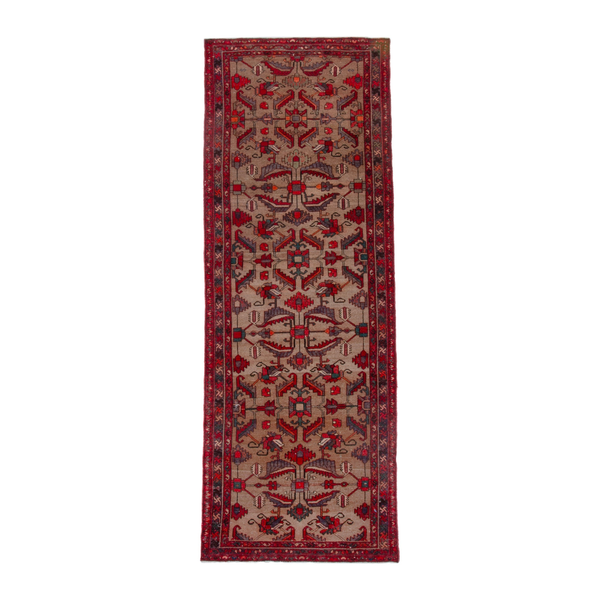
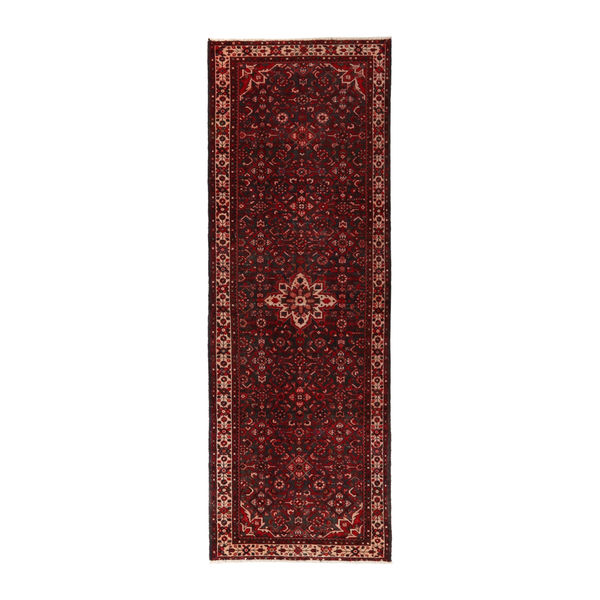
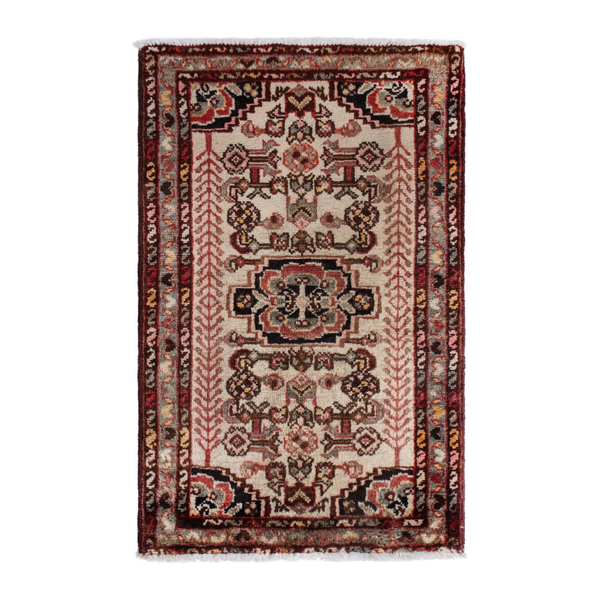
Designs are mostly geometric, with lozenge medallions, repeating botehs and stepped borders drawn in madder red, deep blue and ivory. Village weavers worked from memory rather than a cartoon, so small irregularities in the drawing are normal and part of the character.
Hamedan is the largest Persian group we carry, and the runner format is especially common: long, narrow pieces woven for the corridors of village houses that now suit hallways, kitchens and stairs. Prices are moderate for hand-knotted Persian work, which makes Hamedan a practical first Persian rug.

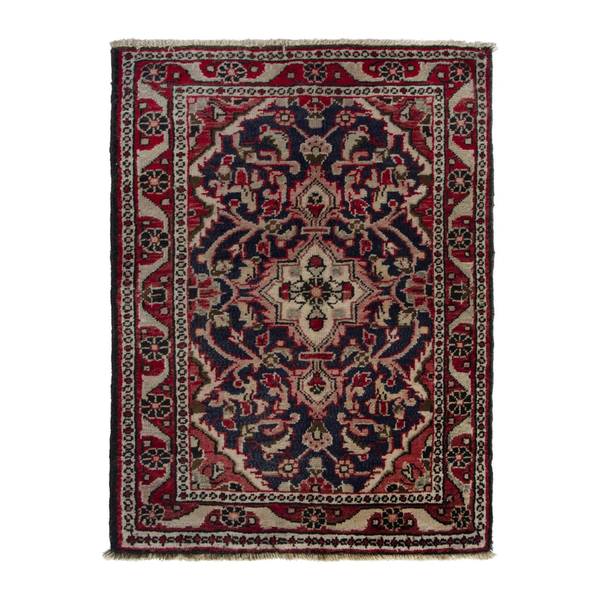


Hamedan: the sturdy village backbone of Persian weaving
Hamedan, in western Iran, is not a single weaving town so much as a whole region. Hundreds of villages across the Hamedan plain have produced carpets for generations, each with its own hand, and together they account for an enormous share of the Persian rugs that reached the West. That variety is the pleasure of the collection: no two Hamedan villages draw a medallion quite the same way.
What they share is construction. Hamedan weaving is typically single wefted, worked in robust local wool, and built to be used. These are not delicate carpets. They were made for houses where people wear shoes indoors, and they have survived accordingly.
What a Hamedan usually looks like
- Drawing: honest geometry; hooked medallions, stepped diamonds, repeating botteh and camel ground fields.
- Color: madder red and indigo carrying most of the weight, with camel, ivory and soft green accents.
- Construction: single wefted, wool on cotton, firm and hard wearing.
- Sizes: exceptional for runners and mid sized pieces; the region produced them in quantity.
Where they earn their keep
Hamedan is the practical choice. A Hamedan runner in a hallway or a kitchen will take years of daily traffic and look better for it. The geometry hides the reality of a working house, and the wool is dense enough that footfall compacts rather than wears it.
In a living room, a Hamedan brings warmth and pattern without the formality of a city carpet. It suits rooms that are lived in hard: family spaces, snugs, studies, anywhere a precious rug would make you anxious.
Village character, not workshop polish
Expect some asymmetry. A border that adjusts as it turns a corner, a medallion sitting a little off center, a color that shifts partway up the field where a new batch of dyed wool came into use. In village weaving these are not faults; they are the record of a person working without a printed cartoon, and they are much of what collectors look for.
Hamedan rug questions, answered
Why is a color band running across my rug?
That is abrash, and it happens when the weaver moved from one dye lot to the next. It is a hallmark of genuine village weaving and is generally considered desirable rather than a flaw.
Are Hamedan rugs lower quality than Tabriz or Kashan?
They are different, not lesser. City carpets buy you fineness of drawing; village carpets buy you durability and character. For a hallway or a family room, a Hamedan is very often the better rug for the job.
Is the spelling Hamedan or Hamedan?
Both are in common use for the same region of western Iran. You will see either, and they refer to the same weaving tradition.
Choosing your Hamedan
Size and shape first, since this is the strongest source of good vintage runners you will find. Then look at the ground color and how strongly the geometry reads. Every piece here is one of a kind.