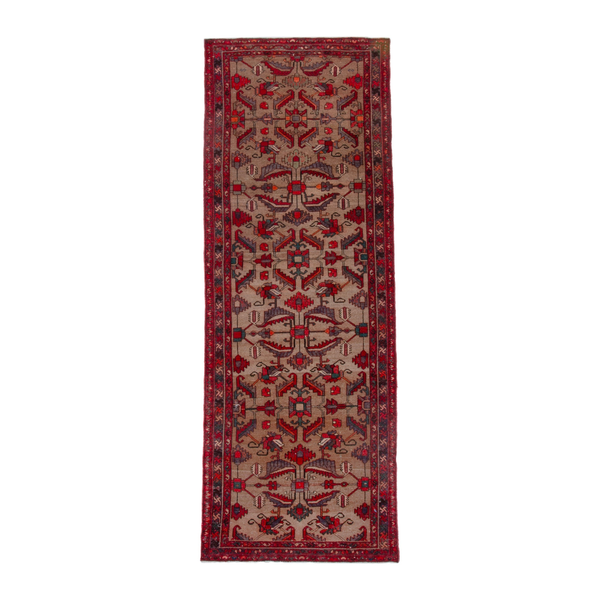
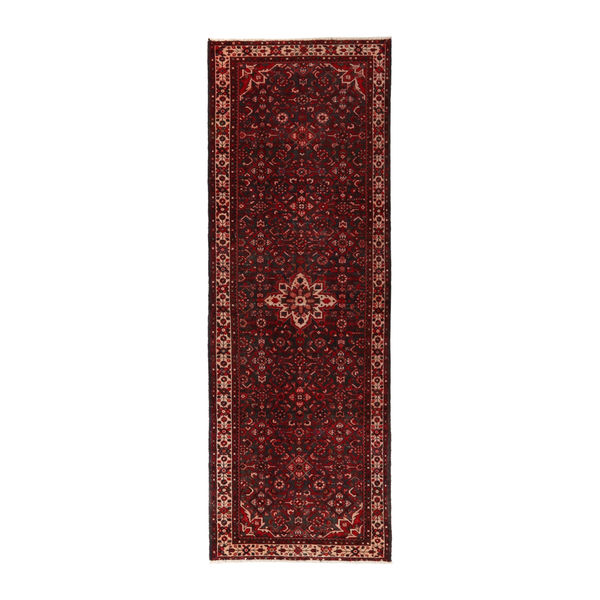
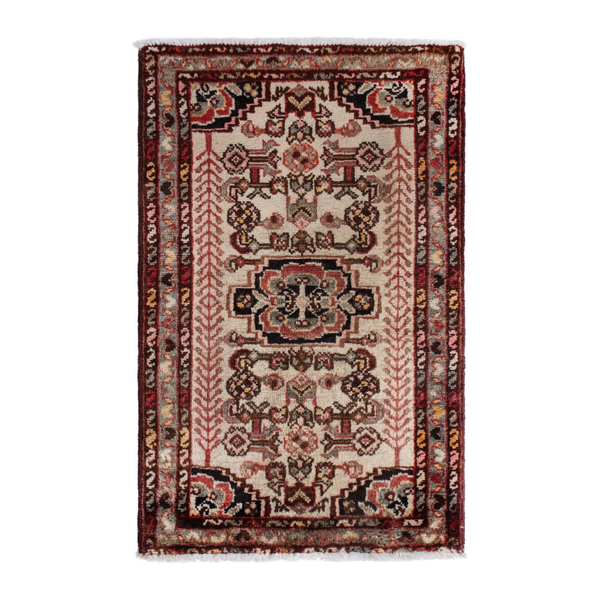
If you have looked through our catalog you have seen the word Hamedan more than any other. Roughly one rug in nine is a Hamedan, and that is not an accident of buying. Hamedan is the largest rug-producing district in Iran, the rugs are built for daily use, and the 1970s pieces that reach us have held up better than almost anything else woven at the time. This is a guide to what a Hamedan actually is, how to recognize one, and why it is the rug we recommend most often to someone buying their first vintage piece.

A district, not a workshop
Hamedan is a city in western Iran, one of the oldest continuously inhabited places in the world, and the rugs that carry its name were mostly not woven there. Several hundred villages in the surrounding hills wove rugs in their homes and sold them through the Hamedan bazaar, where dealers grouped them by size and quality rather than by village. Some villages became famous on their own, and you will see their names on our listings: Lilian, Malayer, Tuyserkan, Nahavand, Borchalou. When a rug cannot be pinned to one village it is simply called a Hamedan.
This matters for two reasons. It means the design range is enormous, from tight all-over patterns to single bold medallions, because each village had its own habits. And it means the price is honest. Hamedan rugs were made to be sold and used, not collected, so the vintage market prices them as furniture rather than as art.
How to recognize one
- The knot. Hamedan rugs are woven with the symmetric knot on a cotton foundation, with a single weft between rows. Turn the rug over and the back looks slightly ridged, with the design clear but a little coarse.
- The wool. Thick, glossy and hard-wearing. Hamedan sheep produce wool with a high lanolin content, which is why these rugs take a wash so well and why they shine after one.
- The palette. Madder red, indigo blue and undyed ivory do most of the work, with green, gold and a soft brown in the details. The red often mellows to brick with age.
- The drawing. Village geometry. Even when the motif is a flower, it is drawn with straight lines. Medallions are angular, borders are wide, and the corners are often a little irregular.
- The sizes. Hamedan weavers made a lot of runners and small rugs, which is why they dominate our runner and accent collections. Room-sized pieces exist but are less common.
Why they wear so well
The single-weft construction and the thick wool make a dense, springy pile that stands back up after a chair leg. Most of the Hamedans in our warehouse are from the 1970s, which means they have already done fifty years of service in someone’s home, and the ones that reach us with full pile are the ones that were made well to begin with. A washed 1970s Hamedan will outlast a new machine-made rug by decades.

Where to use one
Anywhere with traffic. Hallways, kitchens, entryways, dining rooms and family rooms are where a Hamedan earns its keep. The red and blue palette hides a lot, the pile forgives a lot, and if a spill does happen the wool is dense enough to blot before it soaks in. A Hamedan runner in a kitchen is one of the most common things we ship.
They also suit rooms that already have pattern. Because the drawing is bold and the palette is limited, a Hamedan reads as one strong color from across the room rather than as a busy surface.
What to check when buying vintage
Look at the ends first. Hamedan rugs often have a flat-woven band at each end that wears before the pile does, and a good vintage piece has had it secured. Look at the ivory areas in the field, which show dirt and wear before the red does. And look at the back for old repairs, which are common and fine as long as they are tidy. Every Hamedan we list is photographed front and back, and the condition notes say exactly what we found.
Browse Hamedan rugs or vintage runners. Every piece is one of a kind, washed and restored in Vancouver.
For how Hamedan sits against the other weaves, Persian and Turkish rugs: how to tell them apart, and Heriz vs Tabriz compared for the north west. The collection itself is at Hamedan rugs.