Heriz and Tabriz are the two names people know from northwest Iran, and they are often confused because the towns sit only forty miles apart. On the floor they could not be more different. One is bold, geometric and made to be lived on. The other is fine, curvilinear and made to be looked at. Here is how to tell them apart, and how to decide which one belongs in your room.
Where they come from
Tabriz is a city, one of the oldest carpet centers in the world and the capital of East Azerbaijan province. Its workshops have produced rugs for royal courts and export markets for at least five centuries, and the weaving there is organized around drawn designs, master weavers and fine wool or silk.
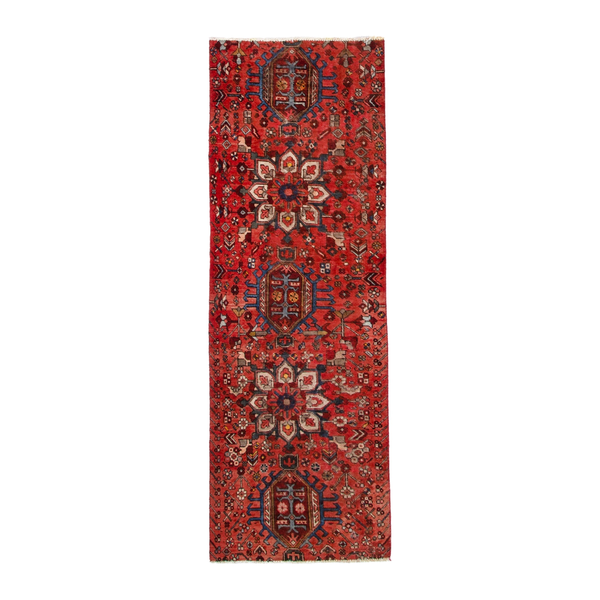
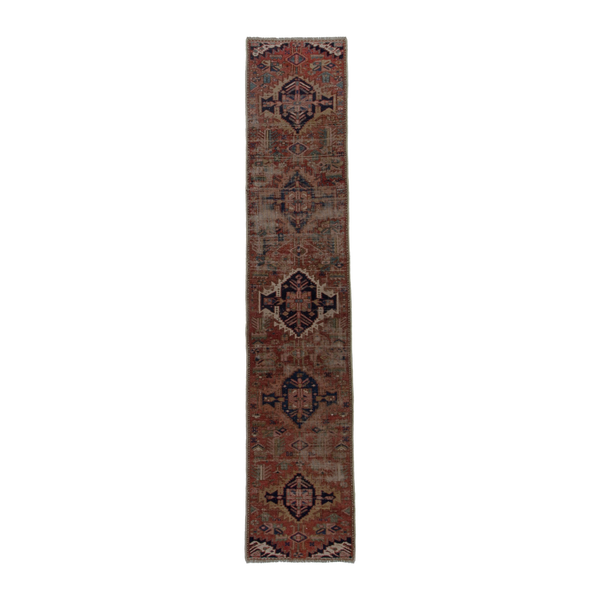
Heriz is a district of villages on the slopes of Mount Sabalan, east of Tabriz. The rugs are woven in homes rather than workshops, on heavier looms with coarser wool from local sheep. The famous Heriz look grew out of village weavers copying the curved medallion designs of Tabriz from memory, and straightening every curve into an angle as they went.
How to tell them apart in thirty seconds
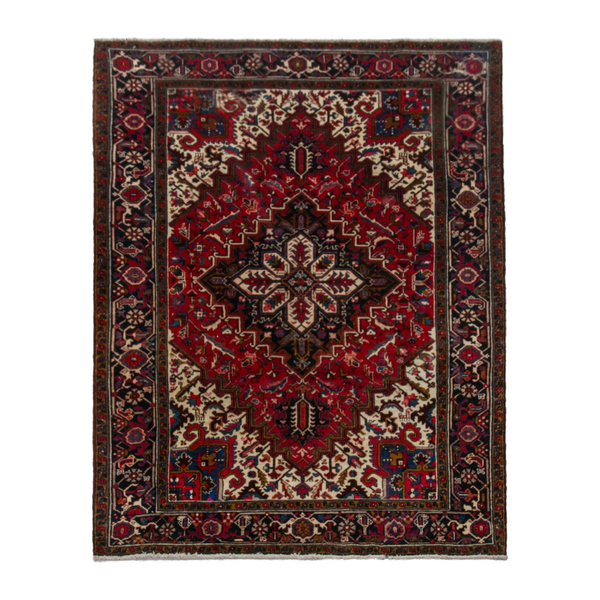
- Look at the lines. Heriz motifs are drawn with straight lines and sharp corners. Leaves are diamonds, vines are staircases, the medallion has points. Tabriz motifs curve. Vines bend, flowers have rounded petals, medallions are lobed.
- Turn it over. A Heriz has a coarser knot and you can usually count the knots without a loupe. A Tabriz is tightly knotted and the back looks almost like a printed fabric.
- Feel the pile. Heriz wool is thick, springy and a little rough. Tabriz wool is soft and short, and older pieces often have a silk highlight in the design.
- Check the palette. Heriz rugs live on brick red, navy and ivory, with touches of green and gold. Tabriz rugs use a wider range, including soft pinks, taupe, cream and pale blue.
Which one wears better
Heriz. The thick pile and coarse knot are the reason so many Heriz rugs from the 1970s still look full today after fifty years of use. They were made for busy rooms and they shrug off chairs, dogs and children. Put a Heriz in a hallway, a dining room or under a family sofa and it will still be there for the next family.
A Tabriz is not fragile, but it is finer. The short pile shows wear sooner under a dining chair that is dragged out twenty times a day. It is the better choice for a living room where people walk but do not scrape, a bedroom, or a study.
Which one suits which room
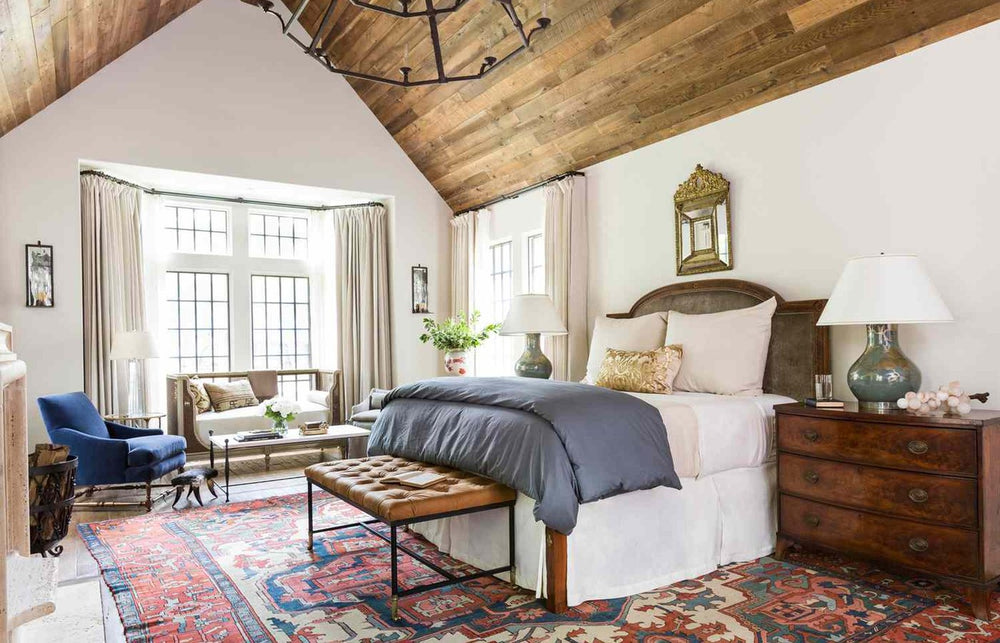
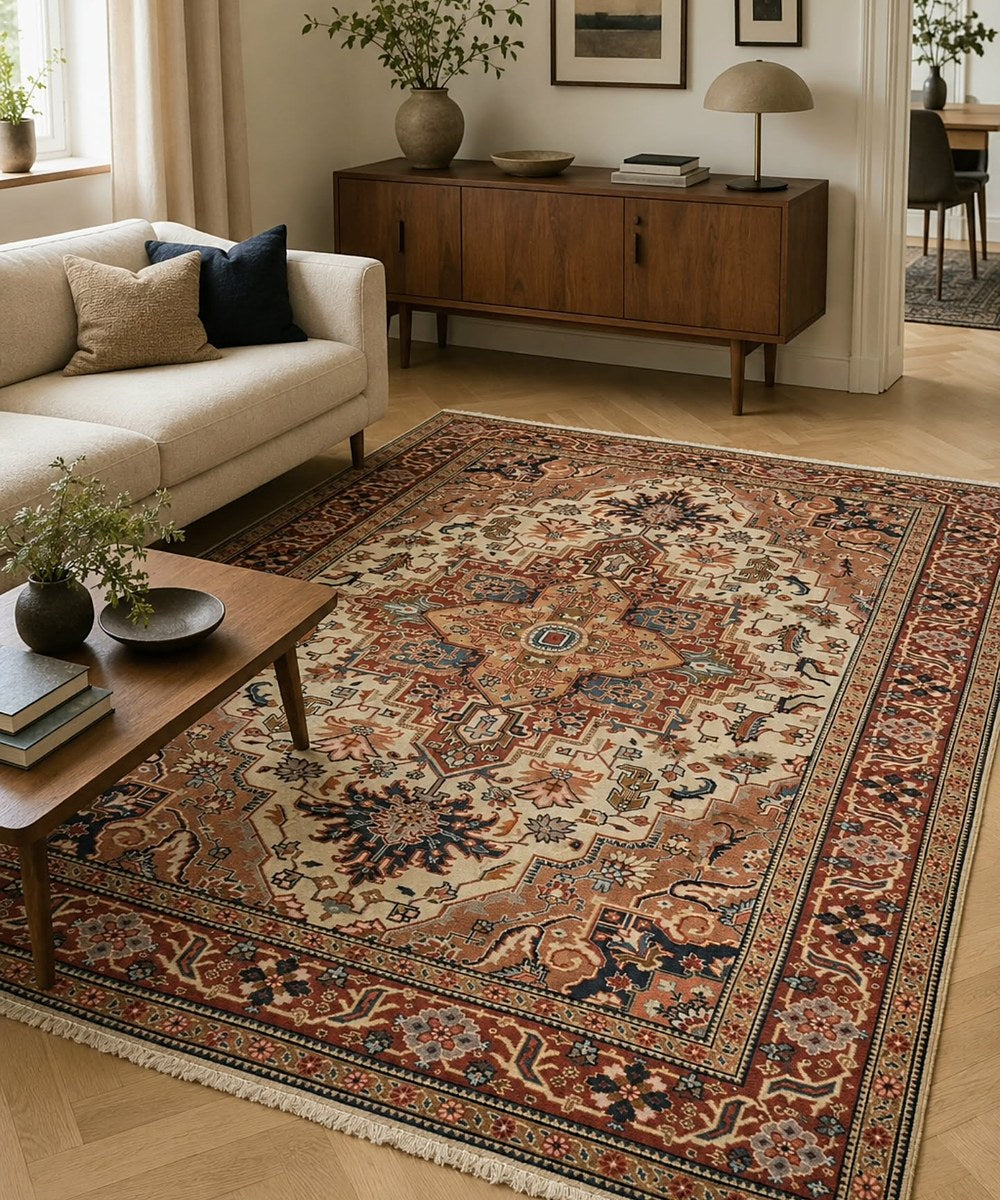
A Heriz is a statement. The large angular medallion reads from across the room, and the strong red field sets the palette for everything on top of it. It works with dark wood, leather and plain sofas. If the rest of the room is quiet, a Heriz gives it a center.
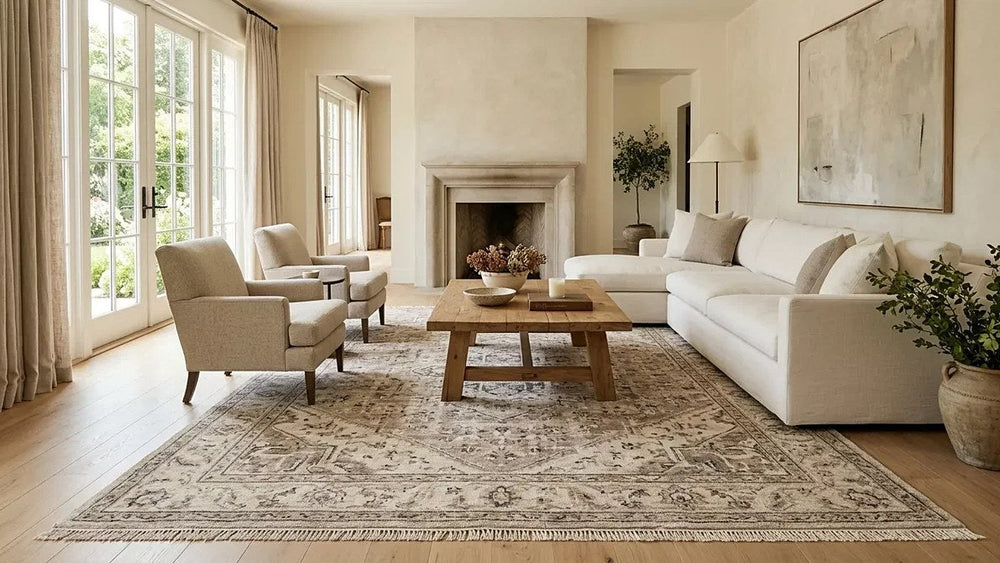
A Tabriz is a background. The all-over floral or lobed medallion designs are dense enough that the eye does not settle on any one motif, and the softer colors let furniture and art take the lead. It suits rooms with pattern already in them, and rooms in cream, gray and pale wood.
What to look for when buying vintage
With a vintage Heriz, check the ivory areas. They are the first to show foot traffic, and a good piece still has full pile in the ivory spandrels around the medallion. Slight unevenness in the drawing is normal and is part of why village Heriz rugs are collected.
With a vintage Tabriz, check the ends and edges. Fine rugs are more often re-ended or re-bound during their life, and a tidy repair is a good sign of an owner who cared for it. Look for a knot count that stays consistent across the rug and colors that have softened evenly rather than in patches.
Price
Size for size, a Tabriz usually costs more than a Heriz because it took longer to weave. But in the vintage market the gap is smaller than in the new market, and a large 1970s Heriz in good condition is one of the best values in Persian rugs. Both are hand-knotted wool on cotton foundations, both were washed and restored before we listed them, and both will outlast anything made by a machine.
See our Heriz rugs or see our Tabriz rugs. Every piece is one of a kind and photographed in our Vancouver studio.
More on each: the story of Heriz for the village side, and Persian and Turkish rugs: how to tell them apart for the broader tells.