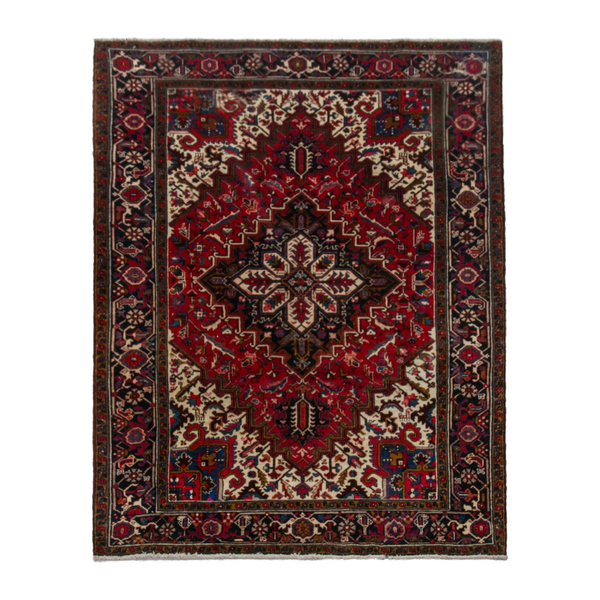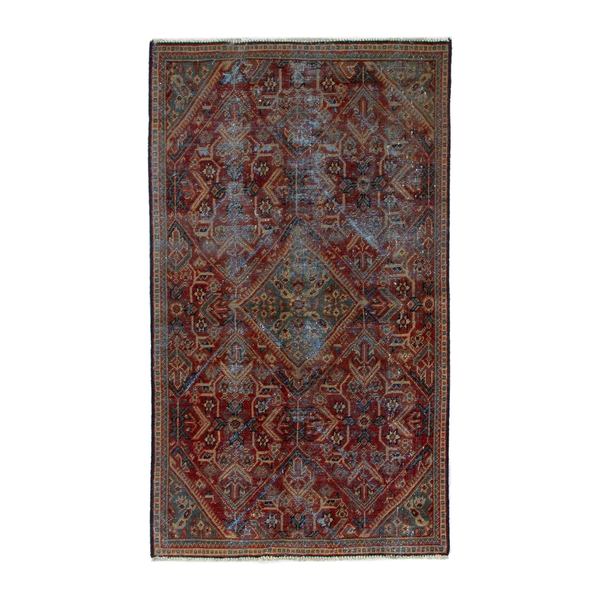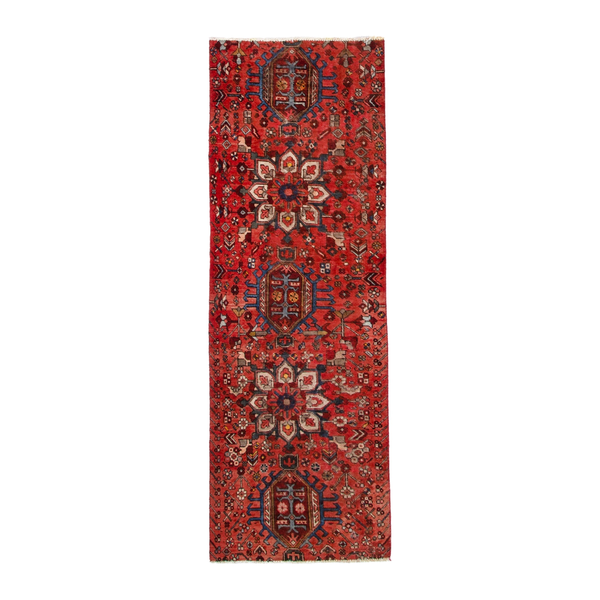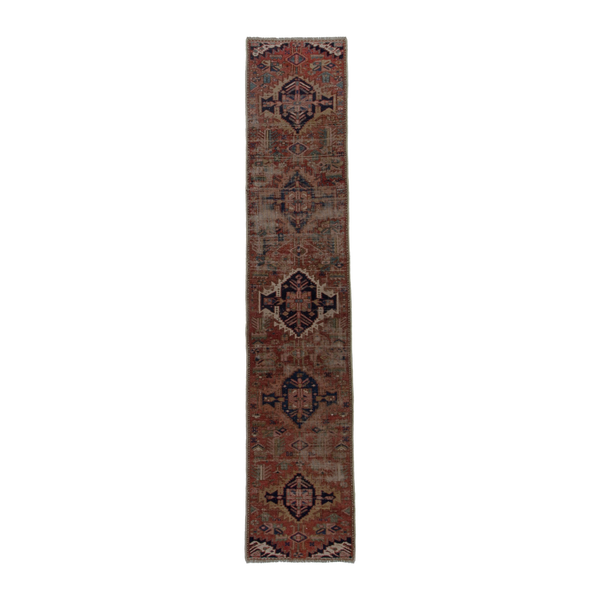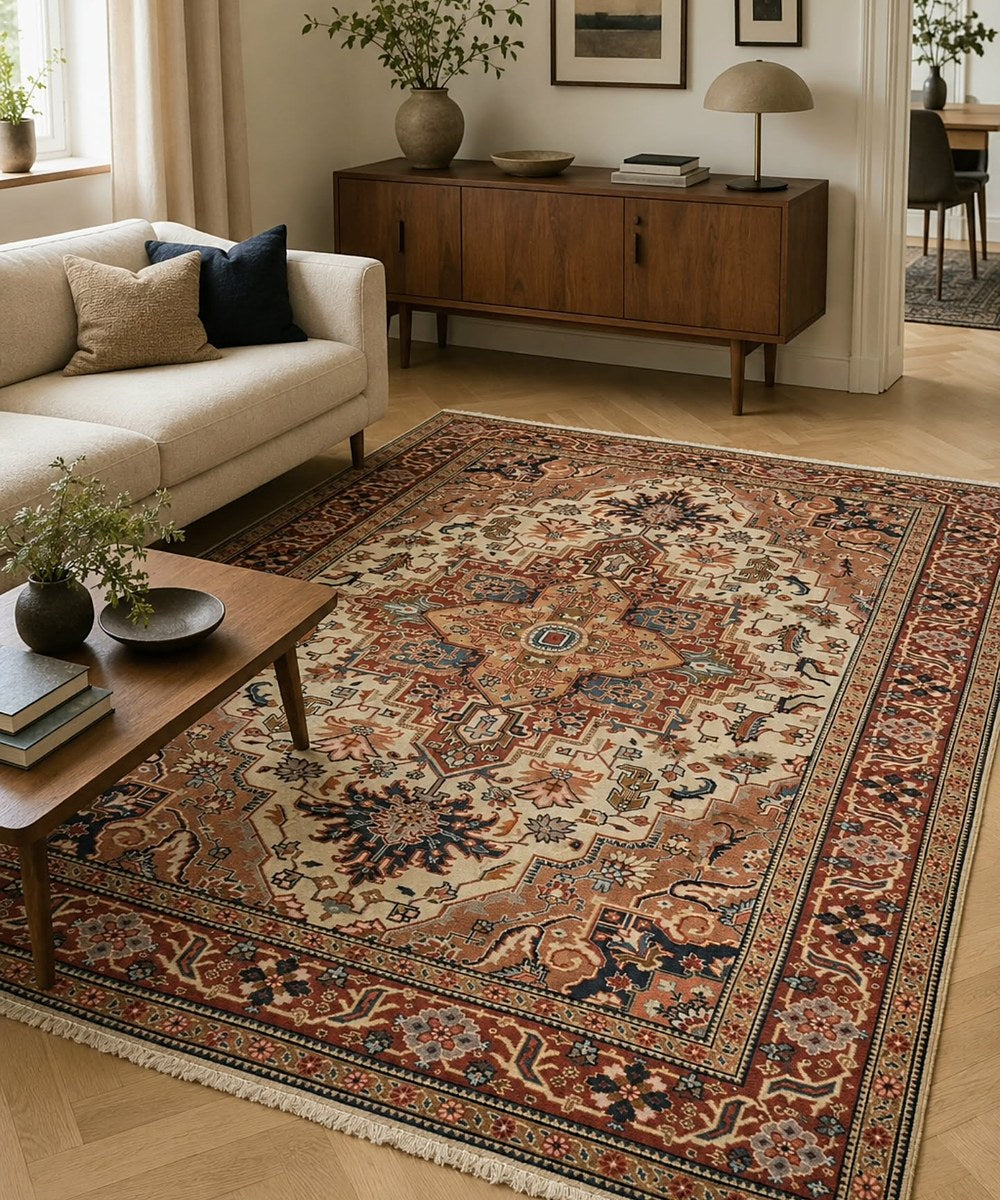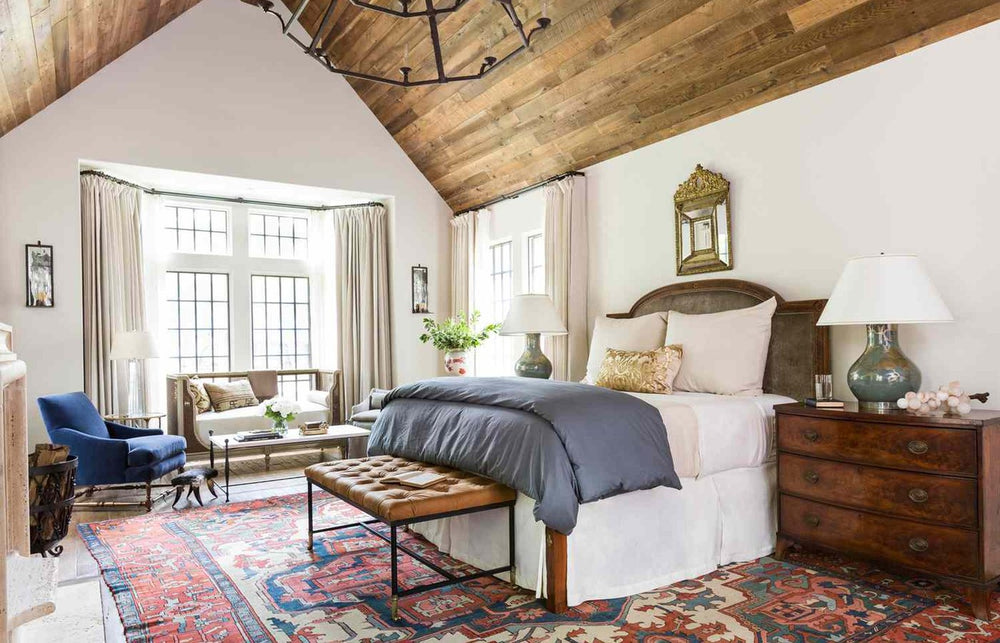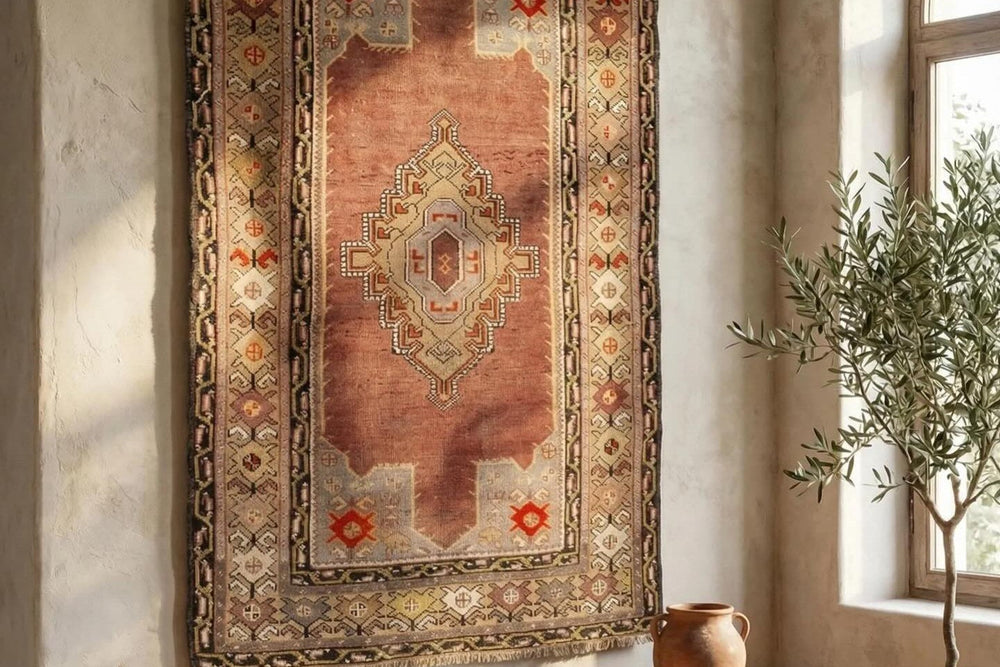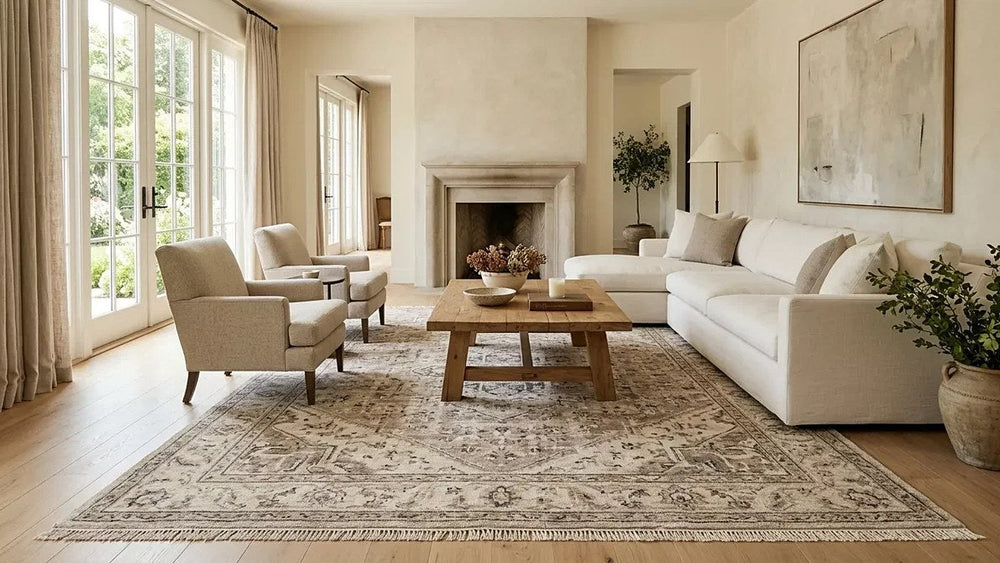
Not every old rug is worth the floor it sits on. Plenty of them are thin, machine-made, or so worn there’s nothing left to love. But a vintage rug worth keeping is a different thing entirely, a hand-knotted piece that has already survived decades of daily life. It still has decades more to give. Knowing how to tell one from the other is what separates a smart buy from a regret.
At Storied Rugs we handle thousands of these pieces, and the same qualities come up again and again. Here’s what actually matters when you’re deciding whether a rug deserves a place in your home for the long haul.
Natural materials are the foundation of a keeper
The first thing that separates a lasting rug from a throwaway one is what it’s made of. A genuine vintage rug is built from wool pile, the soft tufts you walk on, knotted onto a cotton foundation, the woven base of threads the knots are tied to. Both materials age gracefully rather than falling apart.
Good wool has a natural lanolin in it that resists dirt and springs back underfoot. Run your hand across the pile: it should feel dense and slightly oily, not dry or brittle. Synthetic fibers, by contrast, flatten and go shiny within a few years.
Color tells you a lot too. Older rugs were dyed with natural pigments, madder root for red, indigo for blue, various plants for the softer tones. These dyes age into something richer over time, where cheap chemical dyes tend to fade flat or bleed.

Hand-knotting and knot density
A hand-knotted rug is made one knot at a time, each tied by hand around the warp threads, the lengthwise threads that run the length of the rug. This is the single most important marker of a rug worth keeping, because it’s what gives the piece its strength and its character.
To check, fold the rug back and look at the reverse. On a hand-knotted piece you’ll see the pattern come through clearly on the back, with slightly irregular knots, proof a person made it, not a machine. A printed or glued backing is the opposite of what you want.
Knot density matters, but not in the way people assume. A higher knot count allows finer detail, yet a lower-density village rug can be every bit as durable and often more charming. What you’re really looking for is consistency and a foundation that feels solid, not loose or floppy.
Age, patina and the marks of a life well lived
The rugs we carry are typically 40 to 80 years old, and that age is a feature rather than a flaw. Decades of light footfall and sunlight settle the colors into a soft, mellow depth that no new rug can fake. This is what dealers mean by patina.
A little unevenness in tone, known as abrash, comes from small batches of hand-dyed wool. Far from a defect, it’s a sign the rug was made the old way. These gentle shifts in color are part of why an antique piece feels alive in a room.

One of a kind, and gone once it’s gone
Part of what makes a vintage rug worth keeping is that there is only ever one of it. Each piece was knotted by a particular weaver, in a particular place, with the wool and dyes they had to hand. You will never find its exact twin.
We find and restore originals rather than making rugs, which means every listing in our full collection is a single, unrepeatable object. When one sells, it’s gone for good, so the piece you fall for is genuinely yours alone.
Honest restoration keeps a rug in the game
Age brings wear, and how that wear has been handled matters enormously. Every rug we list is professionally cleaned and restored before it goes online, but restoration should be honest, not disguised.
Good repair work stabilises a rug and lets it keep being used. It should be done in matching wool, by hand, so it blends without pretending the rug is untouched. You can read more about how we approach this on our about page.
How to judge quality for yourself
When you’re weighing up a vintage rug, a few quick checks will tell you most of what you need to know:
- Foundation: the rug should lie reasonably flat and feel firm, not thin or papery when you flex it.
- Wear: low, even pile is normal for age; bald patches down to the foundation are harder to live with.
- Selvedge and fringe: the bound edges and end fringes should be intact or cleanly repaired, since these protect the rug from unravelling.
- Repairs: look for tidy, color-matched work rather than crude patches or visible glue.
- Lie: the rug should sit without major buckling, though a gentle wave will often relax over time.
None of this requires an expert eye, just a few minutes of honest looking. A good dealer will tell you plainly about any wear or repair, because a rug that’s built to last has nothing to hide.

Finding a rug worth keeping
A rug that ticks these boxes, natural wool, hand-knotting, honest age and honest repair, isn’t just a floor covering. It’s something you can pass down, and it will very likely outlast most of the furniture around it.
If you’re ready to look, our Persian rugs are a wonderful place to start, and our new arrivals bring fresh one-of-a-kind pieces in regularly. Every one is cleaned, restored, and shipped fully insured, free in the US and Canada. So the only thing left to do is find the one that feels like yours.
For the craft behind it, why hand-knotted rugs outlast machine-made ones. If you are just starting, a beginner's guide to buying your first vintage rug works through it in order.