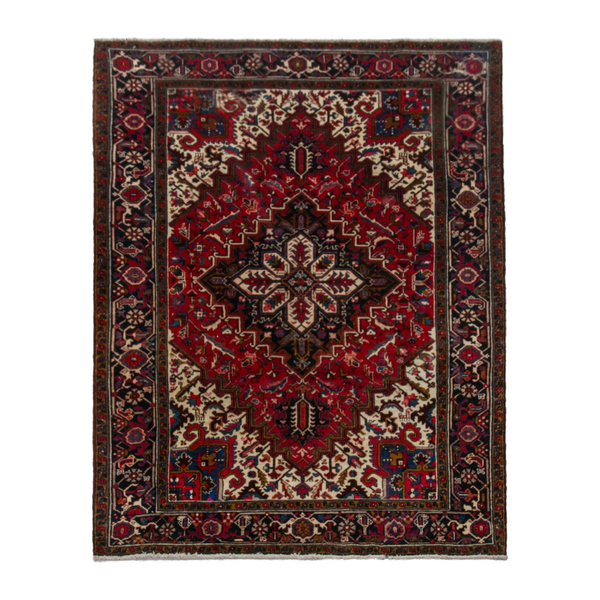
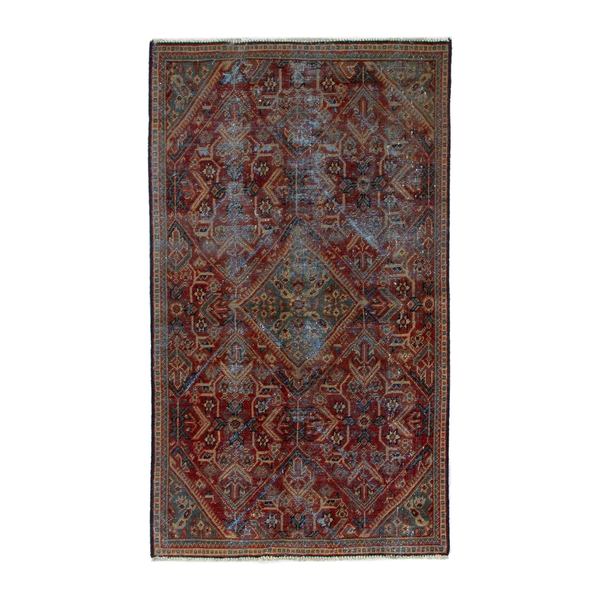
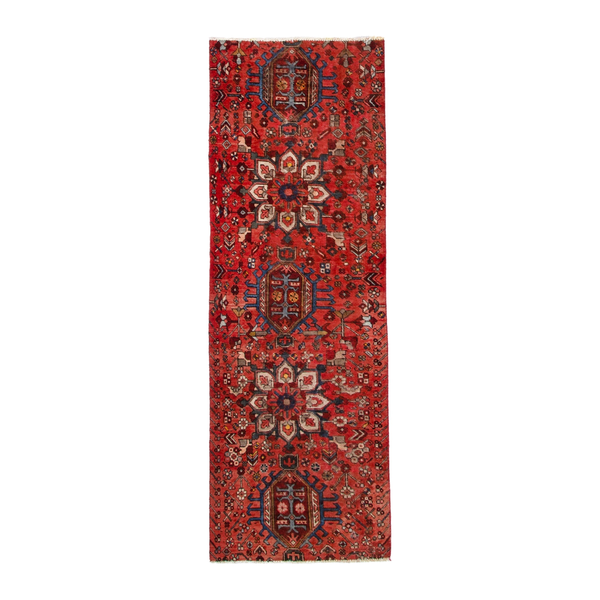
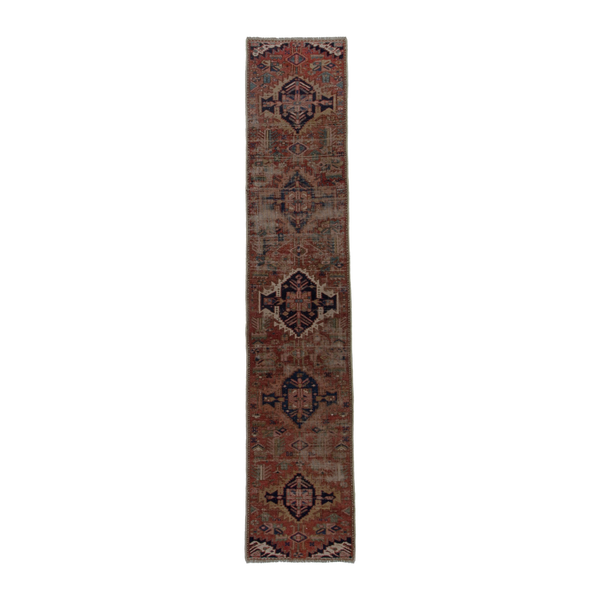
Buying your first vintage rug should feel exciting, not intimidating. Yet for a lot of people it’s the opposite, a swirl of unfamiliar words, uncertain sizing and the quiet worry of getting something wrong. The good news is that it’s far simpler than it looks. A vintage rug isn’t a test you can fail. It’s a floor covering with a bit of history, and once you understand a handful of basics, the whole process becomes genuinely enjoyable. This guide walks you through it from start to finish, in plain terms, so you can buy with confidence.
Start with a realistic budget
Before you fall for anything, decide roughly what you’re comfortable spending. Vintage rugs cover a wide range, and price tends to follow size, age, condition and how fine the knotting is. A small accent piece asks a lot less of your wallet than a large room-sized rug. There’s simply more of everything in the bigger one.
If you’re easing in, there’s no shame in starting modestly. Our under £500 collection is a friendly place to begin, and plenty of first-time buyers find a piece there they keep for years. Set a range rather than a single number, and remember that a rug you love and use every day tends to earn its keep.

Measure the room first, always
This is the step people skip and later regret. Before you browse in earnest, measure the space where the rug will live. Grab a tape measure, note the length and width, and picture where the edges should fall. A rug that’s slightly too small can leave a room feeling unmoored, while the right size pulls everything together.
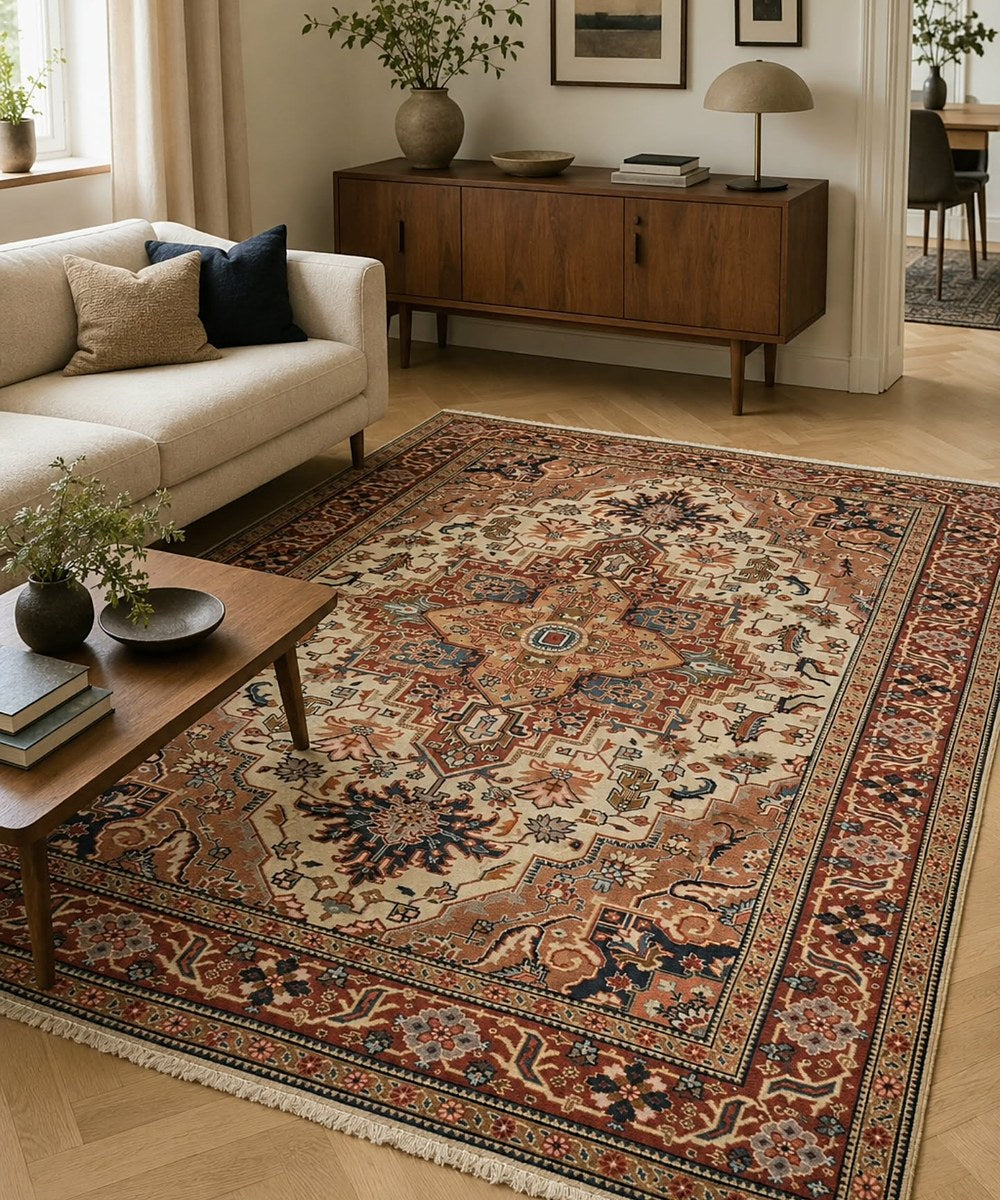
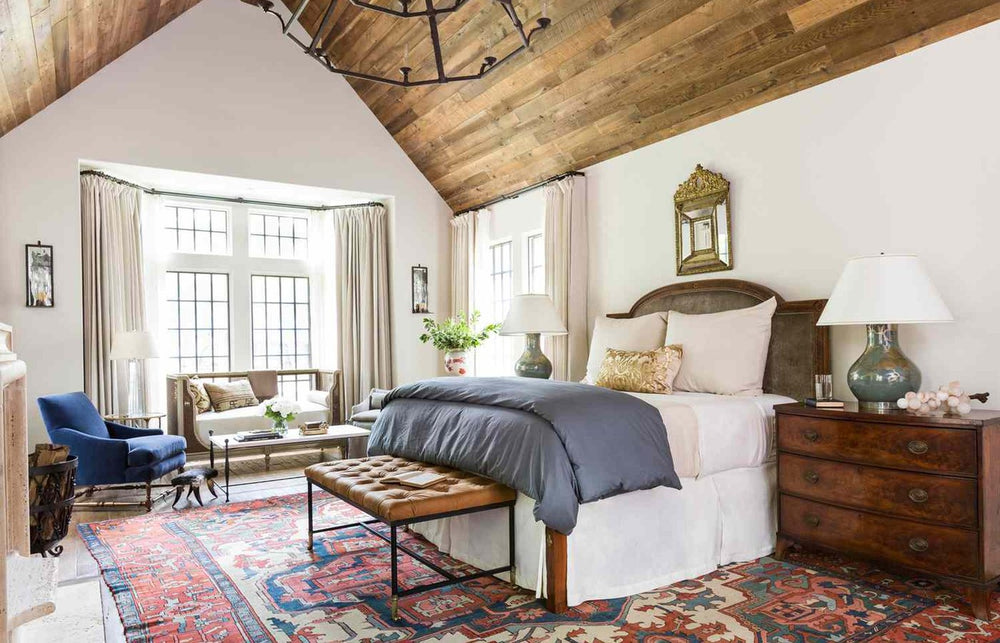
A few rules of thumb help here. In a living room, aim for the front legs of your sofa and chairs to sit on the rug. Under a dining table, allow enough rug that chairs stay on it even when pulled out. In a hallway or kitchen, a runner guides the eye and softens the walk.
Because vintage rugs are one-of-a-kind, their sizes are never perfectly standard, each was woven by hand, so dimensions vary a little. That’s part of the charm, but it means you should check the exact measurements on every listing. Our size guide talks you through common room layouts if you’d like a steer.
Choosing color and pattern that suit your space
Here’s where it gets fun. Color is the fastest way a rug changes a room, so start by looking at what you already have, wall colors, sofa fabric, curtains, the wood tones in your floor.
A simple way to think about it:
- Want the rug to be the star? Choose a color that contrasts with your furniture, a deep red or rich blue against neutral seating.
- Want calm and cohesion? Lean towards beige and neutral tones that let the rest of the room breathe.
- Nervous about pattern? Busier designs are wonderfully forgiving, they hide crumbs, footprints and the general chaos of daily life far better than a plain floor.
Don’t overthink matching. Vintage rugs were made to be lived with, and a slightly unexpected color often looks more considered than a perfect match. Trust the piece that keeps drawing your eye back.
What “vintage” and “professionally restored” actually mean
Two words you’ll see everywhere, so let’s be clear about them.
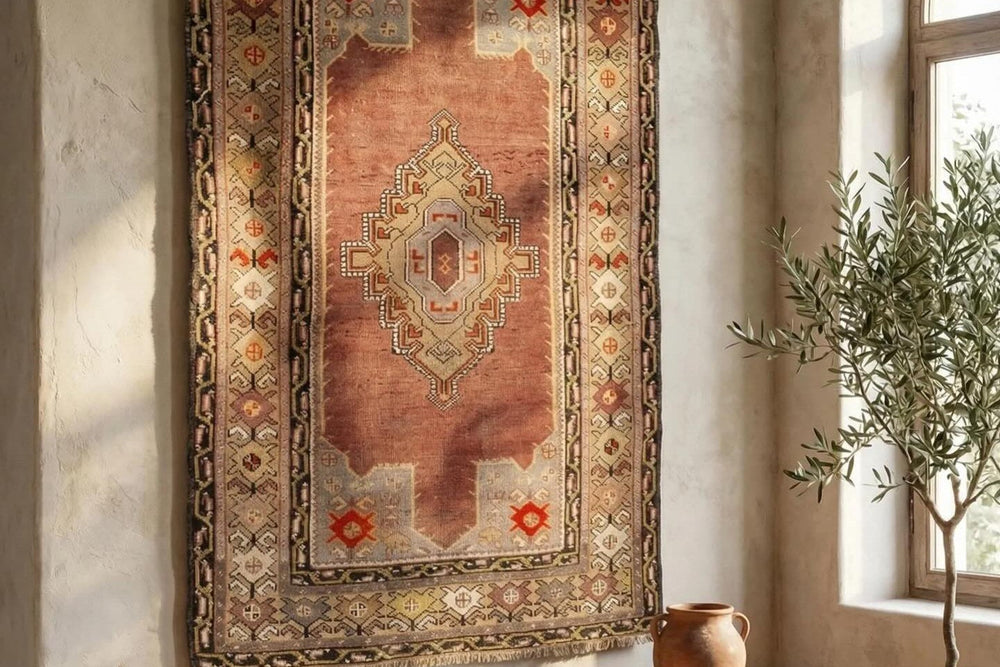
Vintage here means genuinely old, typically 40 to 80 years. These are hand-knotted rugs, most of them Persian or Turkish, made with a wool pile on a cotton foundation. They were woven to last generations, which is exactly why they’re still here and still beautiful decades on. A vintage rug carries small irregularities, a shift in color, a slightly wandering border. These are marks of the hand that made it, not flaws.
Professionally restored means the work has already been done for you. Before a rug is listed, it’s professionally cleaned and restored. So what arrives is ready to unroll and use, not a project to sort out. You’re buying character with the hard work taken care of.

How to read a listing and judge condition
Once you know what to look for, a listing tells you almost everything. Read it slowly and check for these:
- Exact dimensions, measure them against your room, don’t eyeball the photo.
- Origin and age, where it was woven and roughly how old it is.
- Materials, wool pile on cotton foundation is what you want.
- Condition notes, honest descriptions of any wear, low pile or repairs.
- The photographs, look at them properly, including any close-ups.
Signs of gentle age are normal and nothing to fear. A little pile wear, a soft patina, minor variation across the field, these are what give a vintage rug its warmth. What you’re really checking is that the description and the photos agree, and that you understand what you’re getting. If anything is unclear, our FAQ covers the questions first-time buyers ask most.
One-of-a-kind means no reorders
This is the part that surprises newcomers most. Every rug we carry is unique, there are thousands in stock, but each one exists only once. When a piece sells, it’s gone. There’s no second in the same color, no back-in-stock alert, no reorder next season.
That changes how you shop, and in a good way. Adding a piece to your cart holds it briefly while you decide, which takes the panic out of the moment. But it does mean that if a rug feels right, hesitation is the real risk, not the buying. Browsing new arrivals regularly is the best way to catch pieces as they land.

Shipping and returns: what to expect
Practicalities matter when you’re spending on something you can’t touch first. Shipping is fully insured and free in the US and Canada, so the rug arrives protected. International rates are shown at checkout before you pay.
When your rug turns up, unroll it and give it a proper look in the room it’s destined for. See how it sits with your furniture and how the light plays on the wool at different times of day. If you have questions before or after ordering, do get in touch, it’s far better to ask than to wonder.
First steps in caring for your rug
Vintage rugs are tougher than they look, they’ve already survived decades, but a little care keeps them lovely for decades more.
- Use a rug pad. It stops slipping, cushions the pile and reduces wear from foot traffic.
- Vacuum gently and regularly, avoiding the fringes and skipping the beater bar where you can.
- Rotate it every so often so sunlight and footfall wear it evenly.
- Blot spills straightaway with a clean cloth, don’t rub, and don’t soak.
That’s genuinely most of it. Wool is naturally resilient and forgiving, which is a large part of why these rugs endure.
Ready to start buying your first vintage rug
Buying your first vintage rug comes down to a few honest steps: know your budget, measure your room, choose a color you love, read the listing carefully and act when a piece feels right. Do that, and you’ll end up with something that’s not only useful underfoot but genuinely one of a kind, a small piece of woven history that’s now yours.
When you’re ready to look, take your time exploring the full collection. There’s no rush, and no wrong first choice, just the rug that speaks to you.
Two that go deeper: what makes a vintage rug worth keeping on judging condition, and Persian and Turkish rugs: how to tell them apart on reading where a rug comes from.