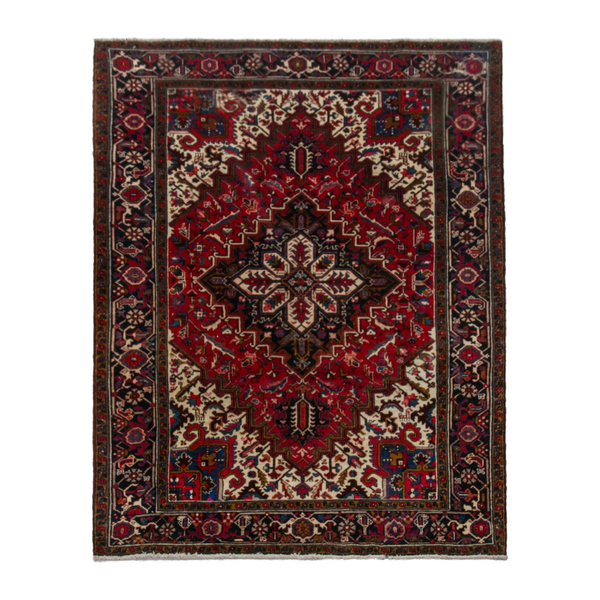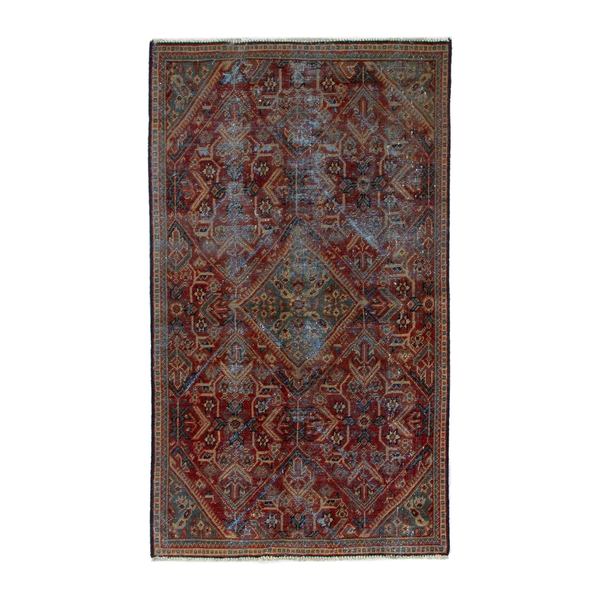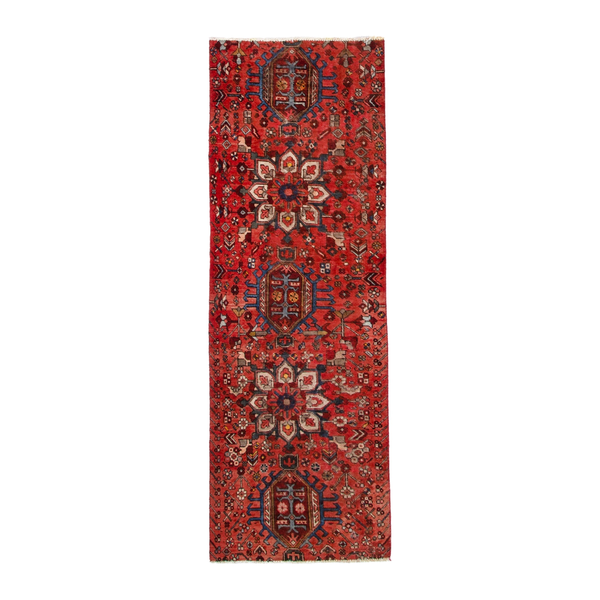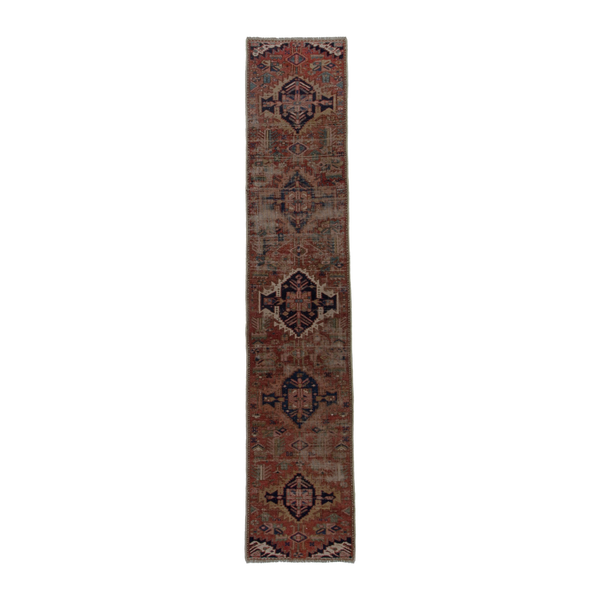
Learning how to clean a wool rug at home is mostly about restraint. Wool is hard-wearing, it naturally resists dirt and shrugs off spills better than almost any other fiber. But a vintage or antique piece has already lived a long life, and its natural dyes deserve a gentle hand. Get the routine right and you’ll rarely need anything more dramatic. This guide walks you through the everyday care that keeps a wool rug looking its best, plus the moments when it’s wiser to call a professional.
How to clean a wool rug at home: start with vacuuming
Most of the wear on a rug comes from grit. Fine particles of sand and soil work their way down into the pile. There they grind against the fibers every time you walk across them. Regular vacuuming lifts that grit out before it does any damage, and it’s the single most useful thing you can do.
Use suction only. A rotating beater bar is the enemy of an old rug. It tugs at the pile, frays the fringe, and can pull knots loose over time. If your vacuum has one, switch it off or raise the head to its highest setting, and ideally use a plain suction attachment instead.
- Vacuum in the direction of the pile, not against it, to avoid stressing the fibers.
- Go gently over the fringe, or skip it entirely and shake it out by hand.
- Turn the rug over now and then and vacuum the back to loosen grit trapped deep in the foundation.
- Lift the rug and clean the floor beneath it, where dust collects.

Shake or beat it outdoors
For smaller rugs, an old-fashioned shake outdoors does wonders. Drape the rug over a sturdy railing or line and give it a firm shake or a gentle beating with a soft tool. Do this on a dry day, and support the rug’s full weight so you aren’t straining the foundation. Larger or older rugs are best left flat, hanging a heavy antique by one edge can stress the weave.
Blot spills straight away
The golden rule with any spill is speed, and the second rule is never rub. Rubbing pushes the liquid deeper into the pile and can felt the wool, matting the fibers together, or blur the dyes.
Instead, blot. Press a clean, white cloth or paper towel firmly onto the spill and lift the liquid away. Move to a clean part of the cloth and repeat until no more transfers. Work from the outside inwards so you don’t spread it, and lift off anything solid with a spoon before you blot.

Gentle, wool-safe cleaning, and always spot-test
If blotting alone doesn’t lift a mark, you can try a mild solution. Mix a small amount of gentle wool-safe detergent, the kind meant for hand-washing woollens, into cool water. Avoid ordinary washing-up liquid and anything alkaline or bleaching, which can strip natural dyes and dull the wool.
Before you touch the stain, spot-test. Dab a little of your solution onto a hidden corner or the back of the rug. Then blot with a white cloth and check for any color lifting onto it. Vintage rugs often carry natural dyes that can be sensitive to moisture, so this small step saves a lot of heartache.
If the test is clear, apply the solution sparingly with a cloth, working the edges of the mark inwards, and blot dry. Then blot again with plain cool water to rinse away any residue. The aim is a barely-damp rug, never a soaked one.
Dealing with pet accidents
Pet accidents need prompt attention because the moisture and acids can affect the dyes and the foundation if left. Blot up as much as you can straight away with dry cloths, pressing hard to draw the liquid out of the pile. Follow with a light cool-water blot, and if you need more, a gentle wool-safe solution as above.
Avoid strong enzyme cleaners and stain removers designed for synthetic carpets; some are too harsh for natural fibers and dyes. On an old wool rug, always test first. If an odour lingers in the foundation after the surface is clean, the moisture has gone deep. That’s a job for a professional wash rather than more home treatment.
What to avoid
A few things do real harm to old wool, so it’s worth knowing what to keep away from:
- Soaking or saturating. Too much water swells the cotton foundation, can cause dyes to run, and takes an age to dry properly.
- Hot water. Heat sets stains and can felt wool. Always work cool.
- Harsh chemicals. Bleach, ammonia and strong spot removers strip color and weaken fibers.
- Steam cleaners. The combination of heat and moisture is particularly risky on old wool and natural dyes.
- Vigorous scrubbing. It frays the pile and blurs the pattern.
Drying flat and out of direct sun
After any spot-cleaning, help the rug dry evenly. Lay it flat and blot up as much moisture as you can with dry towels. Let air circulate around it, a fan nearby speeds things along. Keep it out of harsh direct sunlight, which can fade the dyes unevenly. Don’t walk on the rug or put furniture back until it’s completely dry, top and foundation both.
When to hand it to a professional
Home care handles the everyday, but some situations call for expert hands. A full wash of a large or antique rug, a stain that won’t budge, a flood or deep pet accident, or any sign of dye bleeding or foundation damage are all best left to a specialist. Look for one who cleans rugs by hand rather than by machine. Every rug we sell is professionally cleaned and restored before it reaches you. And there’s no shame in returning to a professional when a piece needs more than a light touch.

Treat your rug gently and it will reward you for decades. Vacuum with suction, blot spills the moment they happen, test before you clean, and never soak or scrub, that simple routine covers almost everything an old wool rug will ever ask of you. If you have a question about caring for a particular piece, our FAQ covers the common ones, and you’re always welcome to get in touch. And if you’re ready to give a beautifully cared-for rug a new home, do browse our full collection.
Cleaning is half of it. Protecting a rug from sun, pets and spills covers the other half, and why hand-knotted rugs outlast machine-made ones explains why the wool takes it.