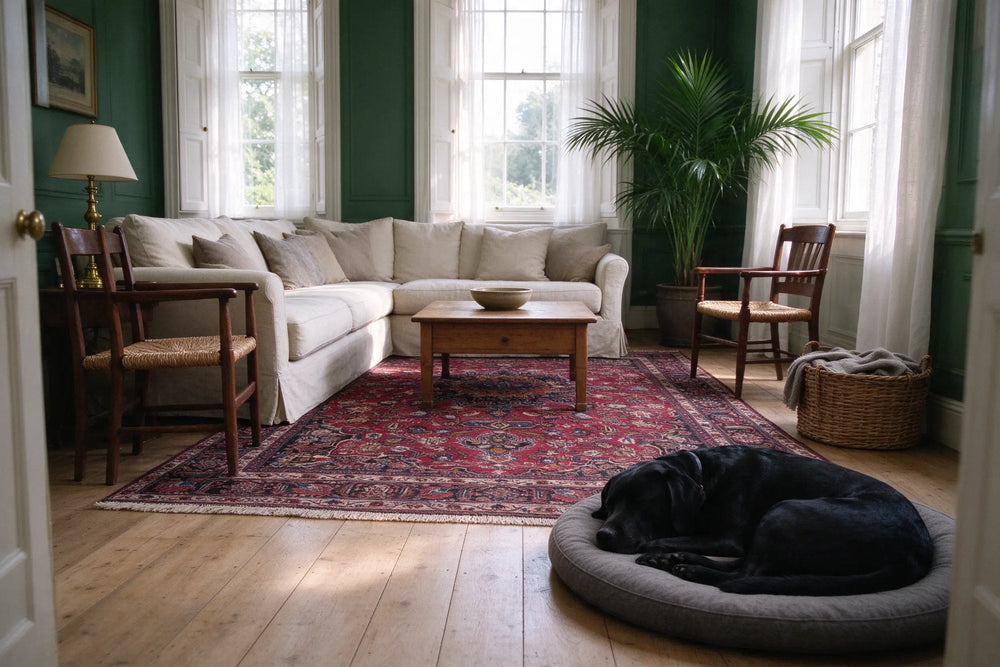
To protect a rug from sun, pets and spills, rotate it every few months so the light fades it evenly. Keep pets’ claws trimmed, and blot any spill right away instead of rubbing it. A pad underneath and a doormat at the door do the rest. A good hand-knotted rug is meant to be lived on, not roped off, and a vintage wool rug is tougher than most people imagine. It has already survived decades of family life, and with a few habits it will keep doing so.
Sunlight and fading
Sunlight is the slowest enemy of color. Over months and years, strong daylight gently lifts the tones in a rug, and the side nearest the window usually softens first.[1] Natural dyes tend to mellow rather than turn muddy, which is part of why old rugs age so well. What you want is for the fading to be even.
The simplest fix costs nothing. Turn the rug 180 degrees every few months so both ends get the same light. The fading stays even, and one end does not race ahead of the other.
Where the sun is strong, close the blinds or draw sheer curtains during the brightest part of the day.[1] UV-filtering window film is another option. It blocks the ultraviolet rays that weaken wool, but visible light still fades dyes, so shade still helps. And make peace with a little natural mellowing. A rug that has softened evenly over time often looks warmer and more settled than it did on the first day. Our post on vintage rugs in a coastal home covers sun and damp by the water.

Living with pets
Dogs, cats and wool rugs get along fine with a few ground rules. Keep claws trimmed so they do not catch in the pile and pull at the knots. If a cat has decided the rug is a scratching post, move it to a proper post nearby. Stop any digging or bunching before it becomes a habit. Some pets like to chew the fringe, too, and a quick redirect usually settles that.
Accidents happen, and speed matters most.[1] The longer a mess sits, the deeper it works into the wool and into the foundation, the woven base under the pile. Lift away any solids first. Then blot the area with clean, cool water and a white cloth, working gently from the outside in.
Go easy on products with old wool. Skip harsh cleaners and be wary of enzyme treatments, which can be hard on natural fibers and dyes. Plain blotting handles most fresh accidents, and anything stubborn is a job for a professional.
If a new puppy is about to arrive, a cheap washable rug may be the smarter choice for the first few months. Washable rugs vs wool rugs weighs that up honestly.
Spills and stains
Most spills only become a problem if you rub them or leave them. Rubbing drives the liquid deeper and can distort the pile.[1] Blot right away instead, with a dry white cloth or kitchen paper, pressing straight down to lift as much as you can.
Work from the edge of the spill inward so it does not spread into clean wool. If you need water, use a little, and keep it cool, never hot. Before you use any cleaner, even a gentle one, test it on a small hidden corner and check that the color stays put. When in doubt, blot, let it dry and ask a specialist. How to clean a wool rug at home has the full routine.

Everyday habits that prevent wear
Most protection comes down to cutting the daily grind before it starts. A few small habits make the biggest difference:
- Use a good rug pad. It cushions the pile against wear underfoot and stops the rug slipping, which matters most in busy spots. Rug Pads 101 explains which kind suits your floor.
- Put doormats at the entrances. They catch grit and water before it reaches the rug.[2]
- Take shoes off where you can. Outdoor soles carry the gritty dirt that grinds down wool over time.[1]
- Vacuum gently and regularly to lift loose grit from the base of the pile. Use suction only, turn off the beater bar and keep the vacuum off the fringe.[1]
A pad and a doormat are unglamorous, but they do more to preserve a rug than almost anything else.
Choose a rug that forgives
Pattern and color decide how much everyday life shows. A rug with an all-over design hides crumbs, paw prints and small marks far better than one with a large plain field. Mid-tones and deep reds hide more than pale cream. If you love beige and neutral rugs, pick one with plenty of pattern in it rather than a plain one.

For a baby’s room or a playroom, choosing a rug for a nursery or kids’ room covers pile height, pads and size.
How often to have a rug professionally cleaned
Even a well-kept rug benefits from a proper wash now and then. As a rough guide, a hand-knotted wool rug in a normal home needs a professional clean every three to five years. Go sooner for a busy hallway or a home with pets, and later for a quiet room.
Choose a cleaner who specializes in hand-knotted rugs and understands natural dyes. Ordinary carpet cleaning methods can be too harsh for old wool. If you are unsure what your rug needs, our FAQ is a good place to start.
A short checklist
None of this needs to feel like hard work:
- Rotate the rug every few months for the sun.
- Keep claws trimmed and deal with accidents fast.
- Blot spills, never rub them.
- Lay a good pad underneath and a doormat at the door.
Do those things and the rug largely looks after itself. When you are choosing one for a busy home, look for pattern and hard-wearing wool across our full collection. If the rug will sit somewhere it takes a beating, layering rugs over carpet and hardwood is worth a read too.


Sources
- Basic care: Carpets and rugs. Canadian Conservation Institute, Government of Canada, 2018.
- How to Clean and Take Care of Your Wood Floors: Essential Tips for Homeowners. National Wood Flooring Association.


