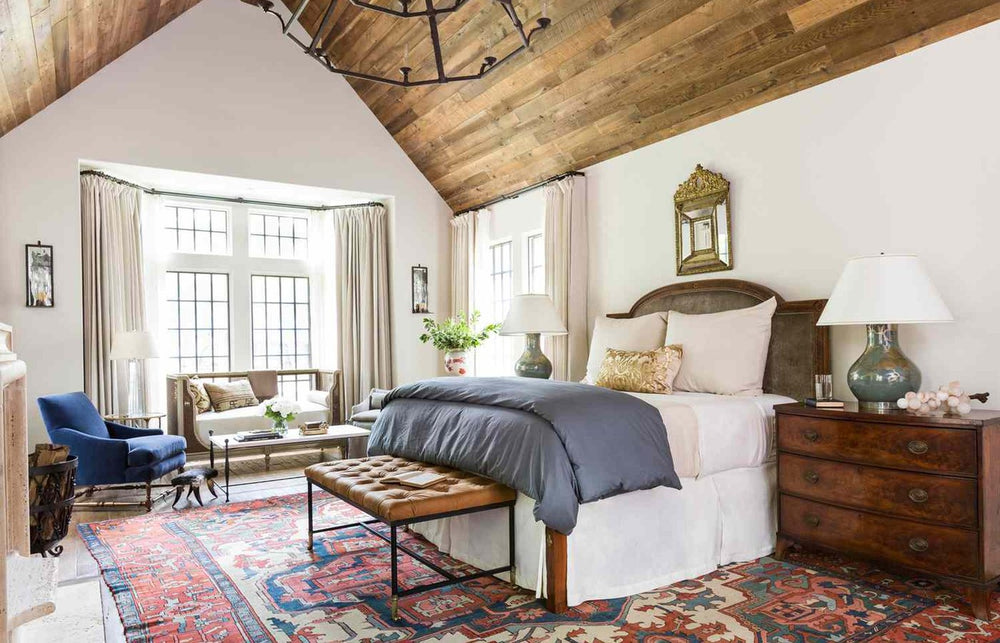
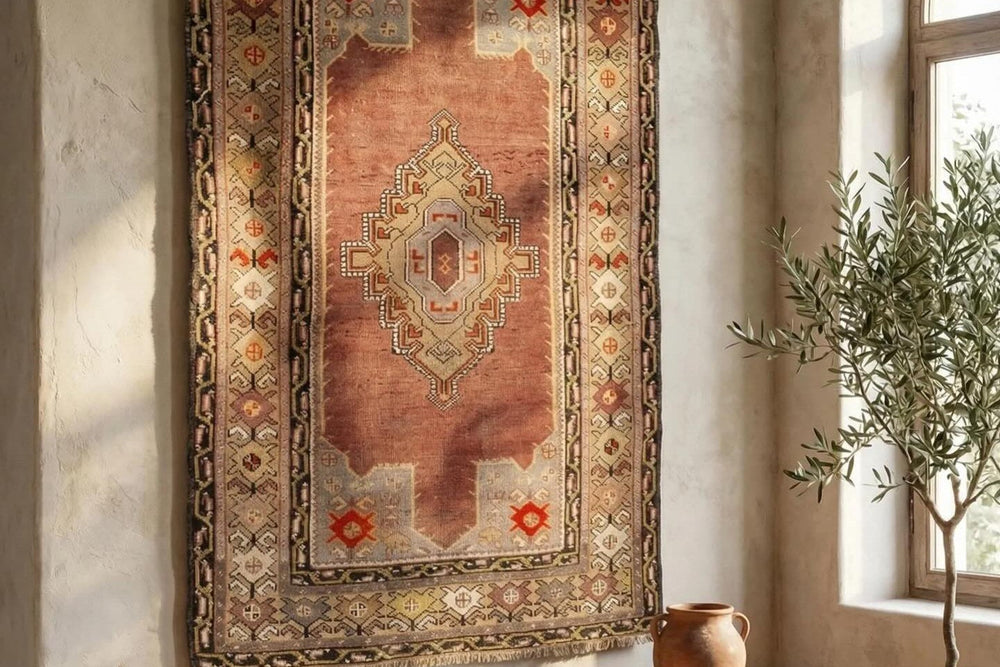
Layering rugs is one of the quietest, most flexible ways to change a room without touching a single wall. Whether you are working over tired wall-to-wall carpet or a stretch of bare hardwood, a well-placed rug on top makes a real difference. It adds warmth, color and a sense of purpose to a space. Done thoughtfully, layering rugs lets a beautiful vintage piece take center stage while the surface beneath it simply does its job.
Maybe a room reads a little flat, or a rental’s beige carpet is dragging everything down. If so, this is the trick worth learning.
Why layer a rug at all?
There are practical reasons and there are lovely ones, and most of the time you get both at once.
- Warmth and softness. An extra layer underfoot makes hard floors kinder in winter and gives thin, flat carpet a bit of body.
- Color and character. A vintage rug brings pattern and depth that a plain floor never will, instantly lifting the whole scheme.
- Defining a zone. Layering marks out a seating area, a reading nook or the foot of a bed, so an open-plan space feels considered rather than adrift.
- Rescuing wall-to-wall carpet. If you cannot replace unloved carpet, you can cover the busiest part of it with something you actually love.
- Protecting hardwood. A top rug takes the daily wear, footfall, chair legs, the odd spill, so the floor underneath keeps its finish for longer.

Choosing a base and a top rug
When you layer over hardwood, the “base” is often the floor itself, and you simply add one rug on top. When you layer rug-on-rug, the base is usually a larger, plainer piece, a natural jute, a flatweave (a rug woven flat, with no raised pile) or a neutral field. It gives the star of the show something to sit against.
The most reliable pairings rely on contrast. Vary the scale so the base extends well beyond the top rug on every side. Vary the color so the top piece stands out rather than blends in. Or vary the texture, a low, tightly knotted vintage rug over a chunkier flatweave reads beautifully.
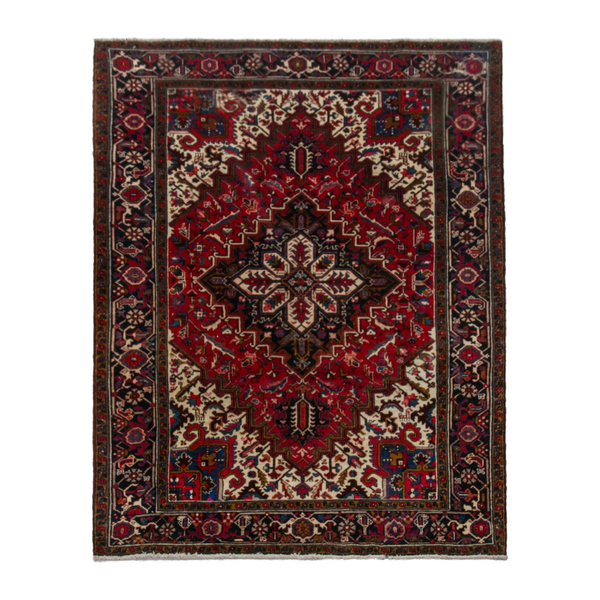
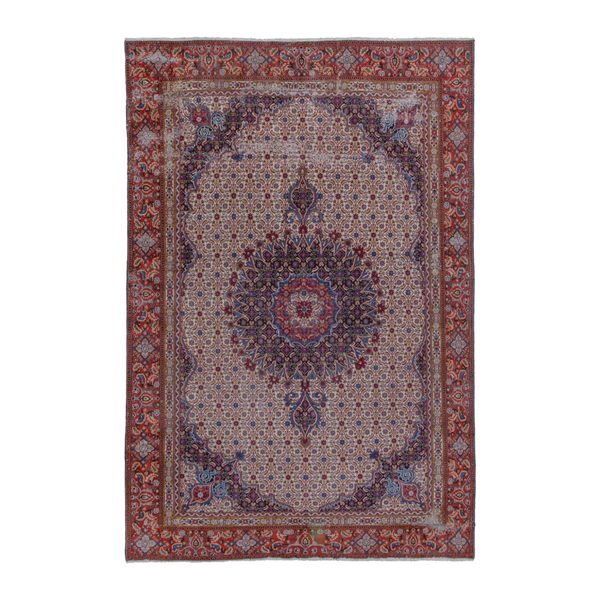
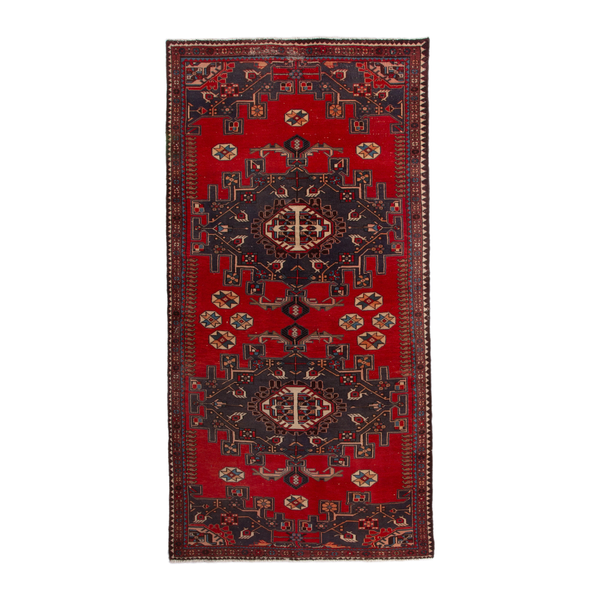
Above all, let the vintage piece be the hero. Choose one rug to carry the pattern and let everything else stay quiet. If you are hunting for that hero, our colorful rugs and the wider range of area rugs are good places to begin, while a smaller find from the small accent rugs collection is ideal for layering at a bedside or in a hallway.
Use a proper pad or grip
This is the step people skip, and it is the one that makes or breaks the result. A layered rug that shifts underfoot is both annoying and unsafe.
Over carpet, use a purpose-made non-slip pad designed for carpet. It stops the top rug from creeping and traveling as you walk across it. On hardwood, a good felt-and-rubber pad keeps the rug still, adds cushioning and, crucially, protects the finish from grit trapped underneath. Avoid cheap adhesive grips that can leave residue on either surface.
A pad also lifts the pile very slightly. That helps a fine antique rug lie flat and wear evenly, rather than being crushed into the layer below.

Keeping edges flat and secure
Vintage rugs sometimes arrive with a memory of how they were last rolled or folded. So give a new piece a few days to settle. Lay it flat, and if a corner curls, weight it gently or reverse-roll it for an hour to relax the fibers.
Position the top rug so its edges fall in low-traffic spots where possible. Tuck them partly under a sofa or bed, rather than across a doorway where toes and hoover wheels catch them. A correctly sized pad that stops an inch or so short of the edges keeps the borders lying neat and flat.
Scale and placement
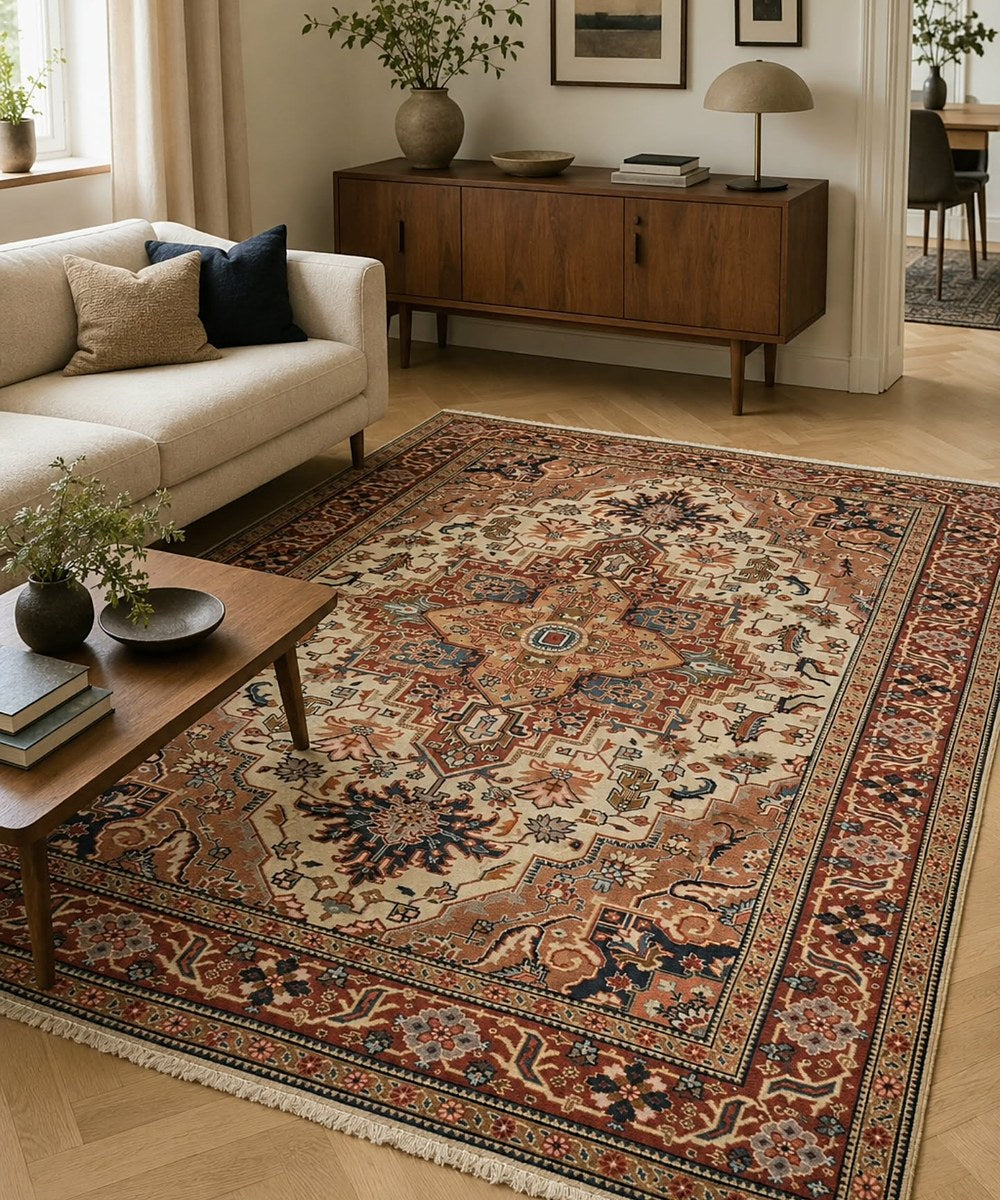
Getting the proportions right is what separates a deliberate look from an accidental one. As a rule, the top rug should be large enough to hold the key furniture together, with at least the front legs of the sofa and chairs resting on it. The base or floor then frames it with breathing room all around.
Angling a layered rug slightly, rather than squaring it dead-on, can add a relaxed, collected feel, though a symmetrical placement suits more formal rooms. If you are unsure what size to reach for, our size guide walks through the common dimensions room by room.

Rooms where layering rugs shine
Living rooms are the natural home for this. A layered rug pulls the seating into a defined group and gives the room its color anchor. Look through our living room rugs for pieces at the right scale.
Bedrooms benefit too. A rug layered at the bedside or the foot of the bed means warm floors first thing in the morning, and it softens plain carpet beautifully. The bedroom rugs collection is worth a browse here.
And rentals are where layering earns its keep. If you are stuck with carpet you did not choose and cannot replace, a vintage rug on top is a landlord-friendly way to make the space feel like yours. Better still, it rolls up and comes with you when you move.
Bringing it together
Layering rugs rewards a little patience: choose one piece to be the star, contrast it against what sits beneath, anchor it with a proper pad, and give the edges time to settle flat. Do that, and even the most unpromising floor becomes a foundation for something you genuinely love walking across.
When you are ready to find that hero piece, take your time browsing the full collection. Every rug is one-of-a-kind, so the one that speaks to you is the one worth waiting for.
Before you commit to a size, read how to choose the right rug size. Once it is down, protecting a rug from sun, pets and spills keeps it that way.