Two words for what looks like the same object, and an argument that comes up every time someone buys one. The short answer is that the difference is about how the thing is laid, not how good it is — but the long answer is more interesting than that, because the two words came into English from opposite ends of Europe and meant completely different things.
Where the words come from
Carpet is the older of the two in English, appearing in the thirteenth century. It came through Old French carpite from Medieval Latin carpita, and behind that sits the Latin verb carpere — to pluck, to pull apart. The sense is of cloth made from plucked and teased fiber. For its first few centuries in English a carpet was not something you walked on at all: it was a heavy covering for a table or a bed. Putting one on the floor was considered wasteful.
Rug arrived later and from the north, from a Scandinavian root related to Old Norse rögg, meaning a shaggy tuft. It is a cousin of "rag" and probably of "rough", and for a long time it meant a coarse woollen blanket — something you put over yourself, or over a horse. It did not settle into its modern sense of "a small carpet" until the nineteenth century.
So one word starts on the table and one starts on your lap, and both end up on the floor.
What the difference is now
In current usage the line is about fitting, not quality:
- A carpet, in most modern British and American usage, is fitted — wall-to-wall, cut to the room, fixed down, and not something you take with you when you move.
- A rug is loose-laid. It sits on top of the floor, it can be moved, turned, rolled up, taken to the next house, and sold on.
That is the whole of it for most people. Neither word implies anything about how the thing was made or what it is worth.
The trade uses the words differently
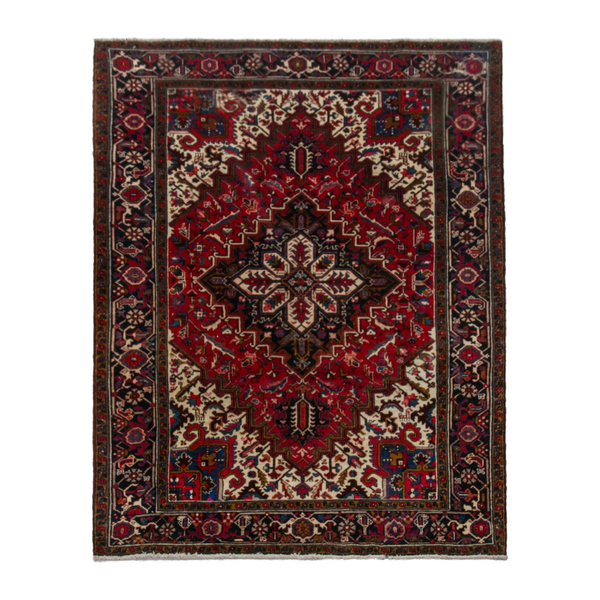
Among dealers in hand-knotted oriental pieces, "carpet" tends to mean a large, room-sized example and "rug" a smaller one. The dividing line is loose and nobody enforces it — roughly around the six-by-nine mark, though you will hear it drawn in different places. A nine-by-twelve Tabriz is usually called a carpet; a two-by-three Baluch never is.
This is a habit, not a rule, and it is the main reason people end up arguing at parties. One person is using the fitted-versus-loose distinction and the other is using the big-versus-small one, and both are right.
What we call things, and why
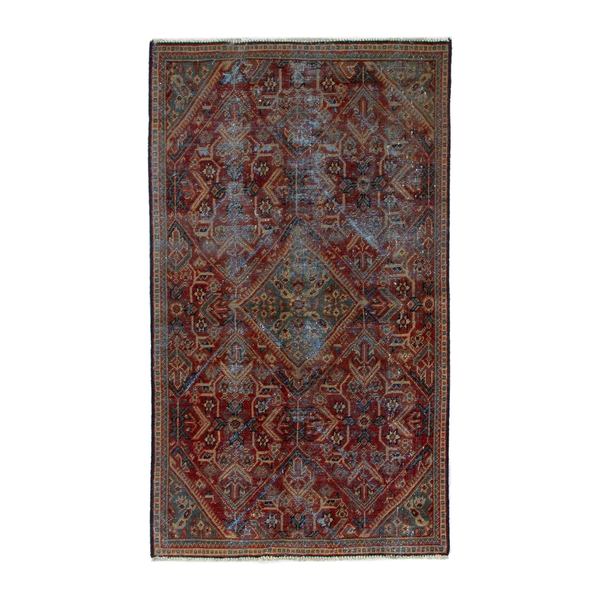
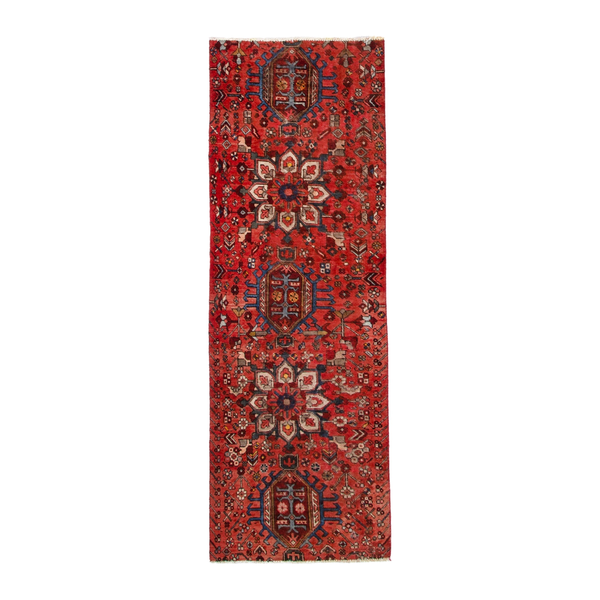
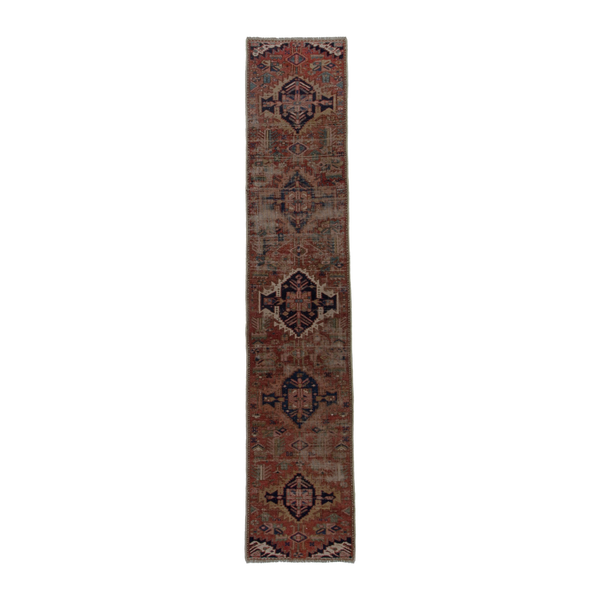
We say "rug" for everything, including the large pieces, because everything we sell is loose-laid and one of a kind. Nothing here is fitted, nothing is cut to a room, and every piece can be picked up and moved. When you see "carpet" on this site it is almost always inside a historical sentence — the Pazyryk carpet, the Safavid court carpets — where that is the established name.
Which one you actually want
If you are choosing between fitted carpet and a loose rug for a room, the case for the rug is that it is reversible. You can turn it to even out sun and traffic, take it up to clean under, move it to another room when the scheme changes, and take it with you. Fitted carpet does none of those things and has to be replaced rather than repaired.
The case against is that a rug needs to be the right size for the room, and getting that wrong is the most common mistake people make — the size guide exists for exactly that. It also needs a pad on a hard floor, which we covered in rug pads 101.
If you have fitted carpet already and want to put something over it, that works better than people expect: layering rugs over carpet and hardwood.