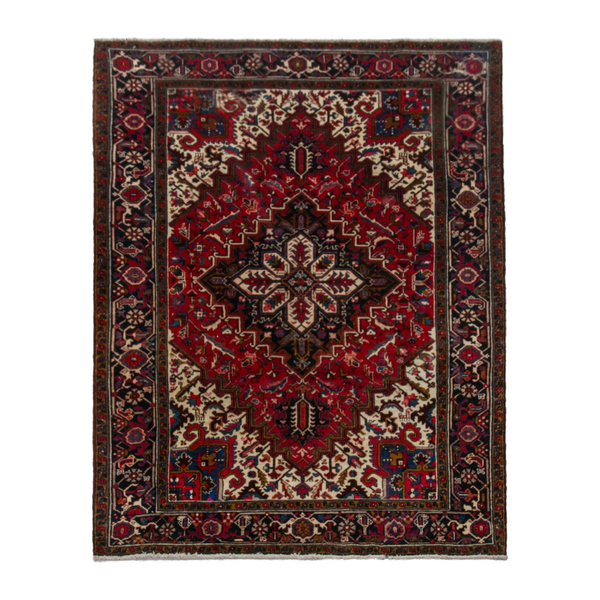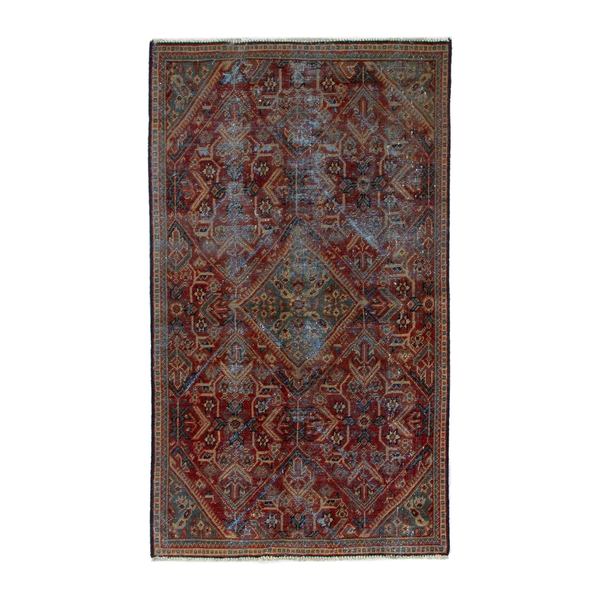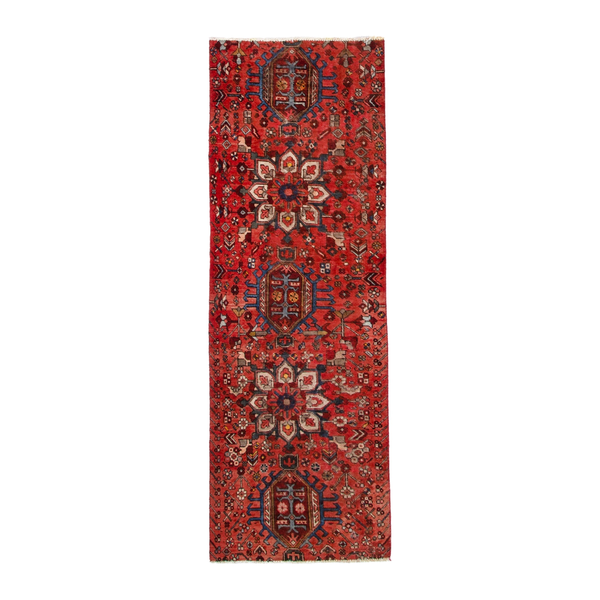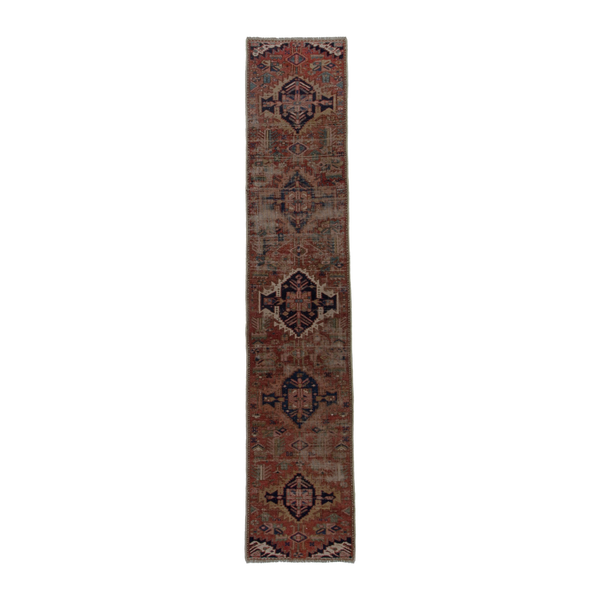
A rug pad is the sheet of material that goes between your rug and the floor. It is the least interesting thing you will buy for a rug and the one most likely to save it. This is what each type actually does, and which one belongs under which floor.

Three jobs, and only one of them is comfort
Grip. A rug on a smooth floor moves, and a rug that moves is something you trip on. This matters more here than it does in a shop selling new rugs. Almost everything we carry is low pile — 1,949 of our 2,055 Persian rugs and all 794 Turkish ones — and a low-pile rug has less weight holding it down than a thick modern one. It slides sooner.
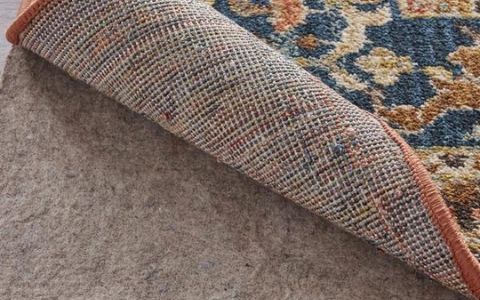
Protection. A rug collects grit. Every time it shifts, that grit is dragged across the floor on one side and ground into the foundation of the rug on the other. On a fifty-year-old hand-knotted rug that wear happens where you cannot see it, in the warp and weft, until a thin patch turns into a split. A pad takes that abrasion instead.
Cushion. The one people buy for and the least important of the three. Worth having, not worth choosing the wrong pad over.
Felt

Soft, thick and quiet. Felt is the best cushioning of the five and it deadens sound, which matters if there is a household below you. What it does not do is grip: on marble, polished tile or anything slick, a pure felt pad will let the rug travel.
Use it on: hardwood, bamboo, engineered timber — floors where the rug is not going anywhere anyway and you want the softness.
Natural rubber

The opposite trade. Rubber grips, and it grips by friction rather than by sticking, so the pad lifts away cleanly when you want to move the rug. It gives you almost no cushioning — it is a dense material and you will feel the floor through it.
Use it on: most hard floors. Not on vinyl — some vinyl finishes react with rubber and discolour, and that is a floor repair, not a rug problem.
Felt and rubber together

Felt on top, rubber underneath. This is what most people should buy and what we would put under a rug in our own homes. It is never as soft as pure felt or as sure-footed as pure rubber, but it does both jobs well enough that you stop thinking about it. The vinyl warning still applies.
PVC
Cheap PVC pads are the ones that go sticky, yellow, and leave marks on a hardwood finish that do not come off. If you have ever peeled a crumbling pad off a floor, it was one of these. Higher-grade PVC made from soybean oil is a genuinely better product and does not do that, but you have to know which one you are holding, and the packaging rarely tells you. Easier to avoid the category.
Memory foam

The most comfortable thing you can stand on and close to useless for grip. It belongs under a rug that is already anchored by furniture — a bed, a heavy sofa — on a floor that is not slippery. Do not put it on tile.
What not to use instead
People reach for these when the pad has not arrived yet, and all of them cost more than the pad did:
- Double-sided tape — leaves adhesive in the foundation of the rug. On a vintage rug that residue attracts grit and is very difficult to get out.
- Hot glue, tacks, rug pins, silicone caulk — permanent damage to the rug, the floor, or both.
- Shelf liner or hook-and-loop anchors — harmless, and they stop gripping within weeks.
A bare rug for a fortnight is better than a taped one.
What we would buy
A felt-and-rubber pad, cut about an inch smaller than the rug on every side so the edge of the pad does not show and the rug still lies flat to the floor at the border.
We do not sell rug pads, so there is nothing for us in that recommendation. What we do sell is the rug that the pad protects — mostly Persian and Turkish pieces from the 1970s, which is exactly the kind of rug where the underside is worth looking after.
If you are layering one rug over another or over wall-to-wall carpet, the pad question changes and we covered it in layering rugs over carpet and hardwood. For everything else that keeps a rug alive, there is cleaning a wool rug at home and protecting a rug from sun, pets and spills.