Almost every article on rug fibers is a list that treats jute, silk, polypropylene and wool as equivalent options. They are not equivalent, and for the kind of rug we sell the list is much shorter than that. This is what the fibers actually do, and which ones matter.
Wool, which is what the pile is
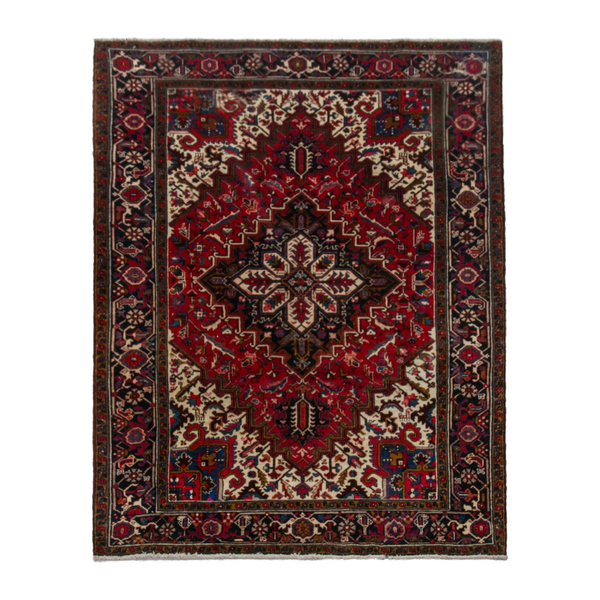
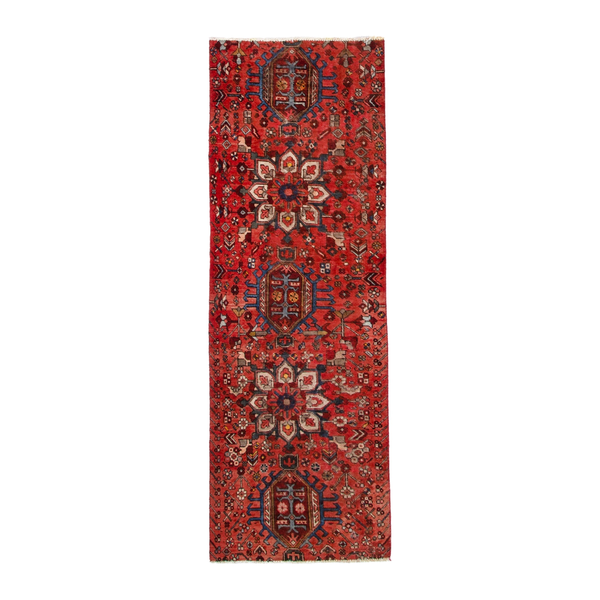
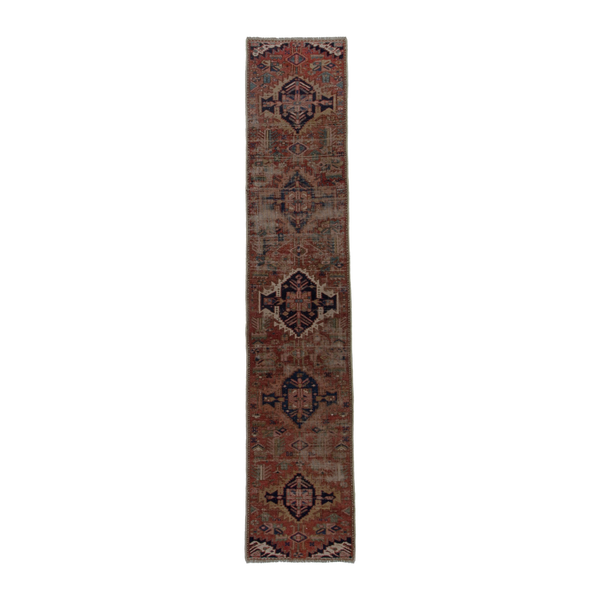
The village and workshop weaving traditions we buy from — Persian and Turkish, 1970s — used wool for the pile, and the reasons are practical rather than romantic.
It springs back. A wool fiber has a natural crimp, so a compressed pile recovers. This is why a chair leg leaves a dent in a wool rug for an afternoon and in a synthetic rug for good.
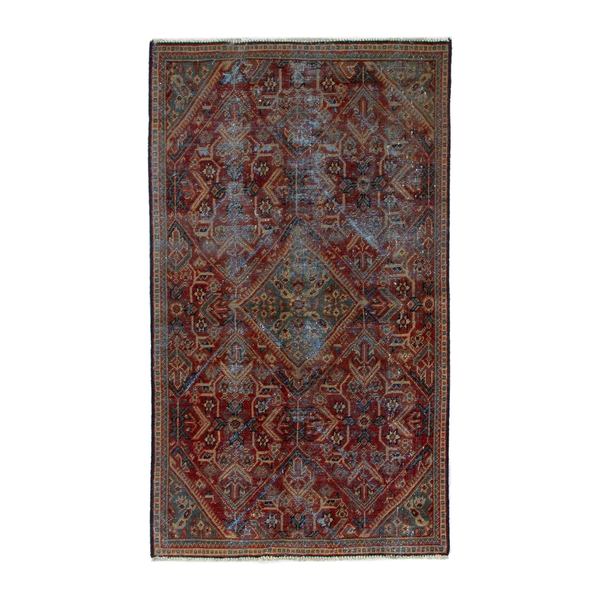
It holds dye and ages well. Wool takes natural dye deeply and then releases it slowly over decades, which is the whole reason a fifty-year-old rug looks the way it does. We wrote that up in why vintage colors age so beautifully.
It resists soiling. Each fiber carries a thin waxy layer that makes liquid bead before it soaks, which buys you the minute you need to blot a spill. It is not stain-proof; it is forgiving, which is different.
It does not burn readily. Wool is difficult to ignite and tends to smoulder and self-extinguish rather than flame. That is a genuine safety difference from most synthetics.
The cost is that wool is weakest when wet, which is why washing a rug is a job with a method — washing happens flat, with the water drawn off in the direction of the pile — and why scrubbing a wet wool pile hard is the fastest way to ruin one. For everyday care, cleaning a wool rug at home is the short version.
Cotton, which is what the rug is built on
You rarely see the cotton, because it is the foundation: the warp threads running the length of the rug and the weft threads passing across. The wool knots are tied onto that structure.
Cotton is used because it is dimensionally stable — it does not stretch under tension the way wool does — and because it gets stronger when wet rather than weaker, which matters every time the rug is washed. The fringe at either end of a rug is usually the warp, left exposed. That is why fringe damage is structural damage rather than a cosmetic problem.
Silk, and the thing sold as silk
Real silk appears in fine workshop pieces, usually as highlights rather than a whole rug. It takes dye brilliantly and catches light, and it is not durable underfoot; a silk rug belongs somewhere with no traffic.
The thing to be careful of is viscose, sold as "art silk", "bamboo silk" or "banana silk". It is regenerated cellulose, it looks convincing in a photograph, and it fails badly: it loses almost all its strength when wet, so a spill blotted with water leaves a permanent yellow-gray mark, and the pile crushes flat and stays flat. If a rug is described as silk at a price that seems too good, this is usually what it is.
What we do not sell
Jute and sisal are plant fibers, cheap and coarse, and they stain permanently. Polypropylene is plastic — hard-wearing, easy to clean, and it will still be intact in a landfill long after it has stopped looking like anything. Neither is a bad choice for a covered porch. Neither is what this site is.
A caution about material claims
We describe what we sell as hand-knotted wool pile on a cotton foundation, because that is what the weaving traditions we buy from used and what these rugs are. We do not fiber-test every piece individually, and we would rather say so than print a laboratory claim on 2,858 listings that we have not verified one by one. If the exact composition of a particular rug matters to you, ask us before you buy and we will tell you what we can actually see.
The construction is the part we can stand behind completely, and it is the part that decides whether a rug lasts: knots tied onto a warp with no adhesive anywhere in the structure. That is the difference set out in hand-knotted versus machine-made.