Natural Dyes: Why Vintage Colors Age So Beautifully

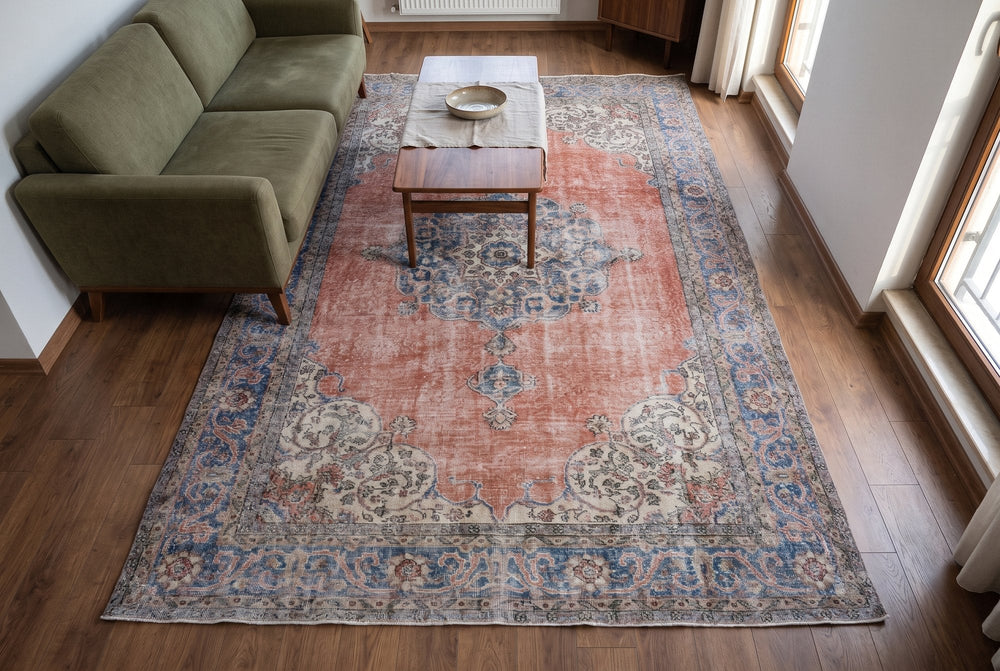
Vintage rug colors age well because of how the wool was dyed and because wool and dye soften together. Dyes made from plants, insects and minerals mellow with light and use instead of dropping out, and small differences between dye batches give the color depth. Fifty years of that turns a bright red into a warm rust or rose and a strong blue into a softer, smoky one.
What natural dyes are
Before factory dyes, weavers colored their wool with what the land gave them: roots, leaves, husks, insects and minerals.[1] Sellers often call them vegetable dyes, though not all of them came from plants. The dyer cleaned the wool, then simmered it in a pot with the plant or insect that held the color.
The wool was often treated first with a mordant, a mineral salt that helps the color grip the fiber so it does not wash out.[1] Without it, many natural colors fade fast.
It was slow, skilled work, and the results varied. The same plant could give quite different shades depending on the water, the mordant, the heat and how long the wool stayed in the bath. That variation is a big part of why old rugs look alive next to machine-made ones.

Where the classic colors come from
A few dyes turn up again and again in Persian and Turkish weaving.
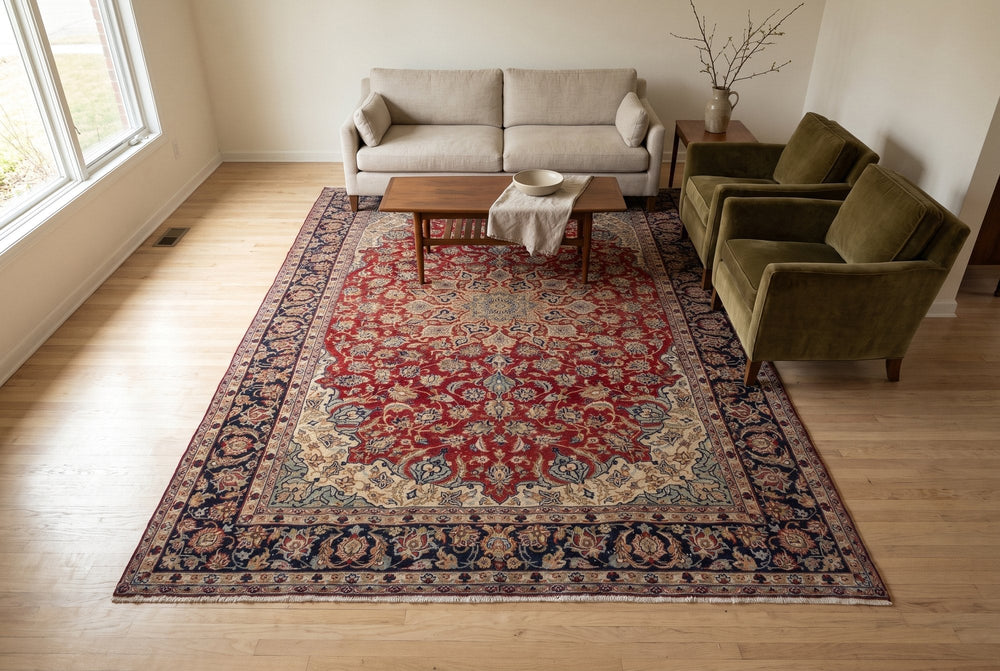
- Madder root gives the reds, from soft terracotta to deep brick and rose. Madder is a plant grown for its roots, and it sits behind most old reds.[2]
- Indigo gives the blues, from pale sky to inky navy. The wool comes out of the dye bath a yellowish green and turns blue as it meets the air. Each extra dip makes the blue deeper.[3]
- Weld and vine leaves give the yellows. Yellow dyed over indigo blue makes green.
- Walnut husk and pomegranate rind give the browns, tans and soft neutrals.
Greens and oranges were usually made in two baths, one color over another. That layering is why the mixed colors in an old rug have more depth than a single flat factory shade.
What abrash is, and why buyers like it
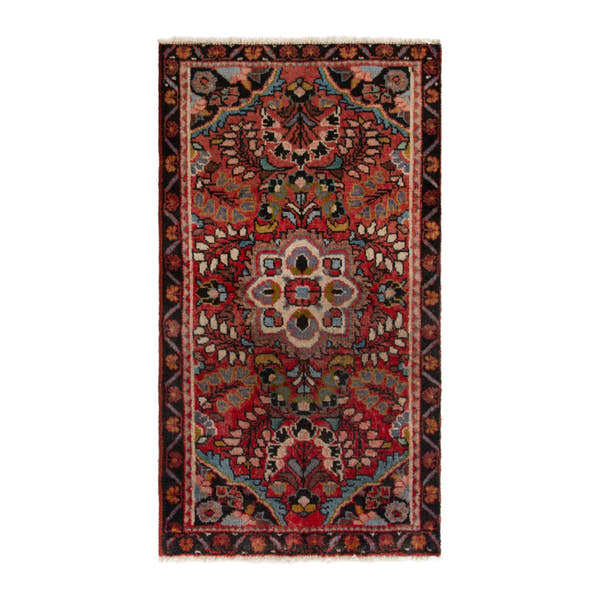
Look closely at a big area of red or blue in a vintage rug. You may see the color shift in soft bands, a stripe a shade darker here and a stripe a touch lighter there. That is abrash: gentle changes of color within one area of the rug.
It happens because wool was dyed in small batches.[4] When one batch ran out, the weaver dyed or bought more, and no two batches came out quite the same. A rug is woven row by row from one end to the other, so each new batch shows up as a band across the width.

People who know rugs look for it. Abrash gives a plain field movement and warmth. It is also a common sign that a rug was knotted by hand rather than printed or made by machine.

How natural dyes age
Natural dyes mellow. Years of light, footsteps and cleaning soften the edges of a color, and the whole palette settles into something warmer. A red that started bold eases toward rose or rust. Blues take on a smoky, weathered depth. That faded rose is the color of a grandmillennial room, as our grandmillennial rugs post explains.
The colors also soften together. The wool ages with the dye, and though each color fades at its own pace, the palette stays balanced. That gradual change is what gives an old rug its lived-in, sun-warmed look.
Sunlight does most of the work, so the side of a rug nearest a window often softens first.[5] Turning the rug around once or twice a year keeps the change even. Protecting a rug from sun, pets and spills has more on that.
Which natural dyes fade fastest?
Not every color fades at the same speed. Indigo on wool is one of the few plant dyes with low sensitivity to light, so old blues tend to hold their depth.[6] Madder reds sit in the middle, and how fast they fade depends on how strong the dye is and which mordant was used.[6] Most other plant colors are far more sensitive, especially yellows, oranges and greens.[6] So a green made from yellow over indigo can drift toward blue as its yellow fades first. That is why an old rug’s greens are often bluer than they began.
Natural and synthetic dyes: what changed
A synthetic dye is a color made from chemicals in a factory. The first ones appeared in the second half of the nineteenth century, and some of them looked harsh or aged badly.[7] A color could run, drop out in patches or turn muddy. That is where synthetic dyes got their bad name.
Later synthetic dyes are far more stable. By the 1970s many village weavers used them, sometimes alongside natural dyes in the same rug.[8] A good synthetic dye on good wool also softens evenly with time, and you usually cannot tell the two apart by eye.[8] So the fair way to judge a vintage rug is by how its colors look now: soft, even and still clearly separate from each other.
That is also the difference between an aged rug and an overdyed one, where one strong color has been laid over the whole rug. Overdyed vs naturally faded rugs shows how to tell them apart.
Can you dye a rug at home?
You can, but we would not do it to a hand-knotted rug. A rug is far bigger and heavier than the yarn a home dyer usually works with, so even color is hard to get, and an old rug’s own colors may bleed into the new bath. Commercial overdyeing usually strips the old color with strong chemicals first, which is how overdyed rugs are made. If a rug looks too bright or too faded for your room, a different rug is usually a better answer than a dye pot.
Why buyers look for the softened palette
You cannot rush this look. It takes decades, and it is hard to fake well. When you bring home an aged rug, the colors have already done their settling. They sit comfortably with your walls, your wood floors and your light instead of fighting them.
A softened madder red rug or a weathered indigo blue rug brings warmth without demanding attention. The muted beige and neutral tones are easy to build a whole room around.

What you see is the real color
Every rug is washed and restored by specialists we trust before it is listed, and each color is tested for bleeding before any water touches it. How our vintage rugs are washed and restored walks through the steps. We do not paint color back onto a faded rug, so the photos show the wool as it really is. To see how these old palettes look side by side, browse the full collection.
The drawing tells its own story, covered in reading a rug: motifs and what they mean. And what makes a vintage rug worth keeping covers what color tells you about condition.


Sources
- Caring for textiles and costumes. Canadian Conservation Institute.
- ‘Star Ushak’ Carpet (audio guide: Turkman Carpets). The Metropolitan Museum of Art.
- A Home Dyer’s Garden, Part III: Dyeing With Japanese Indigo. Utah State University Extension, 2024.
- Talish Carpet. Springfield Museums.
- Basic care: Carpets and rugs. Canadian Conservation Institute.
- Agent of Deterioration: Light, Ultraviolet and Infrared. Canadian Conservation Institute, Government of Canada.
- William Henry Perkin. Science History Institute.
- Afghan Carpets. Penn Museum, Expedition Magazine, 1973.