Mahal Rugs
Mahal rugs come from the villages around Arak in central Persia, the rustic, generously-scaled relatives of the finer Sultanabads.
Loose all-over patterns and soft, faded color make them genuinely easy to live with. Every piece is vintage, decades old, and mellowed by a lifetime of use.
Mahal rugs come from the Arak region of west-central Iran, where village weavers produced large, loosely knotted carpets for export throughout the twentieth century. The drawing is relaxed, with oversized floral motifs, simplified medallions or all-over herati patterns, and the overall effect is softer and more informal than city rugs.
The pile is medium and the foundation is cotton, and Mahal rugs are typically found in room sizes. Colours were often light: ivory and cream fields with rust, rose, soft blue and green, which is why Mahals became favourites of decorators looking for a Persian rug that does not dominate a room.
In our collection Mahal appears mostly in area and oversized formats. They suit bedrooms and quieter living rooms, and layer well with contemporary furniture because the pattern is large and open rather than dense.
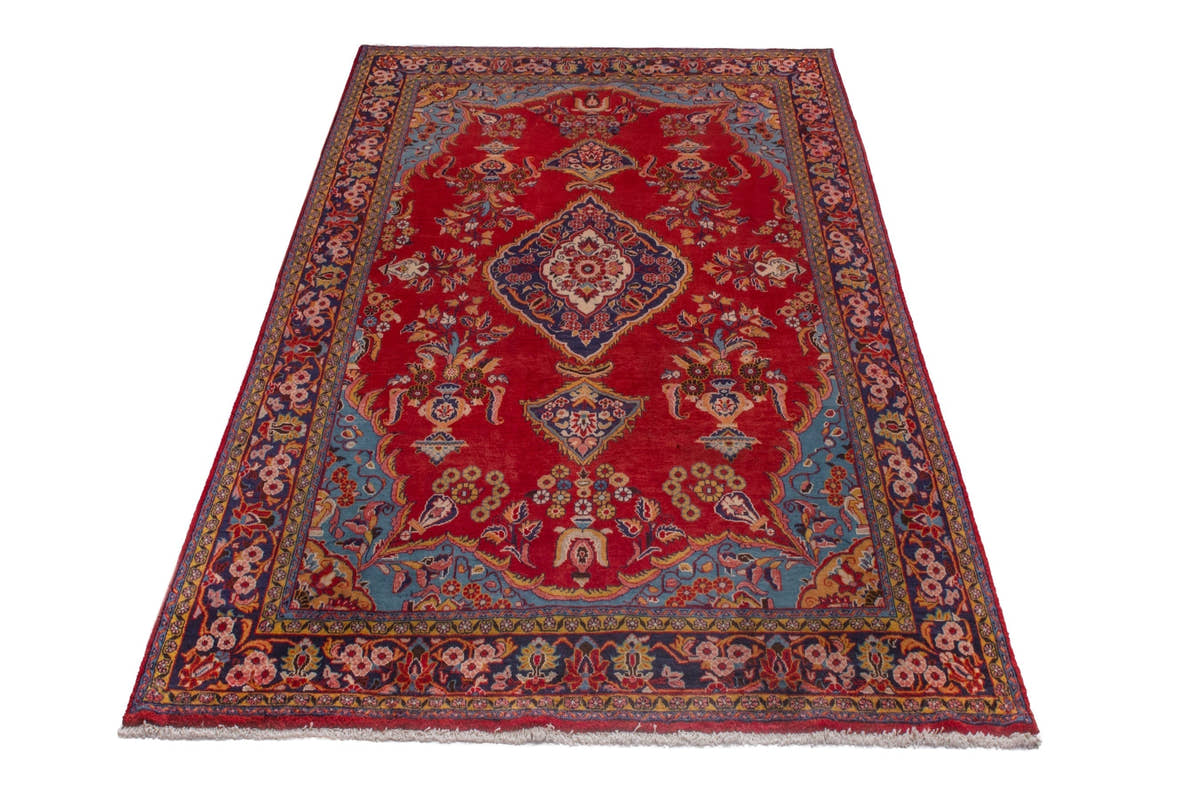
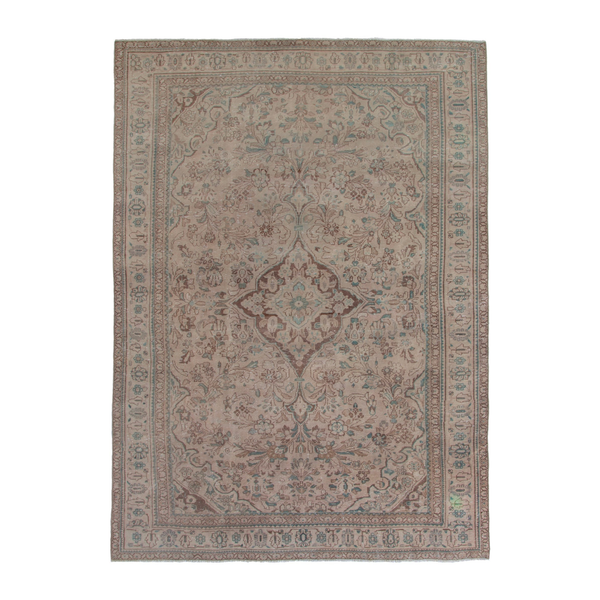


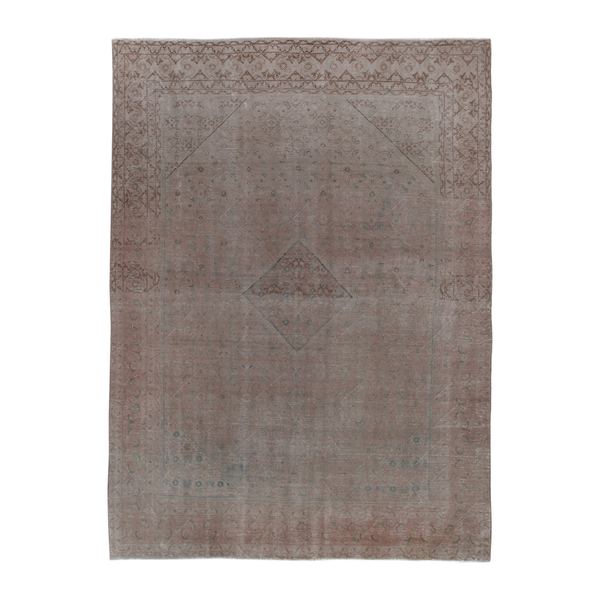
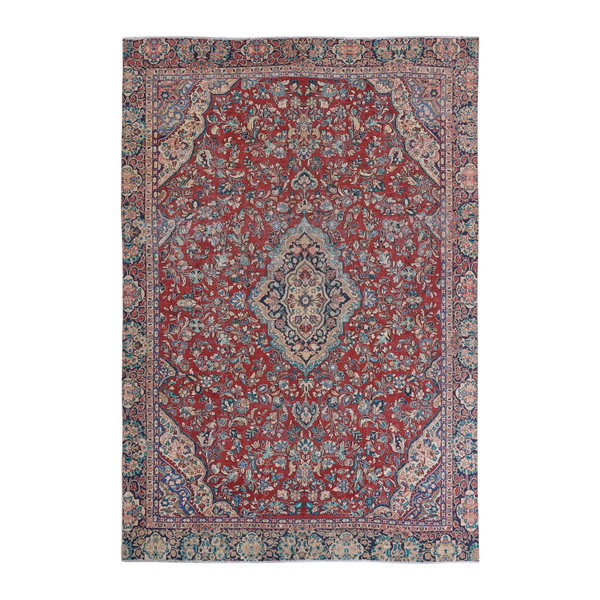


Mahal: large scale, open drawing from the Arak region
Mahal carpets come from the Arak region of central Iran, and they occupy a particular and much loved place in the market. They are village weavings, but woven at a size and with a spaciousness usually associated with workshops. The drawing is large in scale, the fields are relatively open, and the palettes tend toward soft rust, camel, faded gold and muted blue.
They are the carpets most people picture when they think of a big, gently faded antique Persian rug in a large room, and they have been sought after in Europe and North America for well over a century.
What to look for
- Scale: large scale drawing, often all over rather than medallion centered.
- Color: soft rust, terracotta, camel, faded gold, muted blue.
- Weave: village construction, generally robust, wool on cotton.
- Sizes: a strong source of genuinely large room carpets.
Where they work
Mahal is the classic large living room rug. Because the pattern is drawn big and the palette is soft, a Mahal fills a big floor without overwhelming it, and it takes furniture on top of it without the design being ruined. Open plan spaces suit them especially well.
They are also unusually good under dining tables. The all over pattern means that a table sitting in the middle does not obscure anything critical.
Why they read as faded
Partly dye choice, partly age. Mahal weavers used softer madder and gold tones to begin with, and a century of light has opened them further. On a good Mahal the ground will shift gently across the field rather than sitting at one flat tone, which is what gives them their depth from across a room.
Mahal rug questions, answered
Is Mahal the same as Sultanabad?
They come from the same region and the terms overlap in the trade. Sultanabad is generally used for the finer end of the same weaving tradition; Mahal for the more village worked pieces.
Are large Mahals hard to find?
Large antique carpets in usable condition are scarce everywhere, but Mahal is one of the better sources for them, which is a good part of why they command the prices they do.
Will a soft palette look washed out?
Only in very bright, very white rooms. In most interiors a Mahal reads as warm and settled rather than pale.
Choosing your Mahal
Size first, since that is where Mahal earns its reputation. Then look at how the ground color shifts across the field. Each rug is one of a kind.