Tabriz Rugs
Tabriz, in Persia's north-west, produces some of the most finely knotted rugs in Iran.
Look for crisp central medallions, all-over Herati patterns and a palette that runs from soft ivory to deep madder red. Every rug here is a genuine vintage piece, decades old and the only one of its kind.
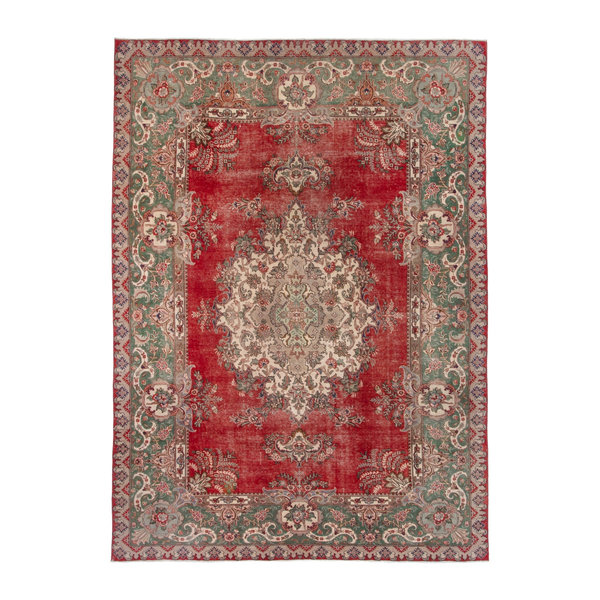
Tabriz, in north-western Iran, is one of the oldest and most influential carpet centres in the world, and its workshops set the standard for the classical Persian design vocabulary: central medallions with matching corner spandrels, dense floral fields, and elaborate borders drawn with precision.
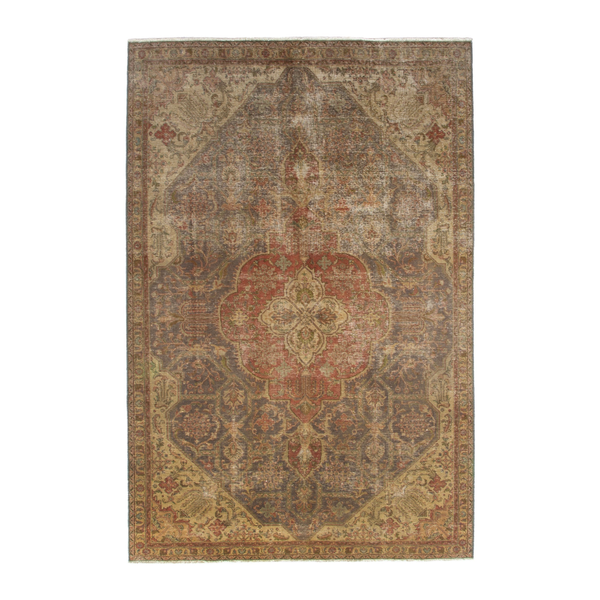
Tabriz rugs are woven on a cotton foundation with a symmetric knot, and the quality range is wide, from sturdy commercial grades to very fine pieces. Vintage examples from the 1960s and 1970s usually show a low, even pile and a palette of reds, blues and ivory, sometimes with the softer rose and grey tones that were fashionable for export.
Our Tabriz pieces run from area rugs to oversized room carpets. They are the choice when a room needs a traditional, formal rug that still holds up to daily use; the medallion layout works best with furniture arranged around it.






Tabriz: the most disciplined drawing in Persian weaving
Tabriz sits in the north west of Iran, close to the old caravan roads into Anatolia and the Caucasus, and it has been a working carpet city for longer than almost anywhere else in Persia. What separates a Tabriz from a village weave is not simply fineness, though the knot counts are usually high. It is that the design was drawn before it was woven. A Tabriz workshop worked from a cartoon prepared by a designer, and the weaver followed it. That is why the medallions close so cleanly, why the corner brackets mirror each other properly, and why a curved vine on one side of the field finds its twin on the other.
The pieces in this collection are vintage, which means they carry that precision alongside decades of real wear. The two together are what people are actually buying: a formal drawing that has been softened by use.
What a Tabriz usually looks like
The classic form is a central medallion on an open or densely floral ground, with matching quarter medallions in the corners. Palettes run from ivory and soft blue through to deep madder and indigo, and the wool is often clipped low, which is part of why the drawing reads so crisply. You will also see Tabriz workshops producing repeating all over patterns, garden designs and, less commonly, pictorial panels.
- Knotting: generally fine, worked on a cotton foundation.
- Pile: usually low, which keeps fine detail legible.
- Color: broad range; ivory grounds and blue florals are common, as are rust and madder fields.
- Scale: Tabriz produced in every size, from small accent pieces to genuinely large room carpets.
Where a Tabriz works in a house
A Tabriz is the safest choice when a room is already busy. The symmetry gives the eye somewhere settled to rest, so it holds up under a patterned sofa or a gallery wall in a way a bold tribal weave sometimes will not. Dining rooms suit them particularly well, partly because the low pile takes chair legs without matting, and partly because a centered medallion under a centered table simply looks correct.
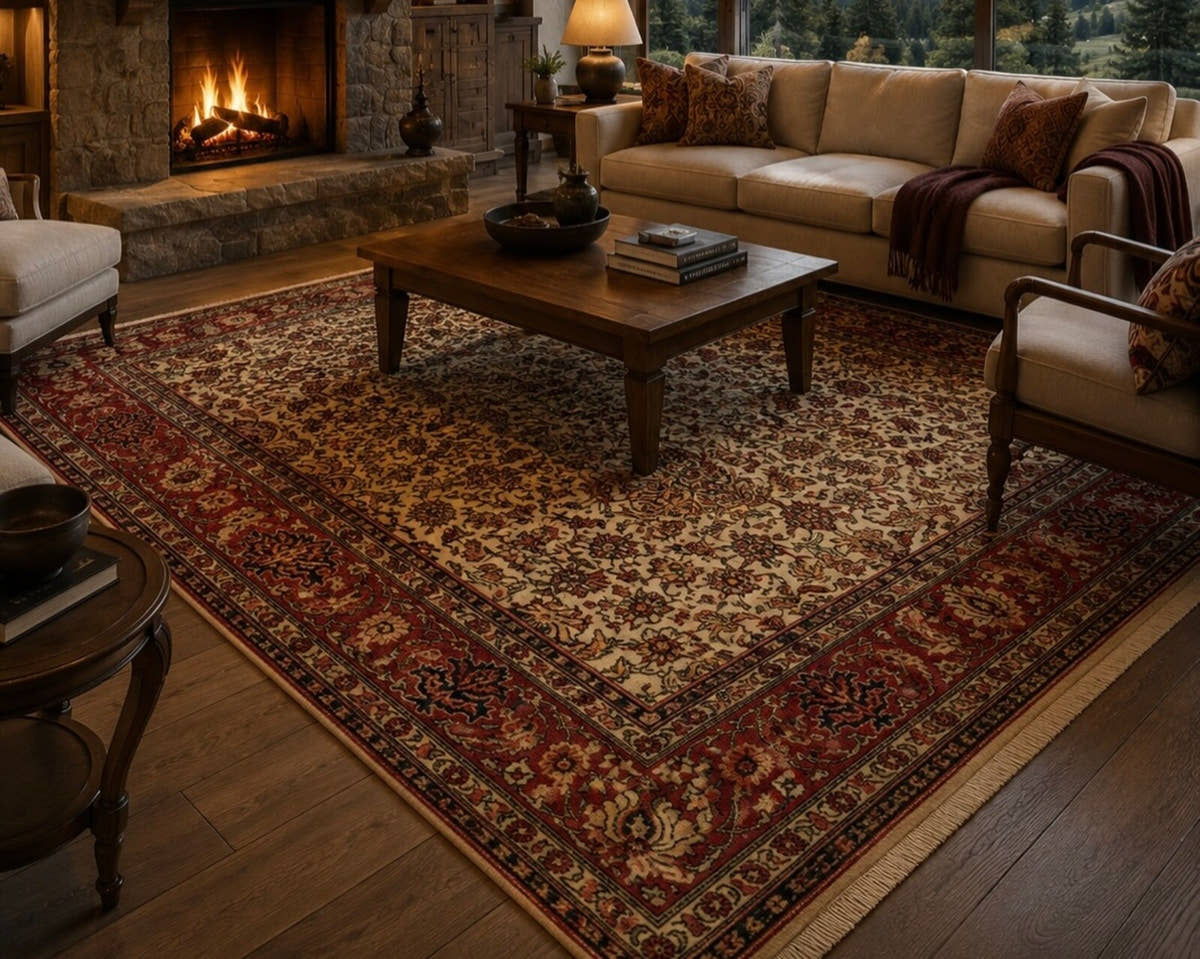
In a living room, let the medallion sit in open floor rather than burying it under a coffee table. If the rug has to run under seating, an all over Tabriz pattern is usually the better pick than a medallion one.
Reading age in a Tabriz
Because the pile is low to begin with, age in a Tabriz shows first as a gentle sheen along the traffic line rather than as bald patches. Ivory grounds warm toward cream. Blues drift slightly gray. None of that is damage; it is what separates a carpet with fifty years behind it from a new one woven to look old. Every piece here has been washed and inspected before it reached the floor.
Tabriz rug questions, answered
Is a Tabriz too formal for a relaxed room?
Only if you pick a high contrast one. A Tabriz with an ivory ground and faded blue drawing reads quiet and almost neutral. The formality comes from strong contrast, not from the design itself, so choose a softer palette and the same rug becomes easy company.
How does a Tabriz differ from a Kashan?
They are cousins. Kashan tends to run warmer and denser, with a deep madder ground and a fuller field. Tabriz is generally more open, cooler in palette, and more architectural in the way the medallion is drawn.
Does the low pile mean it will wear out faster?
No. Low pile in a city weave usually means a high knot count and a tight, dense foundation, which is why these carpets survive a century of use. The pile is short because the drawing needs it short, not because there is less wool holding it together.
Choosing your Tabriz
Work from the ground color outward. Decide whether you want ivory, madder or blue holding the room, then look at scale, then at how strongly the medallion reads. Every rug on this page is one of a kind, so if a piece is right for the room it is worth taking it seriously; it will not be restocked.
Weighing a Tabriz against a Heriz? Heriz vs Tabriz compared sets the two side by side.