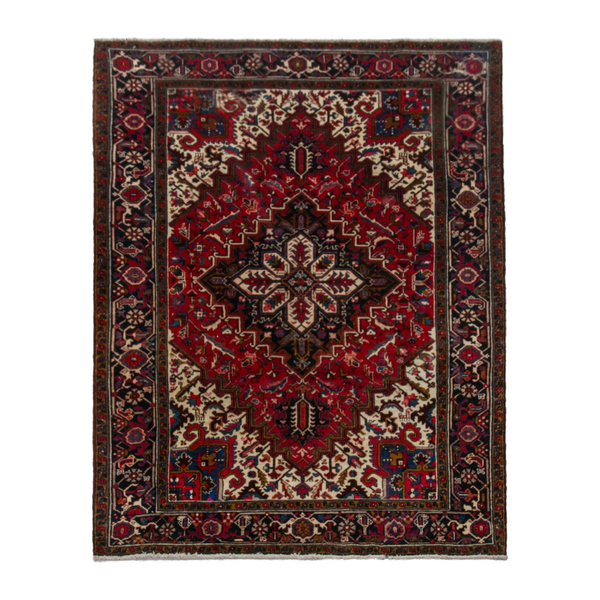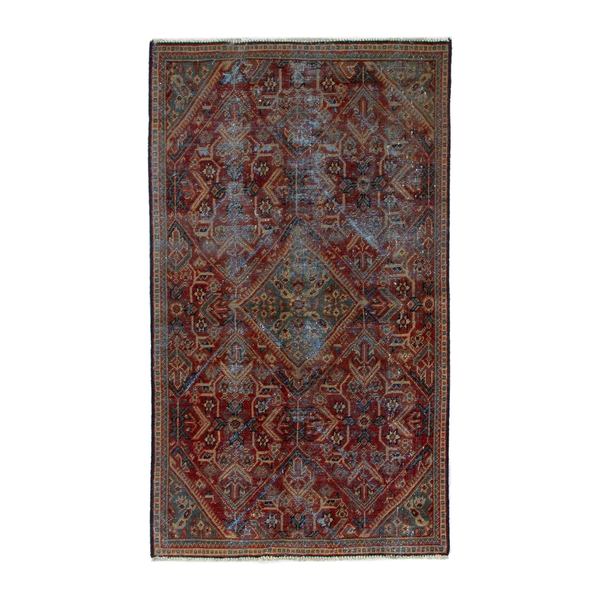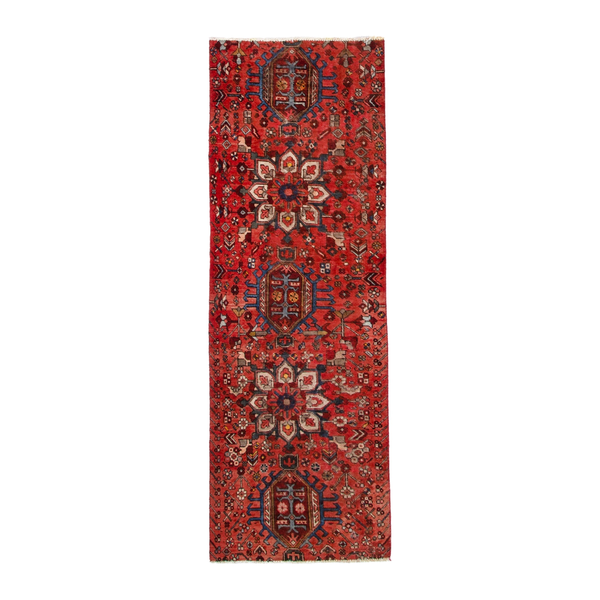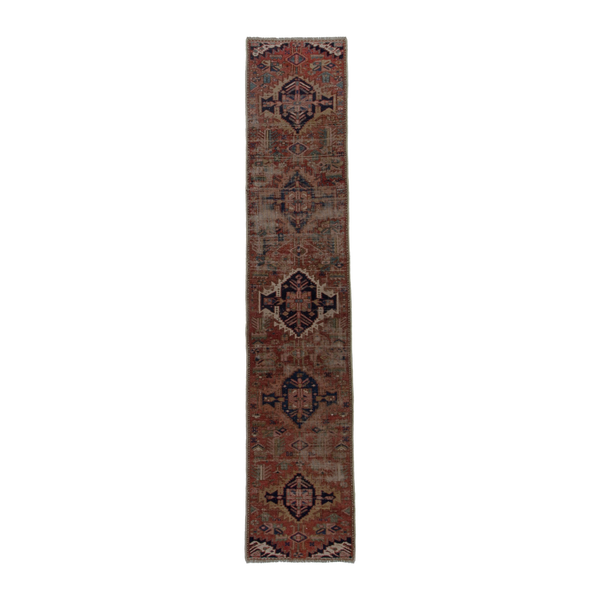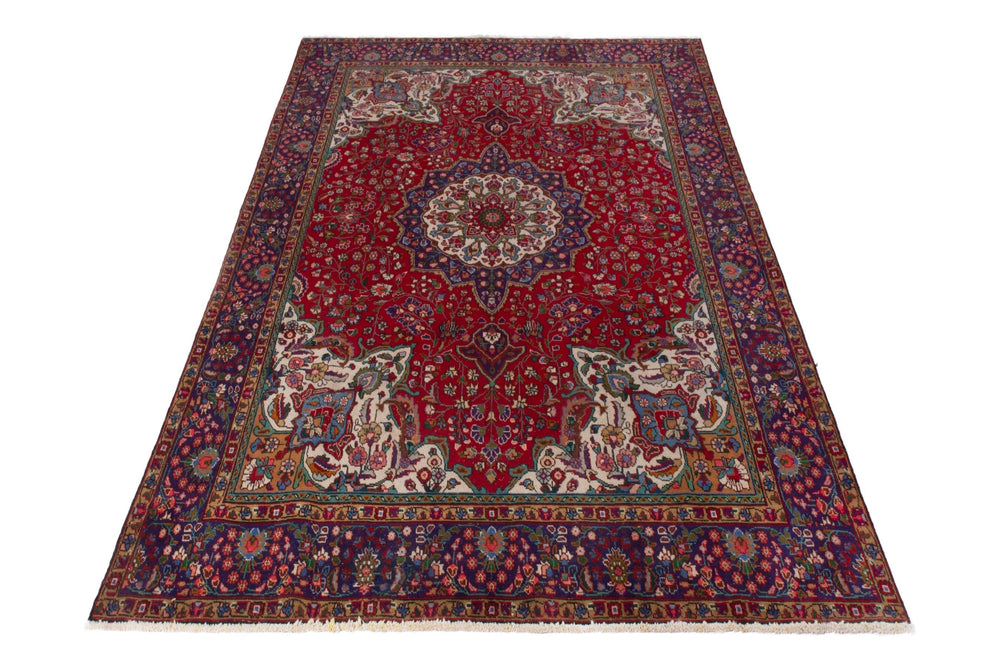
Most of what we sell was woven in villages by people who were also farming. Tabriz was not that. It is a city in north-west Iran with a commercial weaving industry that goes back centuries, and the rugs that carry its name were made in workshops, to drawings, by people whose job was weaving. You can see it in every one of the 123 we currently hold.

Four in ten are room-sized, and that is unusual here
Start with the number that surprised us when we measured it. Across our whole catalog, about one rug in eight is 75 square feet or larger. Among Tabriz rugs it is four in ten — 50 of 123.
That is not an accident of buying. Village looms were built to fit a room in a house, which caps how wide a rug can be. A workshop builds the loom to fit the order. When a 1970s buyer wanted a nine by twelve for a formal room, Tabriz is where that order went.
The flip side is that the middle is thin. There are 36 Tabriz rugs under 25 square feet and 50 over 75, with only 37 in between. If you want a standard five by eight, the Isparta and Hamedan shelves are deeper. If you want something large, this is the first place to look.
The drawing is planned, not remembered
A village weaver works from memory and habit, and the pattern drifts a little as the rug grows — that drift is much of the charm of a Hamedan. A Tabriz was drawn out first. The medallion sits where it was meant to sit, the corner spandrels answer it exactly, and the border keeps its width from one end to the other.
The vocabulary is curvilinear rather than geometric: flowing vines, palmettes, arabesques, a centered medallion. This is the direct descendant of the Safavid court style we wrote about in who invented rugs, filtered through four hundred years of commercial production.
If you want the other Persian answer to the same question, the geometric one, Heriz is woven barely sixty miles away and could not look more different. We put the two side by side in Heriz vs Tabriz, which is the fastest way to work out which one is for you.

Color
Deep red leads 56 of our Tabriz rugs and burgundy another 49, then cream 29, navy 19 and faded red 14. It is a warm, saturated palette and it does not apologize for itself. If you have been looking at the pale Turkish side of this site and found it too quiet, this is the opposite end.
Fifty years have moved those colors, evenly, the way they move in any well-made wool rug — natural dyes and how they age covers what is actually happening there.
What they cost
Ours run from $225 to $2,915, with a median of $1,010. For comparison, the median across all our Persian rugs is $600. Tabriz is the expensive end, and the reason is arithmetic rather than prestige: these rugs are bigger and finer, and both cost weaving hours.
It is worth knowing which of the two you are paying for. Our full breakdown of what determines the cost of a rug shows that size moves price more than anything else, and Tabriz is where size and fineness arrive together.
All of them are low pile
Every Tabriz we hold, all 123, has a low pile. For a finely drawn rug that is what you want: the detail stays legible under your hand instead of disappearing into depth. It also means the rug lies flat, clears doors, and lets a dining chair push back without catching — which matters, because a formal dining room is exactly where these rugs tend to end up.
Who should buy one
Someone with a room that has to look finished, and the space to do it properly. A Tabriz is not a casual rug; it will be the most composed thing in the room and it will make everything else look more deliberate.
It is the wrong rug if you want something you can move around, layer, or stop noticing. For that read the Isparta guide instead.
The whole collection is at Tabriz rugs, and if the room is the open question rather than the rug, start with size.