Choosing the right rug size is the single decision that makes or breaks a room. The color can be perfect and the weave exquisite, but a rug that is even a foot too small will make the whole space feel unfinished, like a painting in the wrong frame. The good news is that getting it right is not guesswork. It comes down to one habit and a handful of proportions you can measure in five minutes.
At Storied Rugs, every piece we sell is a one-of-a-kind vintage rug, so the size you fall for is the size you get. That makes measuring first, before you fall in love, the smartest thing you can do. Here is exactly how we help customers size a room.
Measure the space, not the rug
Before you look at a single rug, put painter's tape on the floor where you imagine its edges sitting. Live with that outline for a day. Walk around it, pull a chair up to it, see how it reads from the doorway. It is the fastest, cheapest way to know whether a size will feel generous or cramped, and it costs you nothing but a strip of tape.
When you measure, write down the full dimensions of the room as well as the “island” of furniture you want the rug to anchor. Rugs are sold in feet and inches and in centimeters, and every listing on our site gives you both, so you never have to convert in your head.

The golden rule: furniture belongs on the rug
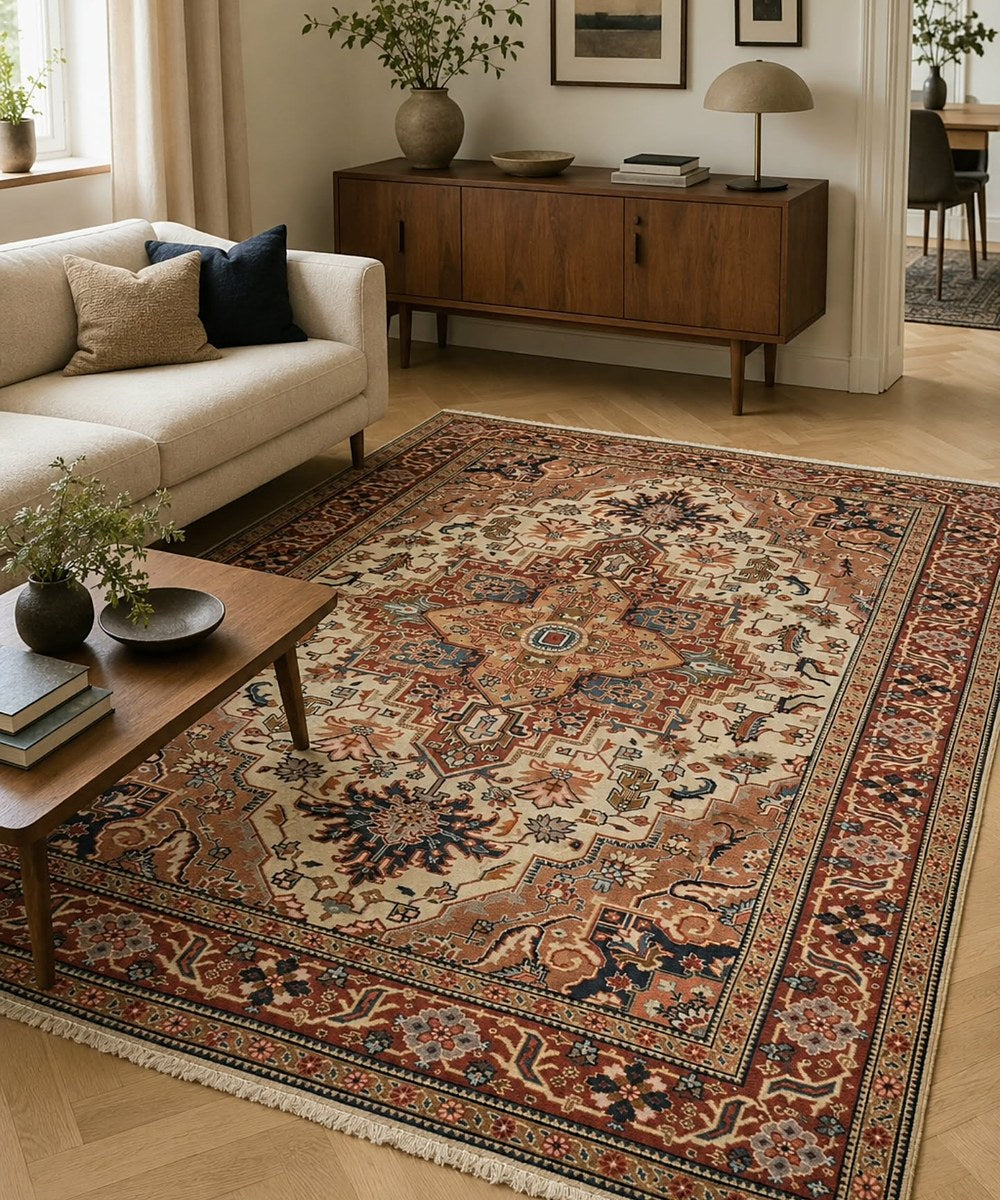
The most common sizing regret is a rug that floats in the middle of a seating area with every chair leg stranded on bare floor. As a guide, an area rug should sit under at least the front legs of your sofa and chairs, and ideally under all of them. That single move ties the furniture together and instantly makes a room feel considered rather than accidental.
For most living rooms, that means an area rug in the 8×10 or 9×12 range. Smaller footprints can work in apartments and reading nooks, but when in doubt, size up. A slightly larger rug almost always looks more expensive than a slightly smaller one.
Room-by-room sizing
Living room
Aim to leave a border of bare floor, roughly 8 to 18 inches, between the edge of the rug and the walls. In a large open-plan space, go bigger and let the rug define the seating zone. Our oversized rugs (9×12 and up) are made for exactly this kind of room-filling statement.
Bedroom
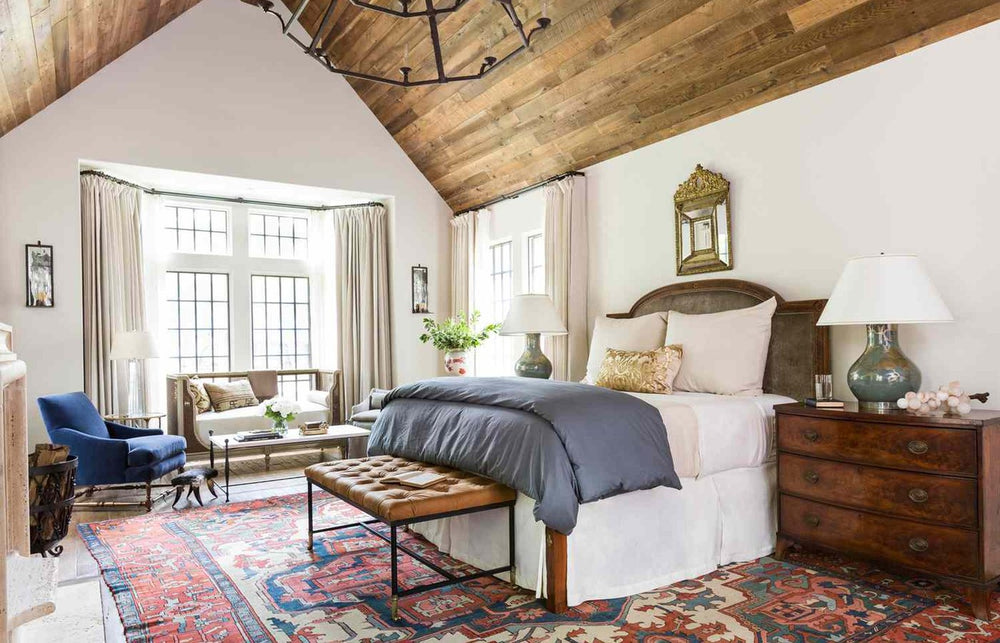
There are two classic approaches. Either place one large rug under the lower two-thirds of the bed so it frames the room, or flank the bed with a pair of smaller pieces so your feet land on wool each morning. Both look intentional; a small rug marooned at the foot of the bed rarely does.
Dining room
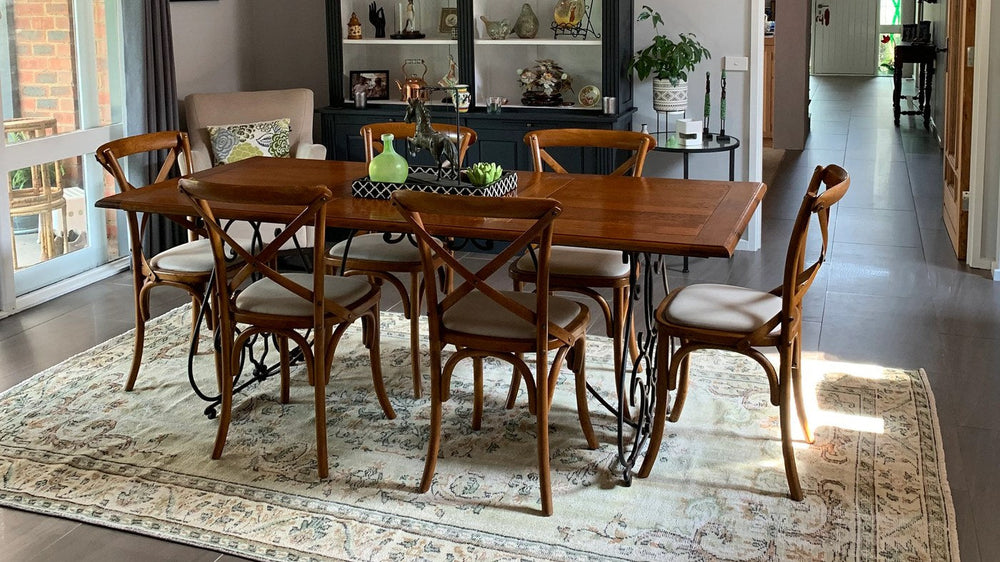
This is the one people get wrong most often. Your rug needs to be large enough that the chairs stay on the rug even when pulled out. Measure your table and add at least 24 inches on every side. Anything less and the back legs catch the edge every time someone sits down.

Hallways and kitchens
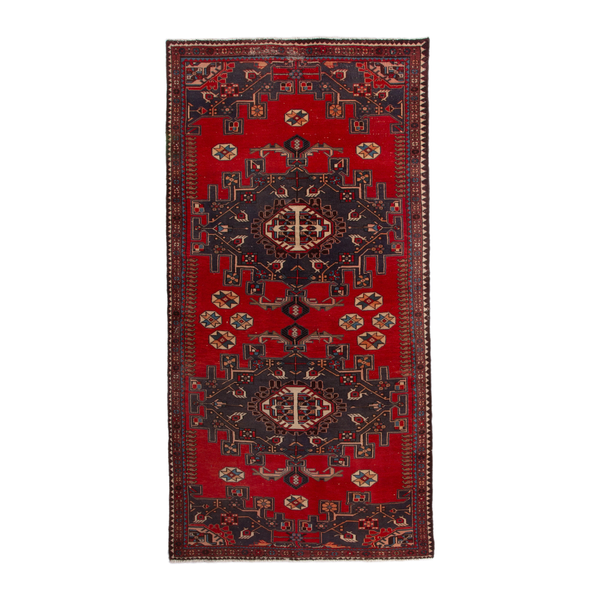
Long, narrow spaces call for runners. Leave a few inches of floor visible on either side and at each end so the runner looks placed rather than wedged. We cover this in detail in our guide to choosing runner length, but the short version is: measure the walkable length, then subtract about a foot total.
When a room falls between sizes
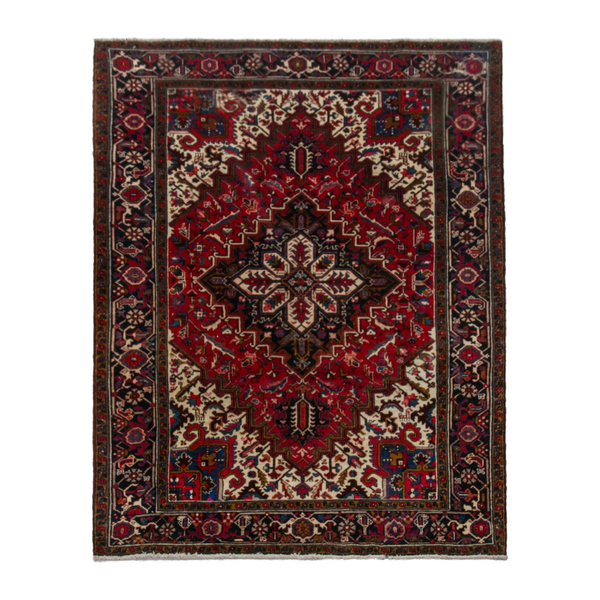
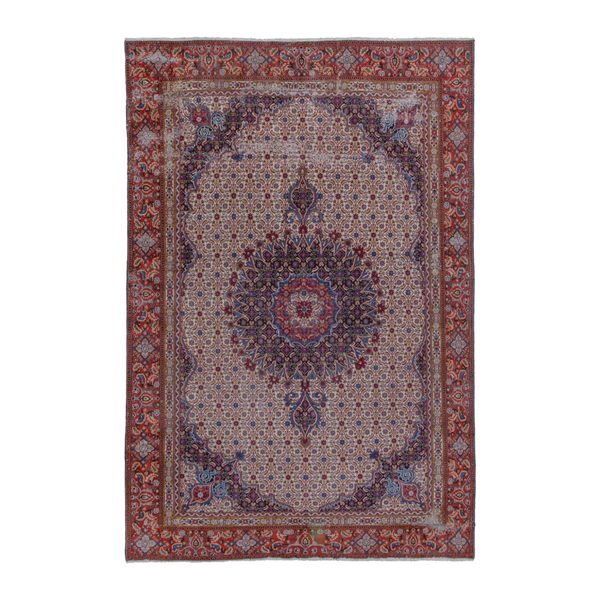
Vintage rugs were woven by hand, one at a time, so they rarely arrive in tidy showroom dimensions. A piece might measure 7’9” × 10’7” rather than a neat 8×10, and that is part of the charm. If a room sits between two standard sizes, we almost always recommend the larger option. Extra rug reads as intentional; a gap of bare floor around a too-small rug reads as a mistake.
If you are torn between two pieces, send us your room dimensions. Our team handles these rugs every day, and we would far rather help you find the one that fits than sell you the one that doesn't.
A quick checklist before you buy
- Tape the outline on your floor and live with it for a day.
- Confirm the front legs of your furniture will sit on the rug.
- For dining rooms, add 24 inches beyond the table on every side.
- Leave a consistent border of bare floor around the edges.
- When you are between sizes, choose the larger one.
Get the proportions right and everything else, color, pattern, age, has room to shine. Browse our full collection of one-of-a-kind vintage rugs, filter by the size you need, and if you would like a second opinion, our size guide and team are here to help you place it perfectly.
Taking it room by room from here: what size rug goes under a queen bed handles the bedroom, and choosing the right runner length covers halls and kitchens.