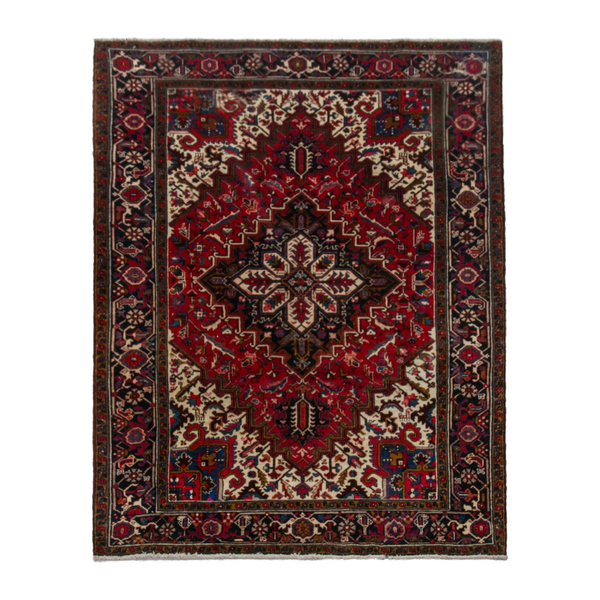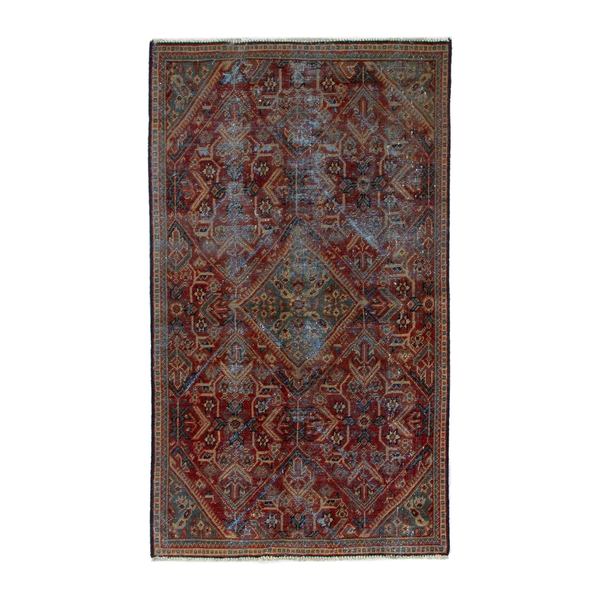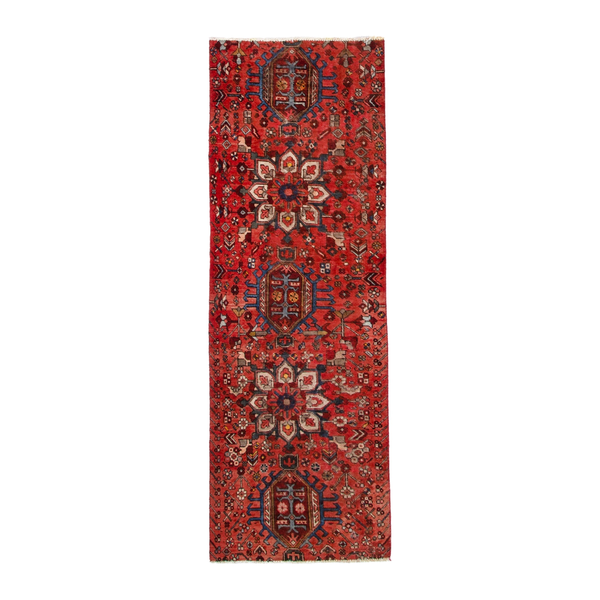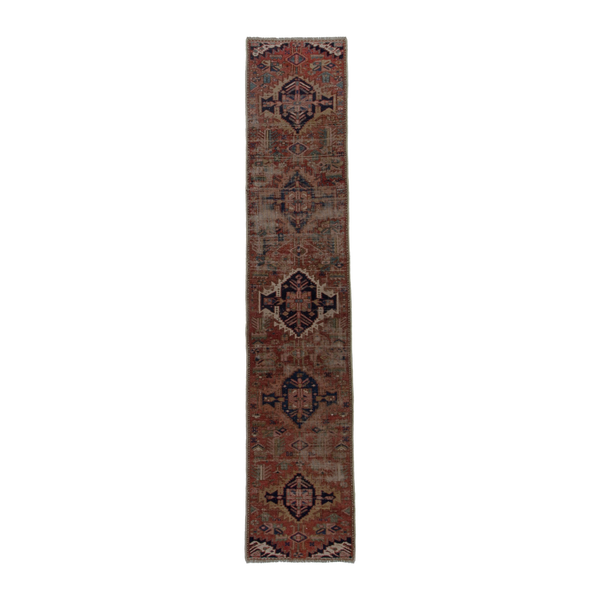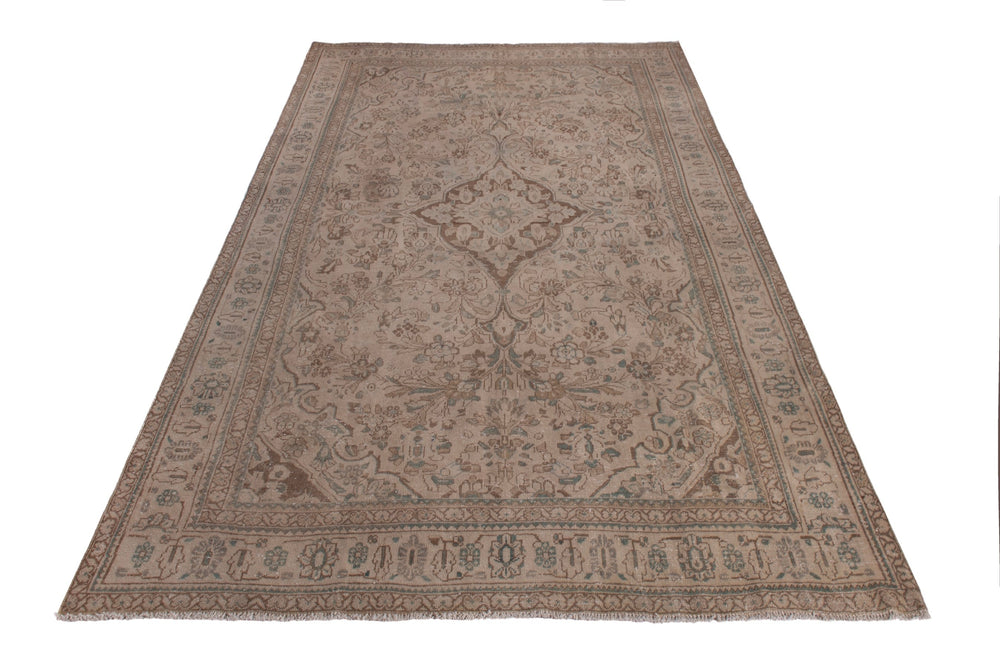
Mahal is a grade name rather than a village. It came out of the Arak region of central Iran, and it described rugs woven for export in room and oversize formats, at a coarser knot than the fine city work. That sounds like a criticism and it is not. A coarser knot means thicker wool, a bolder drawing and a rug that takes fifty years of use without thinning.

Made to be big
A quarter of ours are over seventy-five square feet, and most of the rest are room size. This is not an accident of buying. The whole purpose of the Mahal grade was to fill large western rooms, and the weavers worked to that brief. If you have an open plan and have been struggling to find genuinely old rugs at the right scale, this is one of the few origins that reliably delivers them. Our note on placing a rug in an open plan covers the sizing.
Color and drawing
Deep red, burgundy and navy carry almost all of them, with rust and the occasional greige. The drawing is large scale: big palmettes, generous vine work, a medallion that is often only loosely centered. Compared with a Kashan the Mahal looks relaxed, almost sketched. Compared with a Heriz it is softer and more curved.
How to recognize one
Scale of the pattern. If the motifs are large enough to read across a room, Mahal is a good guess. The knot. Turn a corner: the knots are visibly bigger than on a city rug, which is exactly why the rug has survived. The palette. Red ground, navy border, cream drawing is the common combination.

What they cost
From about $330 for a small piece up to $4,900 for the largest, with the middle around $900. For an oversized hand-knotted Persian rug that is a low number, and it is low precisely because the grade was never the prestigious one. Browse the Mahal collection.