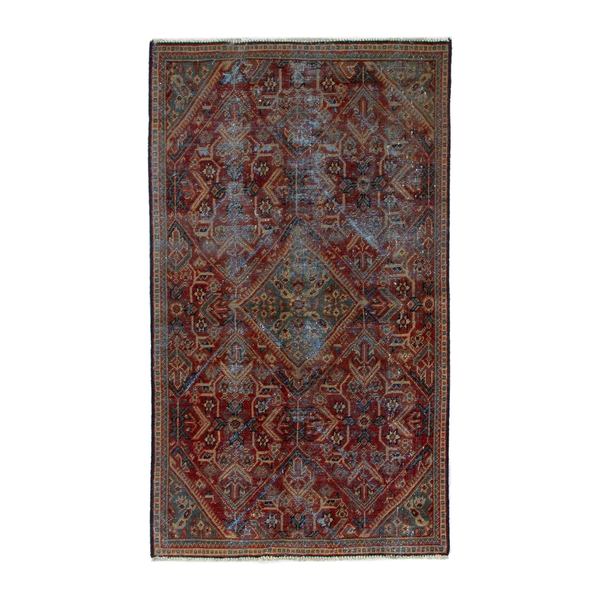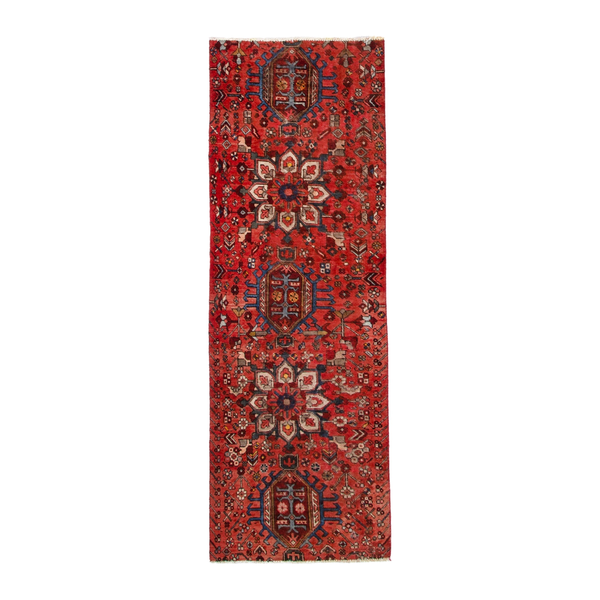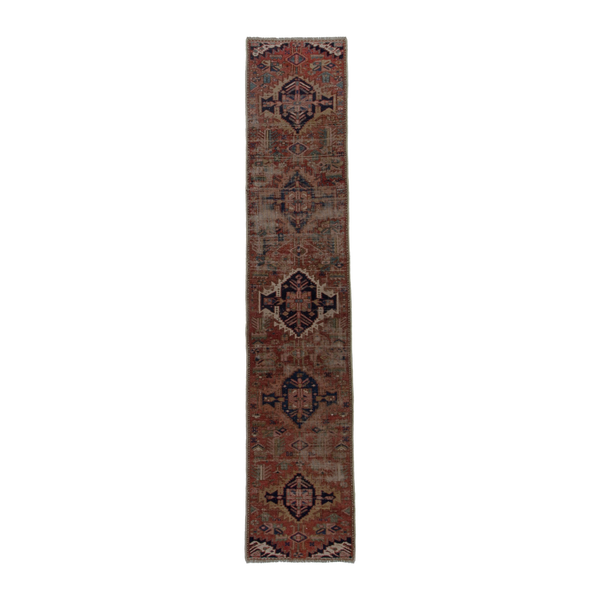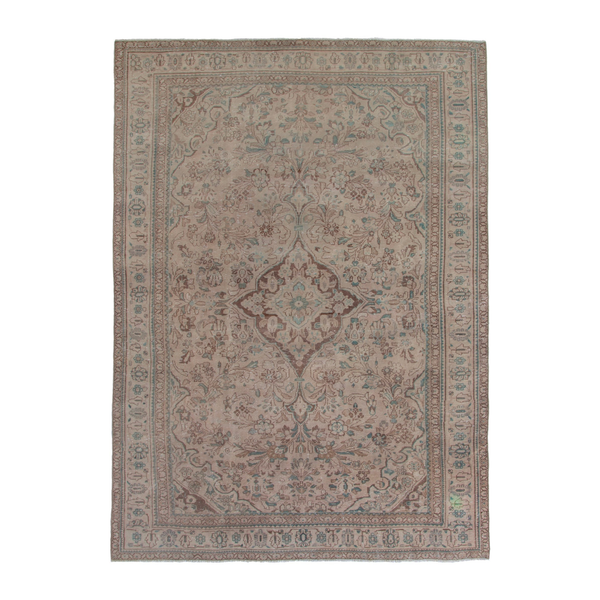
A kilim is not a kind of rug so much as a way of making one, and the difference matters more than almost anything else you will read about them. We should also say this early: we do not hold kilims. Every one of the 2,828 rugs on this site is hand-knotted pile. If you are here to buy a kilim today, we are not the shop; but by the end of this you will know exactly what to look for, and whether a kilim is really what the room needs.
No knots at all
A knotted rug is built by tying thousands of short lengths of wool around the warp threads and trimming them flat. Those cut ends standing upright are the pile; the thing your foot sinks into.
A kilim has none of that. It is woven flat, the colored weft passing over and under the warp and packed down hard so the warp disappears entirely. What you get is a single layer of cloth, usually two to five millimeters thick, with the pattern built into the structure rather than standing on top of it.
The fastest way to identify one is to turn it over. A kilim looks essentially the same on both sides, because both sides are the same thing. A knotted rug shows you the knot heads and the foundation grid on the back, a completely different surface from the front.

The slits are the signature
Across Anatolia the common technique is slit weave. When two colors meet along a vertical line, each weft turns back at its own color boundary instead of interlocking with its neighbor, and a small slit opens between them. Hold a kilim up to a window and you can see daylight through them.
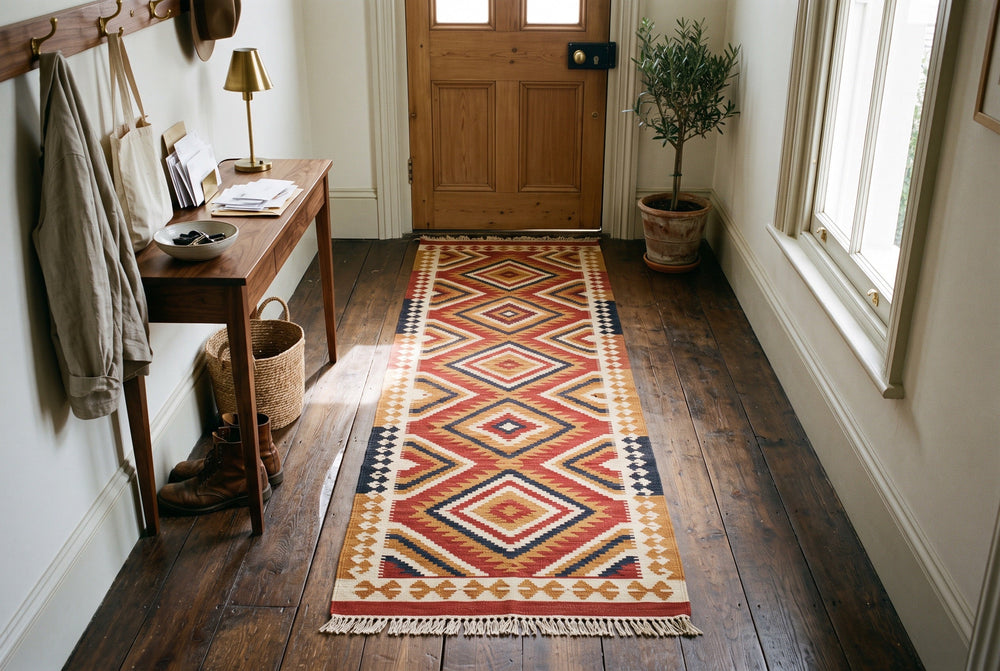
This one structural fact explains the entire visual language. A long vertical edge would mean a long, weak slit, so weavers avoid them. Shapes are built on the diagonal and in steps instead: hooked lozenges, stacked triangles, zigzag bands, stepped medallions. What reads as a bold tribal style is really a technique refusing to draw a straight vertical line. If you enjoy that kind of decoding, reading a rug goes further into what the motifs meant to the people weaving them.

Where they come from
Flatweaving is older and more widespread than knotting, and kilims were woven across Anatolia, Iran, the Caucasus, Central Asia and the Balkans. A large part of that production was never commercial at all: kilims were made at home, for the house, for a dowry, for wrapping and storing things. That is part of why the older ones feel so unselfconscious. Nobody was designing them for a showroom.
What a kilim is genuinely good at
There are four honest reasons to want one. It is thin, so it slides under a door that will not clear a pile rug and it sits flat in a tight hallway. It is light, so one person can pick it up, shake it out and move it to another room. It is reversible, which quietly doubles the life of the side that faces the traffic. And it layers beautifully, either as the quiet base under something patterned or as the patterned piece over sisal; we went through the pairings in layering rugs over carpet and hardwood.
And what it is not
A kilim gives you almost no cushioning. In a bedroom where you want warmth underfoot in February, or a nursery floor, that is a real loss. Being thin and light, it also slides, so a good pad stops being optional; see rug pads 101.
The slits are the structural weak point. Under a heavy chair leg that is dragged rather than lifted, or over years in a doorway, they can open and need resewing. Claws find them too. And a flatweave hides less than a pile rug does: crumbs sit on the surface, and a spill reaches the structure straight away rather than being held in the pile for the minute it takes you to blot it.
How to judge one
Look at the back first. It should be nearly a mirror of the front. If the reverse is fuzzy, glued, gridded, or the pattern is visibly printed rather than woven, it is not a handmade kilim.
Then look at the edges. A handwoven kilim finishes with its own selvedge, the warp wrapped and bound as part of the weaving. A machine-made piece is cut from a roll and bound or serged afterward, and the edge reads as a separate added thing.
Then the wool. Natural-dyed wool almost always shows abrash, a soft horizontal banding where one dye lot ended and the next began. It is a sign of hand work, not a defect. Rub a damp white cloth across a dark area; good dye barely marks it. And check the slits themselves along the length of the rug; a few resewn ones are normal in an old piece and no reason to walk away, a run of open ones is.
Why we do not stock them
We buy one thing, and we buy a lot of it: vintage hand-knotted wool pile on a cotton foundation, washed and restored before it is listed. Holding to a single description is what lets us be specific about every rug on the site instead of vague about all of them. A kilim is a different craft with different faults and different repairs, and doing it properly means learning it properly. So for now, none.
If it was the thinness you wanted
This is worth checking before you rule us out, because it is the most common reason people shop for a kilim. Of our 2,828 rugs, 2,723 are low pile. That gets you most of what the thinness was for: doors clear, chairs push back, the drawing stays legible, and there is no shaggy pile to flatten in a walkway. Our runners and mini and accent rugs are where that matters most.

If it was the geometry you wanted
Then look at the 14 Anatolian rugs, and at the wider Turkish collection behind them. Anatolian village weavers worked in the same visual language whether they were flatweaving or knotting; the stepped medallions, the hooks, the angular borders are all there, just rendered in pile. It is the closest thing we have to a kilim, and unlike a kilim it will feel like something under your feet.
Whichever way you go, the honest test is the one at the top of this page: turn the rug over. The back tells you what it is.