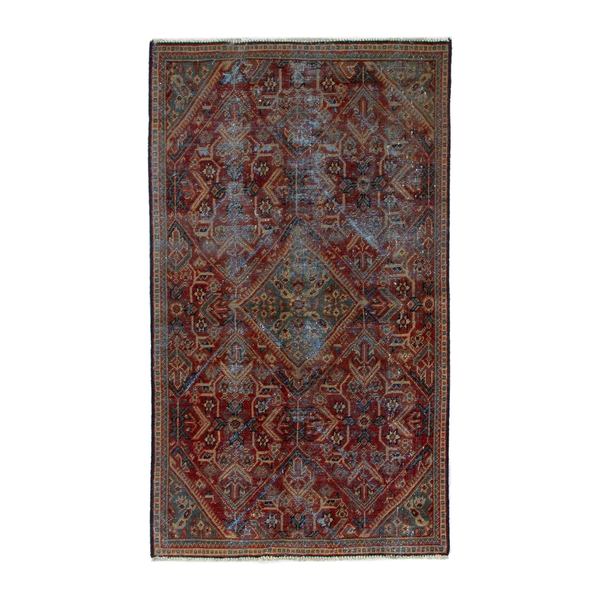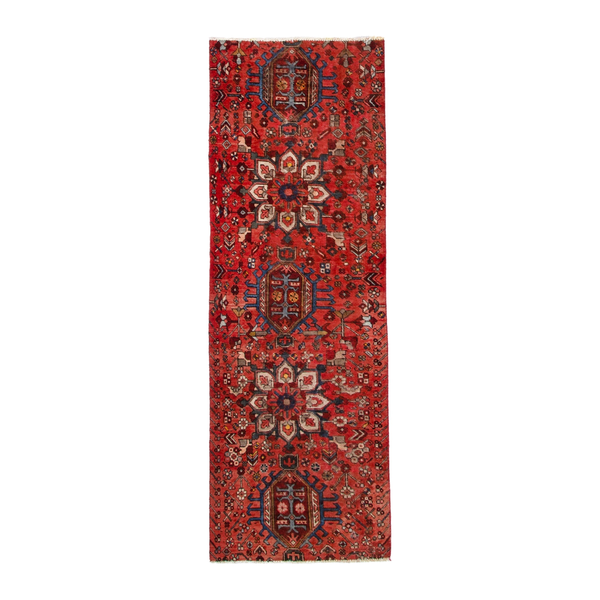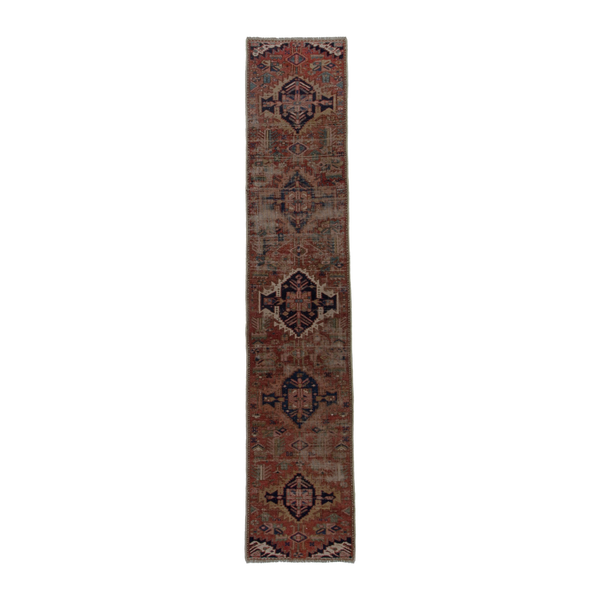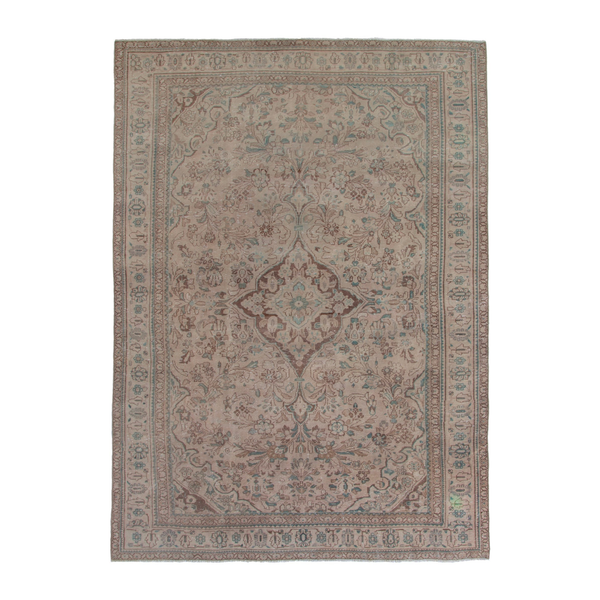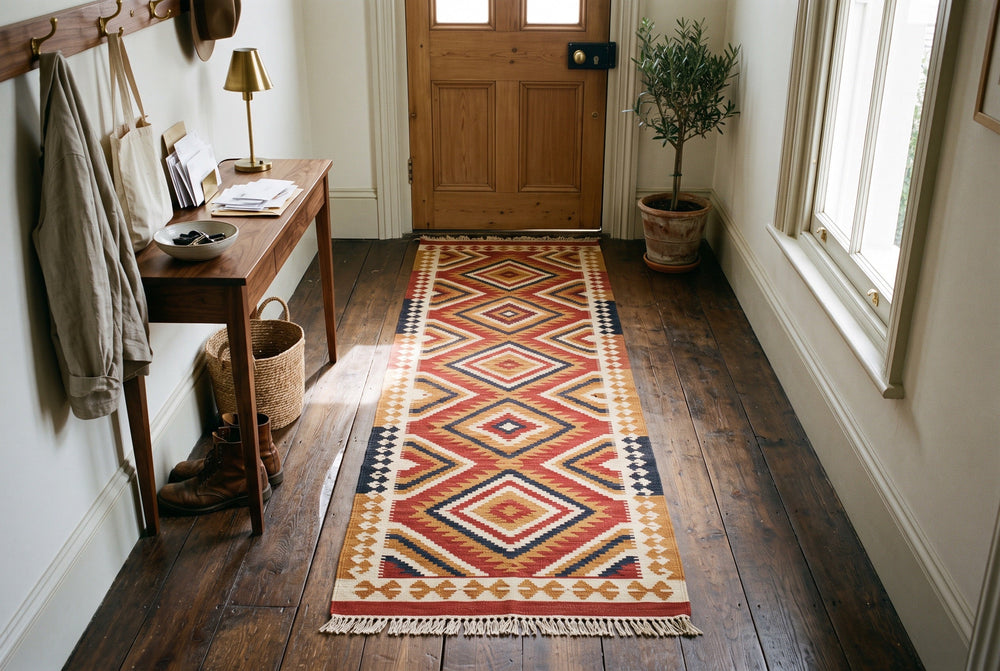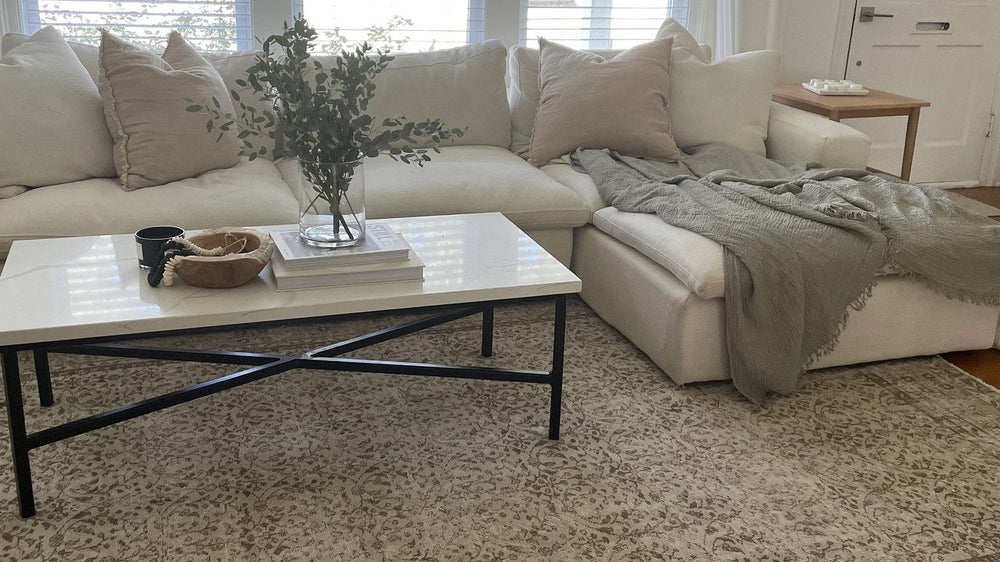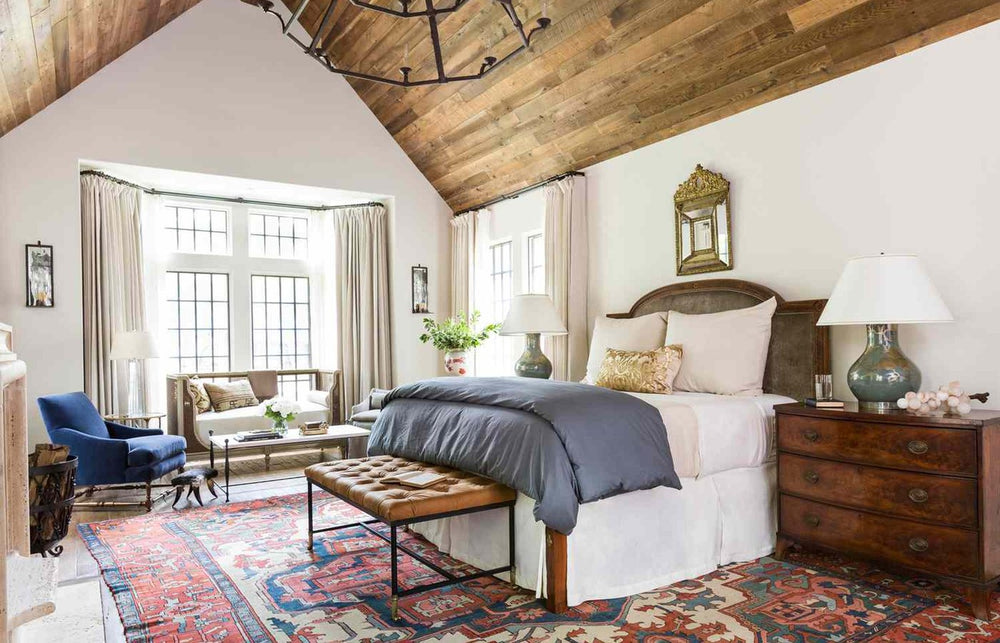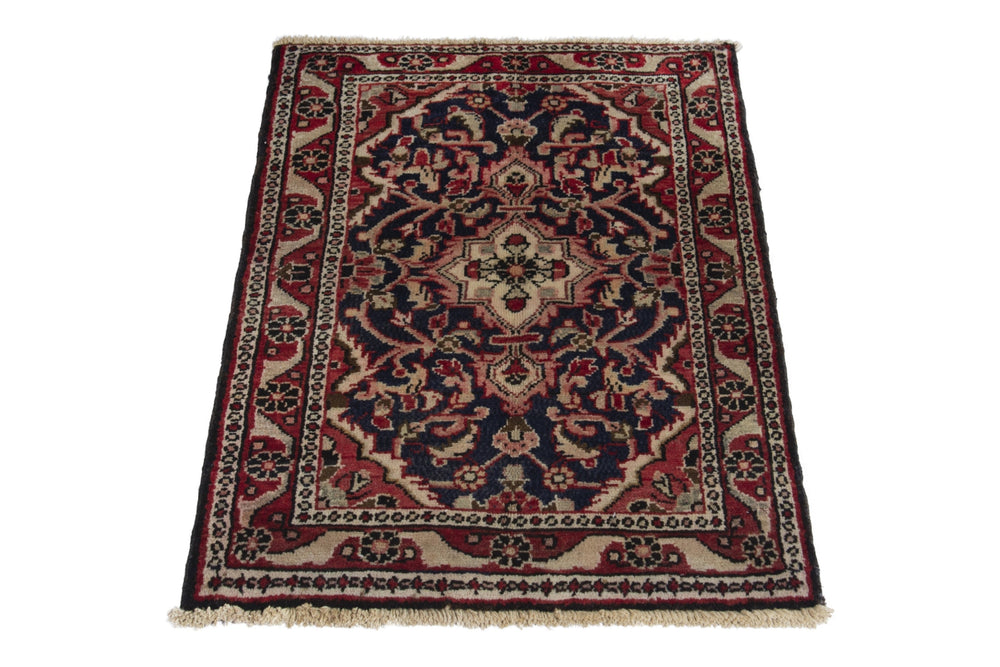
"Persian rug" is not a style. It is a country’s worth of weaving, and the distance between two Persian rugs is often greater than the distance between a Persian rug and a Turkish one. We currently hold 2,055 of them across 53 named origins. This guide is an attempt to make that number useful instead of intimidating.

Fifty-three origins, and what the name is actually telling you
Every rug on this site carries an origin name. That name is doing one of two jobs. Most often it is a place: 1,527 of our Persian rugs are named after a town or district; Hamedan, Kashan, Tabriz, Mahal, Zanjan. The other 489 are named after the people who wove them rather than a point on a map. Baluch and Torkaman are the two big ones, and a Baluch rug is a Baluch rug whether it was woven in eastern Iran or over the border.
The useful consequence: origin predicts format, palette and price far better than it predicts quality. A village Hamedan and a workshop Kashan are both hand-knotted wool on cotton. They are not trying to do the same thing.
The color you will see most is red
Across the Persian side, deep red leads 1,164 rugs and burgundy another 800. Cream follows at 435, navy at 344, then faded red 147, rust 127, dark blue 106 and dark brown 104. That is not our taste showing; it is what the looms produced, and it is why a room full of Persian rugs reads warm before you have looked at a single pattern.
Fifty years of daylight then does its own work on top. If you want the long version of why a 1970s red has aged into rose rather than fading gray, we wrote it up in natural dyes and why vintage colors age so well.
What they actually cost
Our Persian rugs run from $190 to $4,900. The median is $600, which means half of them are under that. The average is $858, pulled up by a small number of large, fine pieces.
Two things move the number more than anything else: size and knot density. An oversized Kashan or Tabriz is a different object from a two by three Hamedan, and priced accordingly. Origin by itself moves price much less than people expect.

Low pile is the default, not the exception
1,949 of our 2,055 Persian rugs have a low pile. Only 105 are high. That is partly the age (fifty years of use flattens a rug) and partly the weaving traditions we buy from, which were making floor coverings for daily life rather than display pieces.
In practice a low pile is the easier thing to live with. The drawing stays crisp, doors clear it, chairs slide, and it vacuums without a fight. If you are choosing between a thick new rug and a low vintage one, the durability comparison is the honest answer to why the old one usually wins.
Where to start, by origin
These are the nine largest Persian origins we hold, with what each is good for.
- Hamedan; 329 rugs. Village weaving, thick wool, red and blue. The rug we recommend most often to a first-time buyer.
- Baluch; 224 rugs. Small, dark, nomadic. Almost always an accent piece.
- Torkaman; 214 rugs. One motif repeated with great discipline. The least expensive things we sell.
- Kashan; 129 rugs. Workshop weaving, formal drawing, the large end of the catalog.
- Tabriz; 123 rugs. Fine, centered, urban. Compare it with Heriz before you decide.
- Mahal; 79 rugs. Large format drawn boldly rather than finely.
- Arak; 79 rugs. The boteh, and the naming confusion that comes with it.
- Zanjan; 75 rugs. North-west village weaving at accent size.
- Ferdos; 64 rugs. Eastern Iran, no guide written yet.
After that the numbers fall away quickly: Ardabil 50, Shiraz 49, Mashhad 44, and a long tail of origins with a handful each. You can see all of them in the Persian collection.
How to choose without learning the map
Most people do not need to know 53 origins. They need to know three things about their room, and we have written each one up separately: what size the room wants, how much traffic the floor takes, and whether the room can carry a warm red or needs something quieter. Answer those and the origin narrows itself.
If you want the short route in, the beginner’s guide walks through a first purchase end to end.