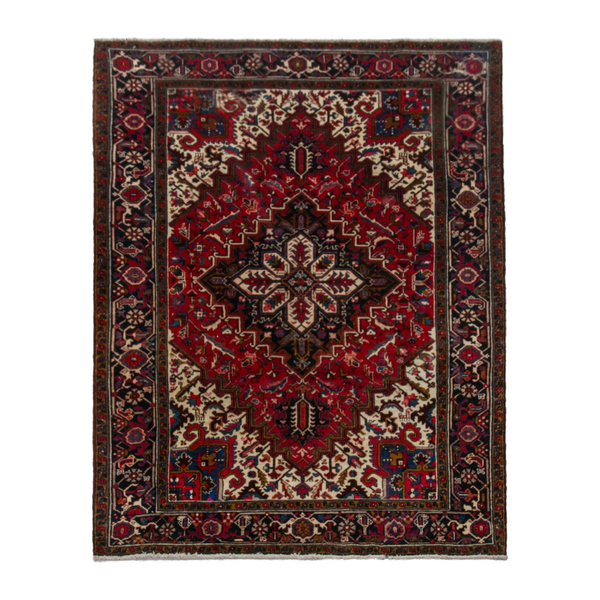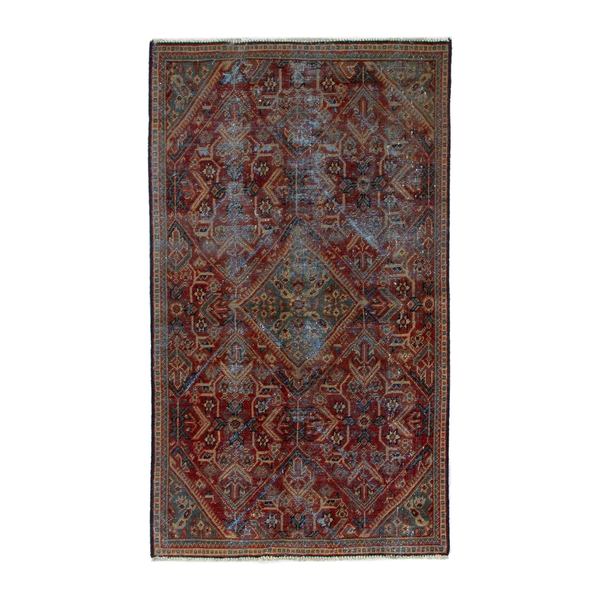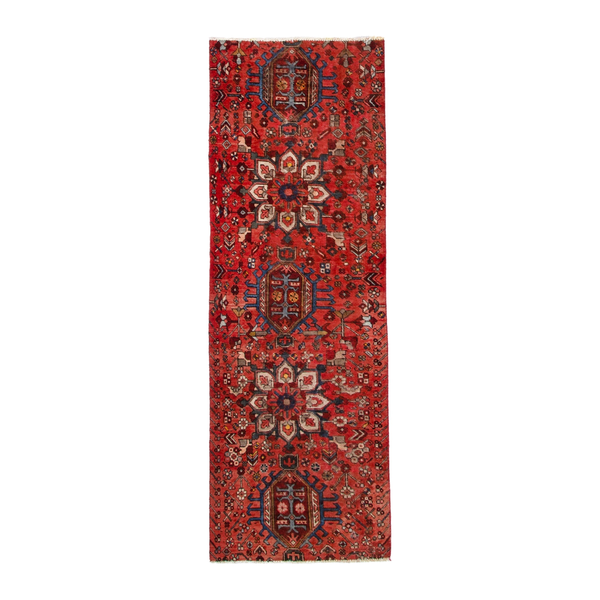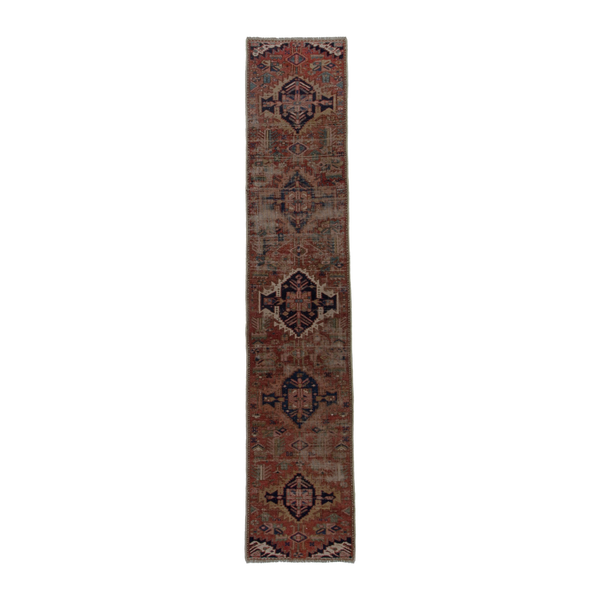
Baluch is the name on 224 rugs here, and if you scroll that collection one thing becomes obvious fast: they are small. Nearly nine in ten are under thirty square feet, and most of those are under fifteen. That is not a buying preference. It is the whole point of the rug.

A people, not a place
Baluch is not a town you can visit and find the rug bazaar. The Baluch are a people spread across eastern Iran, western Afghanistan and into Pakistan, and for most of the period these rugs were woven they moved with their animals. A loom you carry is a narrow loom. A rug you can roll and load is a small rug. The format was decided by the life before it was decided by anyone’s taste.
This is the opposite of an Isparta, where a workshop set up big looms and drew the design in advance. A Baluch was made at home, by hand, in a size one person could manage.
The palette is almost a signature
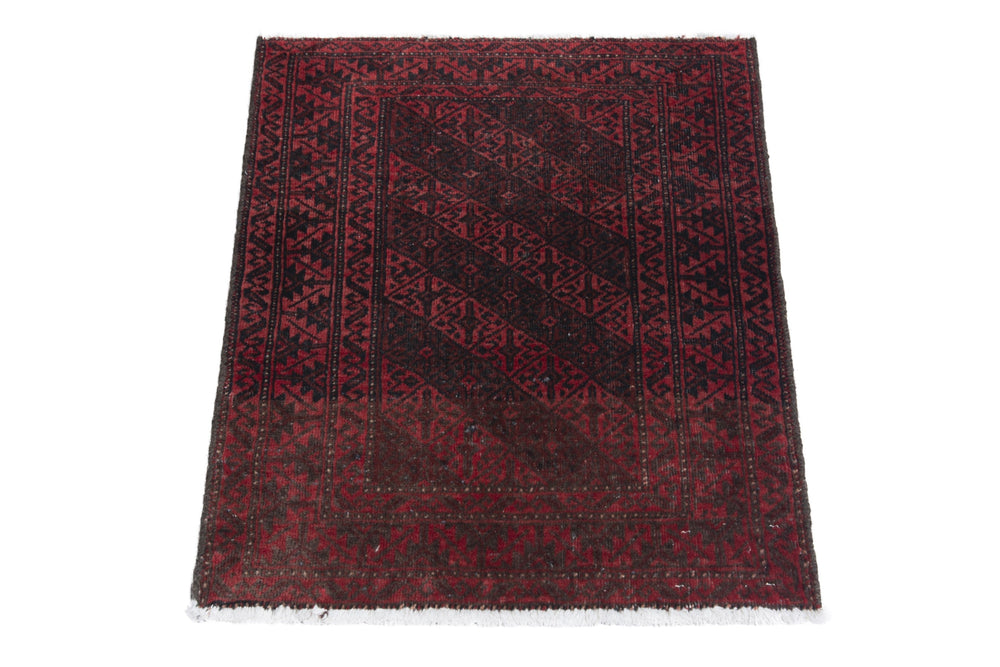
Out of our 224, more than two thirds lead with burgundy or deep red, usually pushed so dark it reads close to brown or black in low light. Cream appears, but as a highlight in the border or in a scattering of small motifs, never as the field.
The reason is dye access. Madder root for red and a very dark blue-black from indigo over-dye were what a traveling household could carry and use. There was no pastel option. Fifty years later the reds have softened toward rose and rust, but the rug still reads dark, which is worth knowing before you buy one for a room with little daylight.
How to recognize one
Three things. Size first: if it is roughly three by five feet or smaller and the color is dark, Baluch is the first guess. Then the ends: Baluch weavers finished rugs with long flatwoven skirts, often patterned, sometimes as much as a hand’s width before the fringe. Very few other traditions do that as consistently. Then the handle: the wool is oily and the pile is low, and a Baluch feels denser in the hand than its thickness suggests. Our note on hand-knotted construction explains what you are feeling.

Where they actually work
A Baluch is not a living room rug and pretending otherwise leads to disappointment. What it is very good at is the places a big rug cannot go: beside a bed, in front of a sink, at a door, under a chair in a corner, layered on top of something plain. See layering for that last one.
Prices here run from about $225 to $975 with the middle around $390, which makes a Baluch one of the least expensive ways to own a genuinely tribal, genuinely old rug. Browse the Baluch collection or the wider small and accent sizes if you are shopping by format rather than by origin.