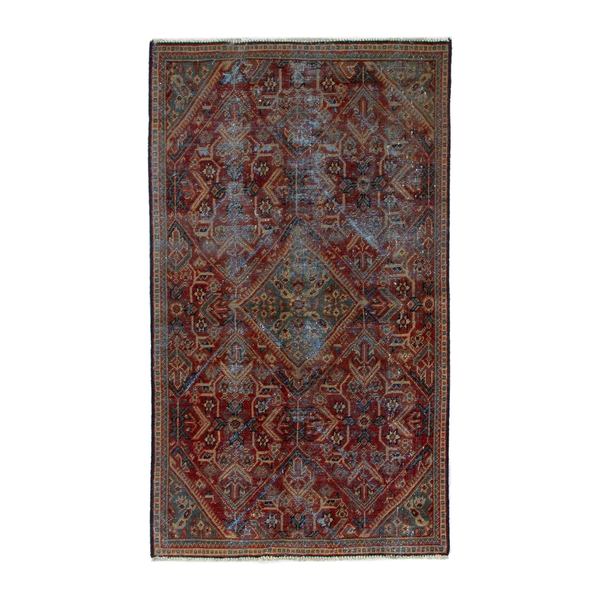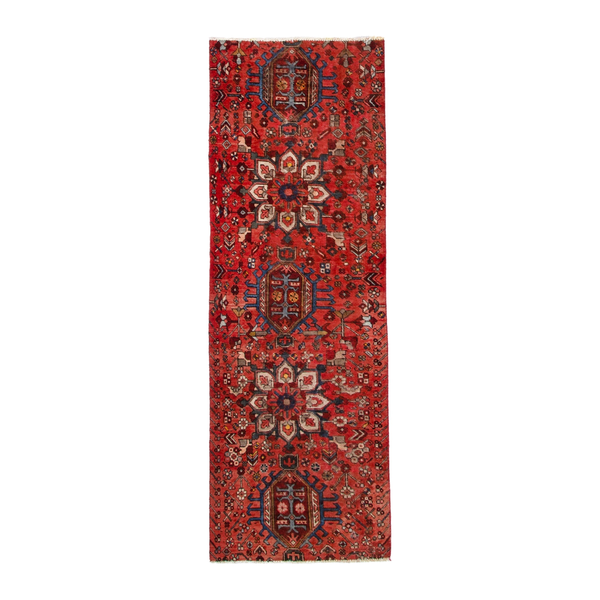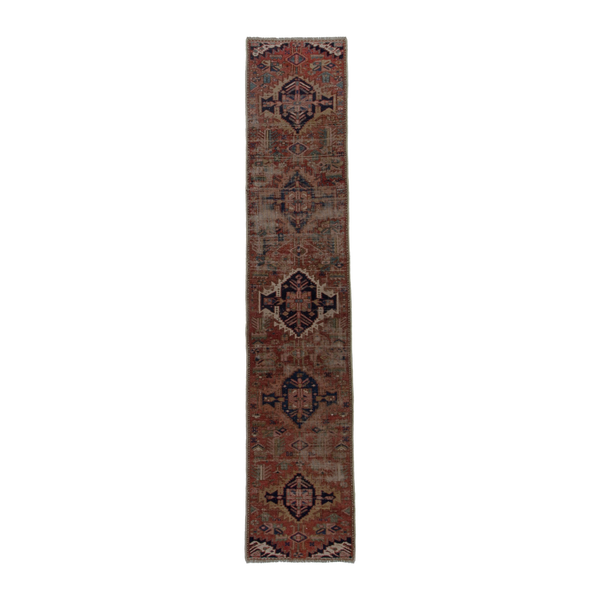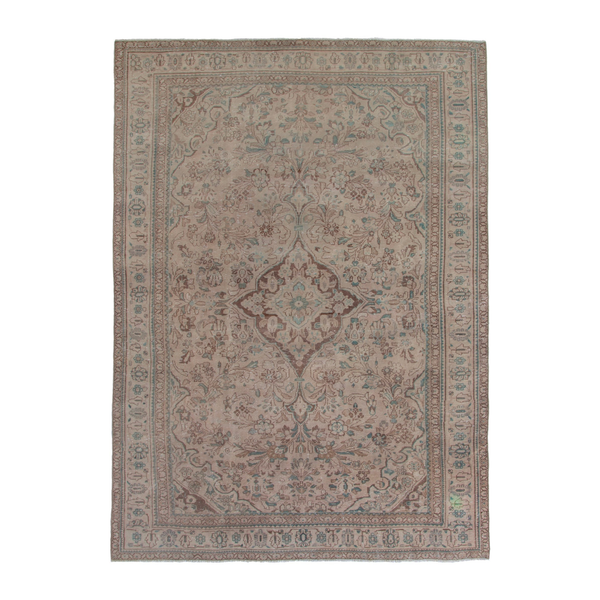
Of the 214 Torkaman rugs on this site, 149 are under fifteen square feet. That is the smallest format of any origin we carry, and the prices follow: from about $210, with the middle of the range around $315. If you want a real hand-knotted rug and have a small budget and a small space, this is the shortest route to one.

The gul
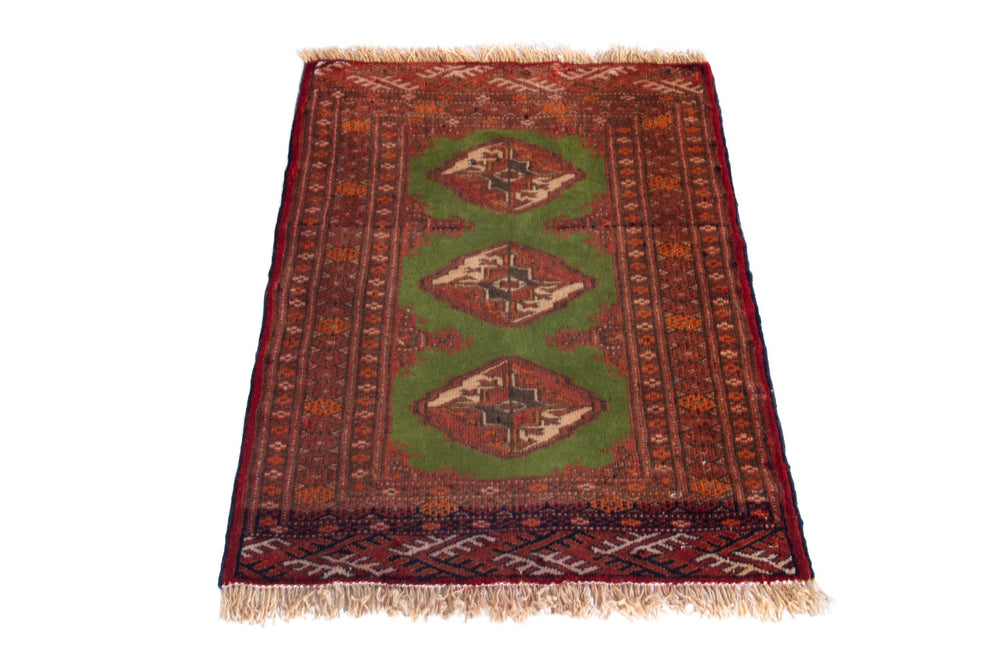
Almost every Torkaman rug is built from one shape repeated in rows. It is called a gul, an octagonal medallion, and each Turkmen tribe used its own version. The field is a grid of them, the border frames the grid, and that is the rug.
It sounds monotonous written down. In the wool it is the opposite. Because the shape never changes, everything else has to carry the interest: the slight drift of the rows, the way the dye lot shifts halfway up, the small decisions in the corners where the grid meets the border. A good Torkaman rewards looking at it the way a plain textile does, not the way a picture does.
Red, and then more red
More than half of ours lead with deep red or burgundy, with cream and navy doing the outlining. The traditional ground was madder red, deliberately deep, and the tribe’s identity sat in the gul rather than in the palette. If you are looking for a pale rug this is the wrong origin; try Isparta instead.
How to recognize one
The repeat. Rows of identical octagons, edge to edge, is close to conclusive. The scale. Torkaman weaving is fine, so the guls are small and there are many of them even on a modest rug. The pile. Low and even; 211 of our 214 are low pile. Turn it over and the knots are small and countable.

What to do with a small rug
Two Torkaman rugs either side of a bed work better than one rug that is slightly too small for the bed, which is the mistake most people make. Our queen bed sizing guide covers why. They also do well at a door, on a landing, or layered over a larger plain rug.
Browse the Torkaman collection, or if price is the constraint, everything under $500.