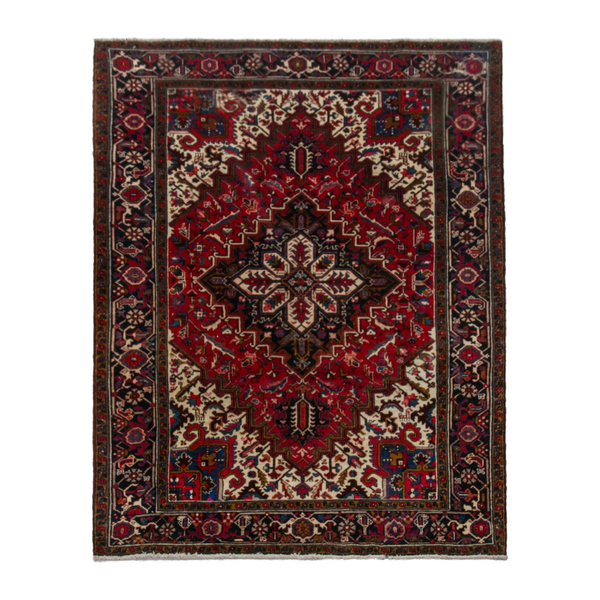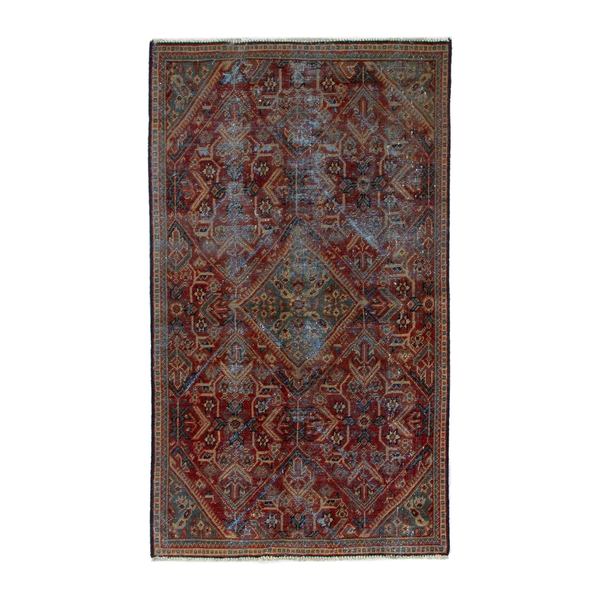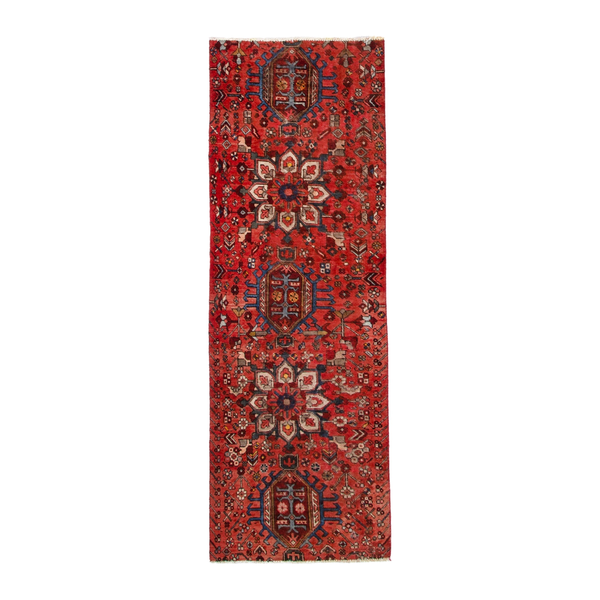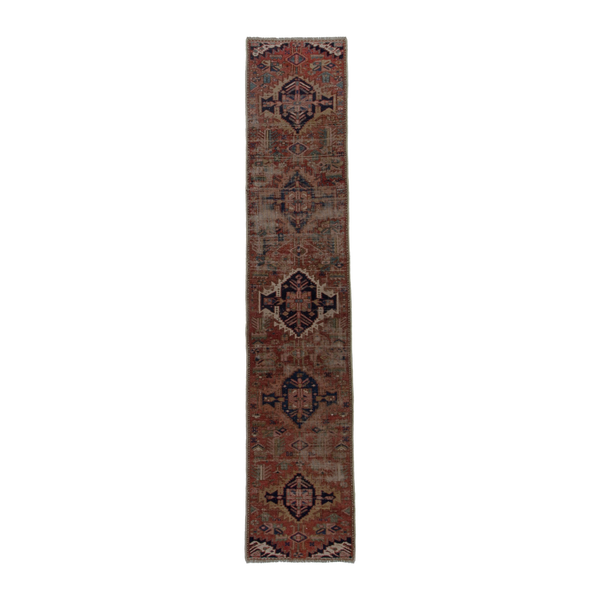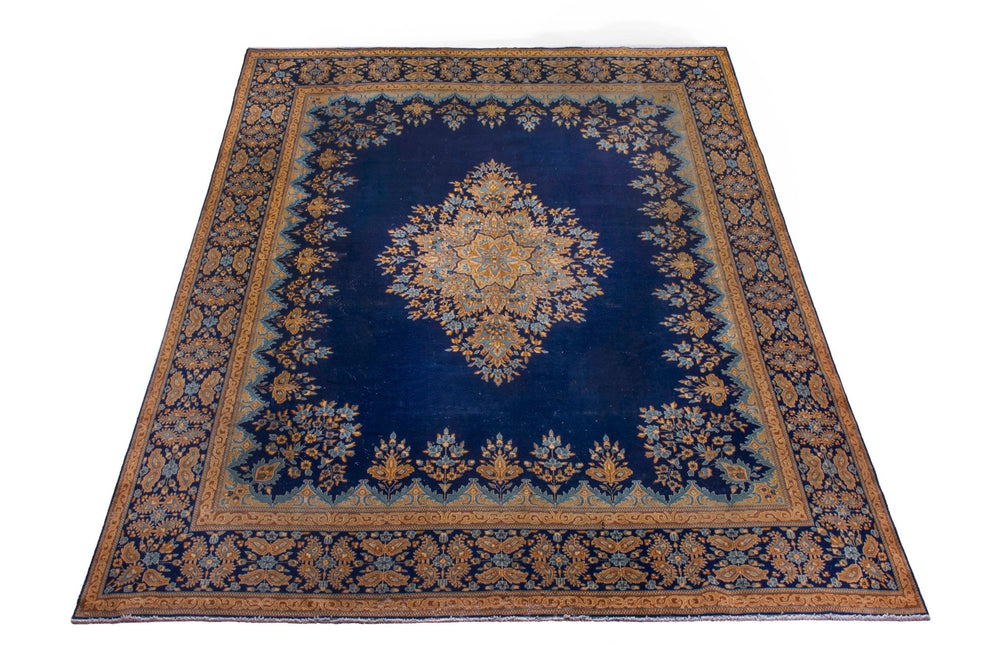
We hold 38 Kerman rugs. It is a small shelf, and it is unlike every other shelf in the building: the rugs are the biggest we carry, the most expensive we carry, and the only ones where blue beats red. Those three things turn out to be the same fact told three ways.

Two thirds of them are room-sized
Of our 38 Kerman rugs, 17 are over 110 square feet and another 8 are between 75 and 110. That is 25 of 38 — two thirds — in a catalog where large rugs are about one in eight overall.
Kerman, in south-eastern Iran, was a city producing for export and for formal rooms, and it built looms accordingly. Nobody wove a Kerman to throw down beside a bed. If you are furnishing a drawing room, a dining room or an open plan, this is the shortest shelf worth walking along; and because it is short, the pieces move. There is no second one like any of them.
Navy, not red
Across our Persian rugs, deep red leads 1,164 pieces and navy 344 — about one in six. Among Kerman rugs navy leads 24 of 38, which is closer to two in three. Cream, deep red and burgundy follow well behind, with a little terracotta and rose.
That inversion is the quickest way to recognize one across a room. Where a Hamedan or a Tabriz reads warm, a Kerman reads cool and deep, and the gold or ivory drawing sits on top of that blue rather than glowing out of a red.
It also makes Kerman the easiest Persian origin to put in a room that is already cool — grays, blues, blacks, steel — where a red rug would fight everything in it.

The price, and why it is not snobbery
Ours run from $415 to $2,850, with a median of $2,250. For comparison the median across all our Persian rugs is $600, and across our Tabriz rugs $1,010. Kerman is comfortably the most expensive origin on this site.
Almost all of that is size. A rug at 120 square feet has four times the weaving hours of one at 30, and our own breakdown of what determines the cost of a rug shows size moving price more than anything else. Take the large pieces out of the Kerman shelf and what is left sits where you would expect.
The six small Kerman rugs we hold — under 25 square feet — start at $415, which is the honest way to own one if the large format is not what your room needs.
Low pile, fine drawing
Thirty-seven of the 38 have a low pile. The drawing is dense and curvilinear, in the same workshop tradition as Kashan and Tabriz rather than the stepped geometry of Heriz. On a rug this size a low pile matters more than usual: it keeps the drawing legible at the scale you actually see it, which is standing up, from the doorway.
Who should buy one
Someone with a large room and a cool palette, who would rather buy one considered thing than three approximate ones. A Kerman will be the most expensive rug in most of our customers' houses and it will also be the last floor decision they have to make in that room.
It is the wrong rug for a busy hallway, a rental, or a room you are still working out. For any of those, start with Isparta or Hamedan instead and spend a fifth as much.
The shelf is at Kerman rugs. If the room is the open question, start with size, and for a large open space placing a rug in an open plan is the one to read first.