Kerman Rugs
Kerman, in south-eastern Persia, made its name on elegance: open, softly-colored fields, delicate floral work and a refined weave.
Kermans in particular carry pastel tones you rarely find elsewhere. Each rug here is an original, one of a kind, restored by hand and ready for the floor.


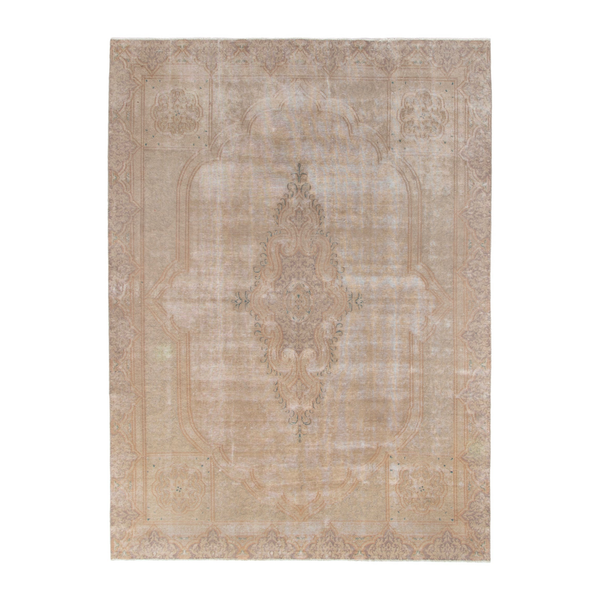


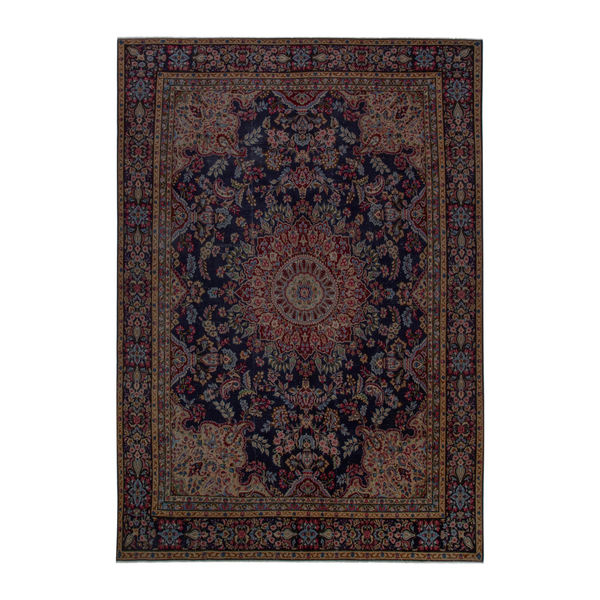


Kerman: soft palettes and delicate drawing from south east Iran
Kerman, in the south east of Iran, produced some of the most refined and most gently colored Persian carpets. Where much of Persia worked in strong madder and indigo, Kerman leaned toward ivory, rose, soft blue, celadon and pale gold. The drawing is delicate and often floral, with fine curvilinear work and elegant open grounds.
The knotting is typically fine and the wool soft, which lets the drawing carry detail that a coarser weave could not hold.
What to look for
- Palette: soft and light; ivory, rose, powder blue, celadon and pale gold.
- Drawing: fine floral work, often with open ivory grounds and elaborate borders.
- Knotting: fine, on cotton, with a soft and pliable handle.
- Sizes: good across mid and larger sizes.
Where they work
Kerman is the Persian answer for a room that needs to stay light. In a pale interior a Kerman gives you all the depth and history of an antique Persian carpet without darkening the floor. They suit formal living rooms and bedrooms particularly well.
They also sit very comfortably with contemporary furniture, because the palette is closer to modern neutrals than most Persian weaving.
How they age
Kerman colors were soft to start with, so age tends to unify them further. Ivory warms toward cream, rose fades toward a dusty blush, and the greens quieten. The overall effect on a well used Kerman is closer to a watercolor than to a printed pattern.
Kerman rug questions, answered
Are pale Kermans practical?
More than a plain pale carpet, certainly. The fine floral drawing breaks up marks well, and wool resists staining naturally. They are not the rug for a mud room, but for a living room or bedroom they are perfectly liveable.
How does Kerman differ from Nain?
Both are fine and light. Nain is characteristically ivory with blue drawing and often a very fine knot; Kerman uses a wider and warmer range including rose and gold, and the drawing is generally a little freer.
Is the soft handle a sign of low quality?
No. Soft, pliable wool on a fine foundation is characteristic of Kerman and is part of why they are prized.
Choosing your Kerman
Decide how light you want the floor to read, then look for a piece where the border and the field are in balance. Every Kerman here is one of a kind.