
In Burdur, before a wedding, the gifts the groom’s family sent to the bride’s house were carried in a pile saddlebag.[1] Older people in the province call it the okuntu bag, after the invitations it carried.[1]
Burdur sits at the center of the area known as Teke, which also takes in Isparta and Antalya.[2] Researchers Bengu Aydin and Mustafa Genc call it one of the few places where Yoruk and Turkmen culture still carries on.[2] This guide covers the Yoruk weavers of the area, the kilim types they named, the zili spreads of Yesilova, the flat weaves kept in the Burdur Museum, the pile saddlebags, and what to look for in a Burdur piece.
Yoruk weavers of the Teke region

The Teke Yoruks lived mostly from their herds, so they wove light, practical pieces for the move between summer and winter pastures.[3] Women spun the wool and goat hair from their animals and wove rugs, kilims, zili, ihram, cul covers, sacks and girths.[3] Tents, kilims, rugs and sacks were all woven on an upright loom called istar.[3]
Estate records list the kilims of Yoruk women by color, design and technique, under names such as ala kilim, kara kilim, yoz kilim, gullu kilim and zili kilim.[3] They also wove kilims called sandikli, farda, akli Turkmen, boynuz, cicekli and kara zili, and pieces known by motifs such as hands on hips, the crane line and the saddle bow.[3]
The zili spreads of Yesilova
Yesilova, in the west of the province, is the summer pasture of nomadic groups who winter in Antalya, and also a place where Yoruks from Denizli settled.[2] An Ottoman yearbook of the 1880s already records a kilim called Eyyuce woven in Yesilova.[2] Oguz Turkmen groups such as the Bayindir, Cavundur, Cepni, Kayi and Igdir settled there.[2] Kayi village in Yesilova was founded by Kayi Turks who lived as nomads around Karakent in the 1870s.[2] Some groups arrived late: one migrated from Geyikli, in Kutahya, in 1825 and settled in the village of Kirli.[2]
In 2023 and 2024, Aydin and Genc surveyed 36 villages of Yesilova and found 210 zili spreads in 31 of them.[2] Of the 20 they studied closely, 16 were plain zili and four crossed zili.[2] In zili, the pattern yarn skips over two and under one, three and one, or five and one to fill a motif completely, while in cicim it wraps upward to draw only the outline.[2]
Black, white and a dull brown yarn were often used straight from the animal without dyeing.[2] The dyed yarns are mostly red, brown, orange, yellow, green, pink and purple, and most of those colors came from chemical dyes.[2] Weaving has been given up in the villages of Yesilova, though families still keep pieces their elders made.[2] The authors warn that kilim-technique pieces, from cradle covers to salt bags, are close to disappearing in many places.[2]

Flat weaves in the Burdur Museum

Burdur’s museum was founded in 1963 because of the finds from Hacilar Hoyuk, a prehistoric mound dug in four seasons from 1957 to 1960.[3] The present museum building opened in 2006.[3] Its storerooms hold 28 flat weaves, none of them on display.[3] Dogan Demirci and Mesut Celik found that 39 percent were in the weft-faced kilim technique, 29 percent zili, 25 percent cicim and 7 percent sumak.[3]
Many pieces mix techniques: eight combine kilim and cicim, two zili and cicim, and seven zili and sumak.[3] Orange and red are the most used colors, followed by yellow, green and white.[3] Older pieces were woven with wool and natural dyes, newer ones with cotton and acrylic yarn, which the authors see as a drop in quality.[3]
Some museum pieces were likely woven by the Bayindir Yoruks who settled in Golhisar, and burrs, stars and water paths are common in them.[3] Spreads from the villages around the city combine zili and cicim, with similar motifs and colors repeated across the field.[3] Pieces recorded as from Yesilova were probably woven by the Cavdur Yoruks who settled there.[3]
Pile saddlebags
Aysen Soysaldi studied the pile saddlebags of Burdur in the museum and in villages in 2013.[1] A saddlebag with leather-bound edges on horseback was a sign of wealth for Turkish men.[1] The leather binding on the base, openings and edges made the bag last longer.[1]
Warp, weft and pile are all wool, because wool is light.[1] The faces are knotted with the symmetric Turkish knot and the backs woven flat.[1] One bag from Kemer has about 30 by 30 knots per square decimeter and a pile 5 millimeters high.[1] The starred rose, common in the rugs of the area, runs along its border.[1]
One bag in the museum has a Milas rug border on its middle strip.[1] A bag from Kocayaka, in Yesilova, was woven in 1960 by the owner and her mother for her dowry.[1] Saddlebags were part of a bride’s dowry and were also woven for the groom.[1] Others were made for sale in the bazaar, and those were not as good as the ones families wove for themselves.[1] A saddlebag from Akkaya village, near the city, is thought to be about 120 years old.[1] When cars replaced horses in the 1970s, the bags lost their use and moved into museums and private collections.[1]
What to look for in a Burdur piece

A zili spread with burrs, stars and water paths, with undyed black, white or brown yarn beside bright colors, fits the Yoruk weaving of Yesilova and Golhisar. A small pile bag with a quartered medallion layout and a starred rose border may be a Burdur saddlebag face.[1] Wool yarn and natural colors point to an older piece; cotton and acrylic to a later one.
Where to go next
Burdur shares the Teke weaving culture with its neighbor, so read the Isparta rugs guide next, and the Milas rugs guide for the border seen on a Burdur saddlebag. The ultimate guide to kilim rugs explains zili, cicim and sumak, and you can browse our kilims and all Turkish rugs.
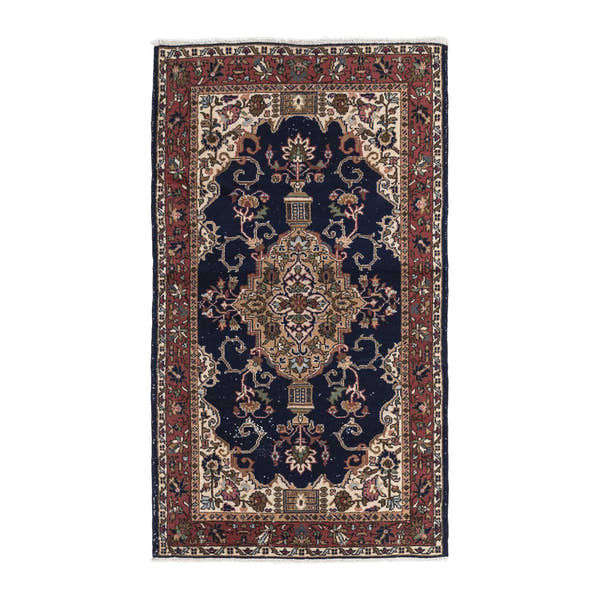
For a rug from the neighboring province, see this Isparta rug, or this Milas kilim from further west. Neither is a Burdur piece.

Sources
- Burdur’da Hali Heybe Ornekleri (Carpet Saddlebags of Burdur Province). Aysen Soysaldi, Aris, 2019.
- Burdur Yesilova’da Tespit Edilen Zili Yaygilar (Zili Rugs Identified in Burdur Yesilova). Bengu Aydin and Mustafa Genc, Art Vision, 2024.
- Burdur Muzesi’nde Yer Alan Duz Dokuma Yaygilar (Flat Weavings in Burdur Museum). Dogan Demirci and Mesut Celik, SDU ART-E, 2020.


