Rug No. has found its new home.
Every rug we sell is one of a kind, so that piece is gone. Here are others in the same spirit, or tell Rug Finder what you are looking for.
Konya Rugs
Konya rugs on this page come from central Anatolia, from a city whose carpets Marco Polo counted among the finest in the world. The earliest dated Turkish carpets, from the 13th century, were found in its Alaeddin Mosque. Each rug in this collection is one of a kind, from a weaving tradition that runs back about eight centuries.


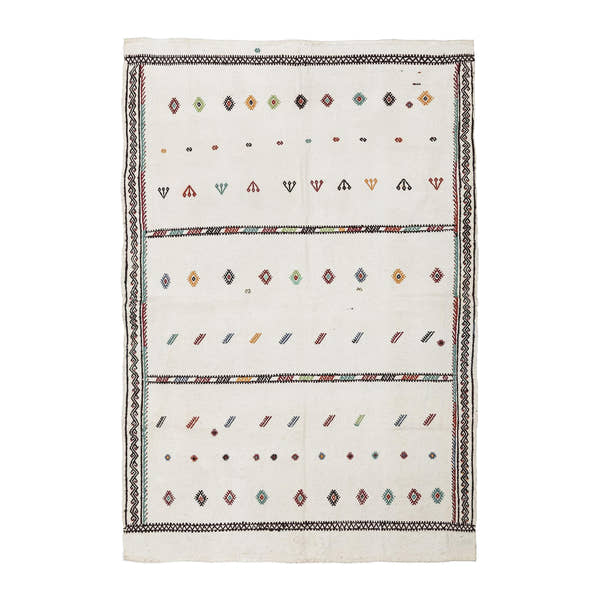

Konya rugs: home of the earliest dated Turkish carpets
Marco Polo wrote that the people of the Seljuk lands wove the finest and handsomest carpets in the world, and named Conia, today’s Konya, among their chief cities. In the Renaissance, expensive, richly patterned Konya carpets were exported to Europe and draped over furniture to show off the wealth and status of their owners.
In 1905 the German consul Julius Harry Loytved-Hardegg found nine carpets in the Alaeddin Mosque in Konya, carpets that date back to the 13th century. They are now in the Museum of Turkish and Islamic Arts in Istanbul, where they are the earliest dated Turkish carpets. In 1926 prayer rugs from the 1600s were moved from the Mevlana lodge, the shrine of Rumi, to the Konya Ethnography Museum.
Konya among the Turkish weaves
Konya sits at the heart of the Anatolian tradition, and its rugs are easy to compare with our Anatolian village rugs, the town rugs of Kayseri and Isparta, and the large carpets of Oushak.
For the wider picture, read the guide to Turkish rugs and the Anatolian rugs guide, and see tribal, village and city rugs for how the three traditions differ.
Choosing a size
- Runners: a hall or a galley kitchen. See choosing a runner length.
- Small rugs: an entry, a bedside or a bathroom. See where to put a small rug.
- Room sizes: a living room seating group or a dining table. See choosing the right rug size.
What this collection holds
The Konya rugs here include both pile rugs and flat-woven kilims, so the collection holds soft, deep surfaces as well as thin, light pieces that lie close to the floor. Browse all kilim rugs to compare the flat weaves side by side.
What each listing shows
Every rug page gives the exact size in feet and centimeters, the main colors and a set of photos, including close views. Read the size against the space before you choose, and look at the close views for the small marks of use that come with a handmade rug. If a question is left, we answer by email or phone.
Living with a Konya rug
A rug with a warm ground brings color to a room with pale walls and wood floors, and it sits well with leather, brass and dark wood. A rug with a pale ground keeps a room light and suits linen, pale oak and plain walls.
Caring for it
Vacuum gently, turn the rug every few months so sun and traffic reach every side, and blot spills straight away rather than rubbing them. A thin rug pad keeps a rug in place on a hard floor. Our guide to cleaning a wool rug at home has the details.
More on where these rugs come from and how they are made: the Konya guide.
Related collections
Browse all Turkish rugs, Anatolian rugs and all runners.