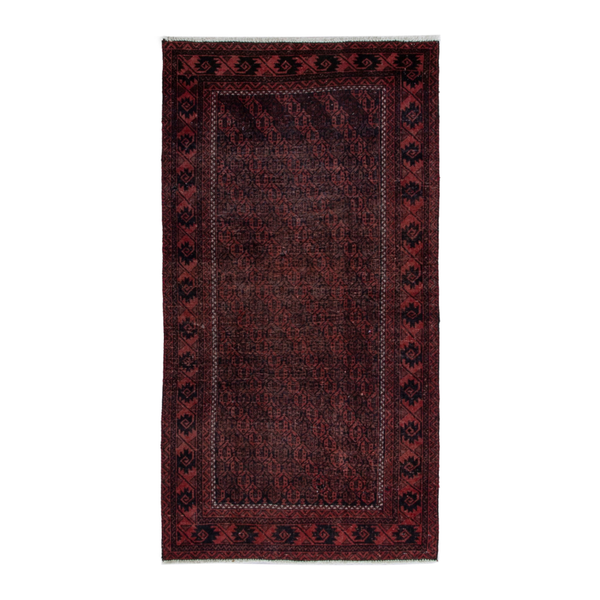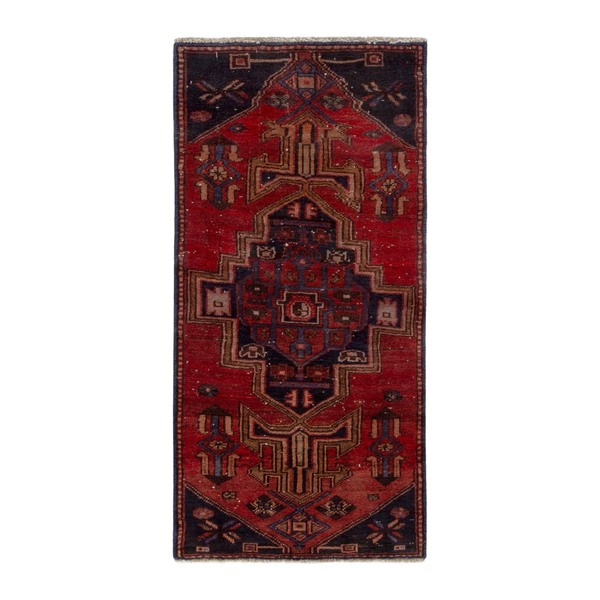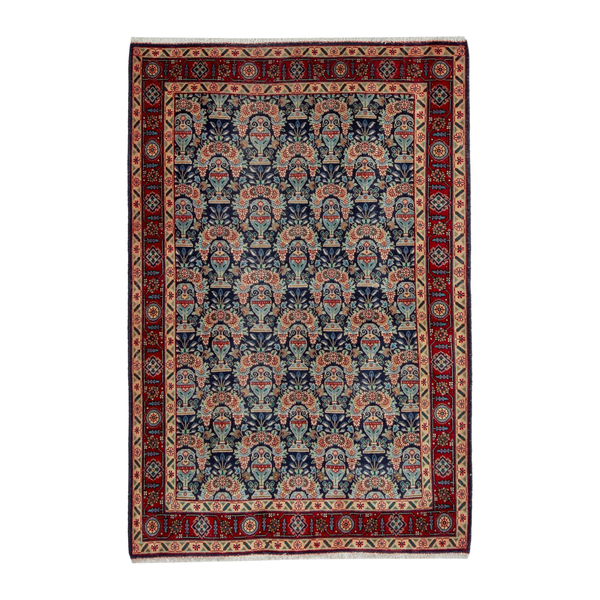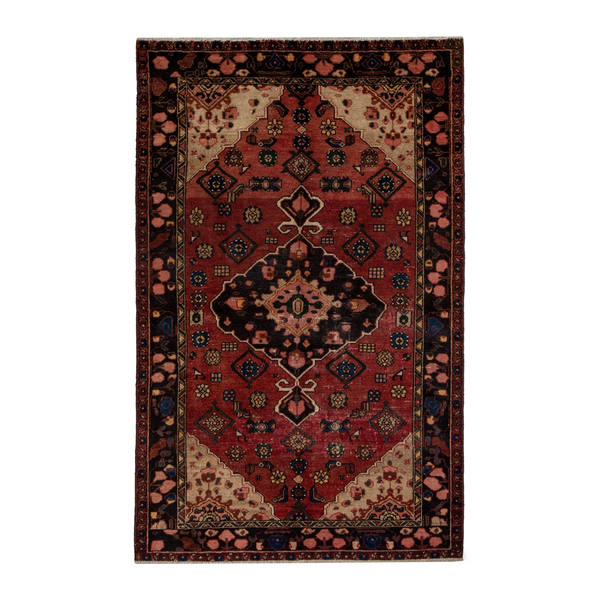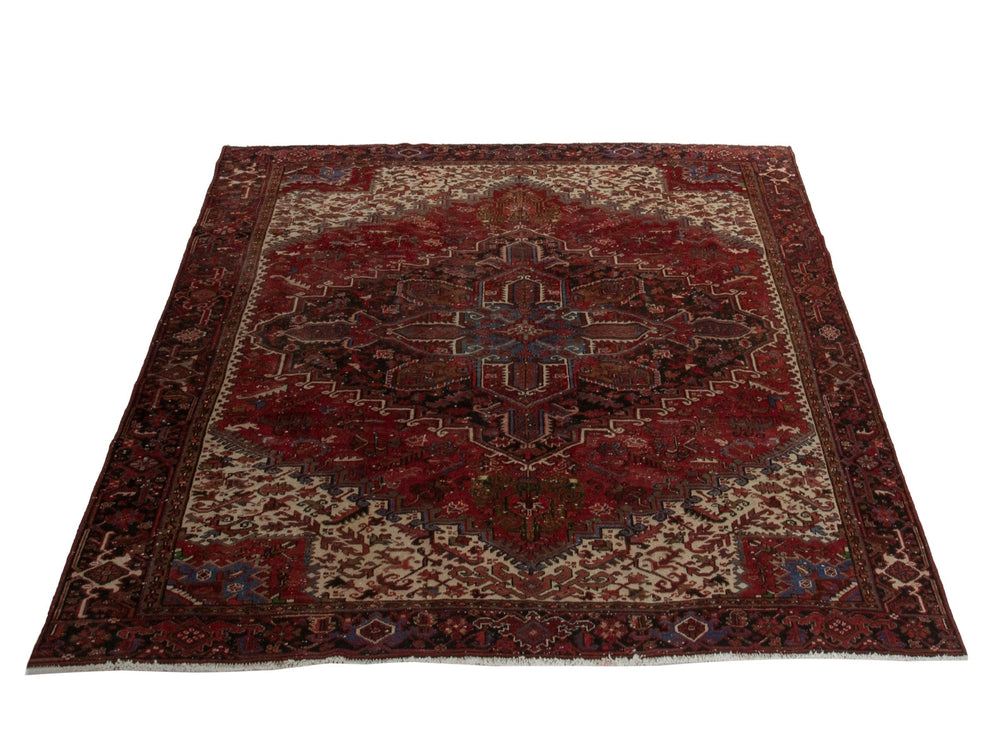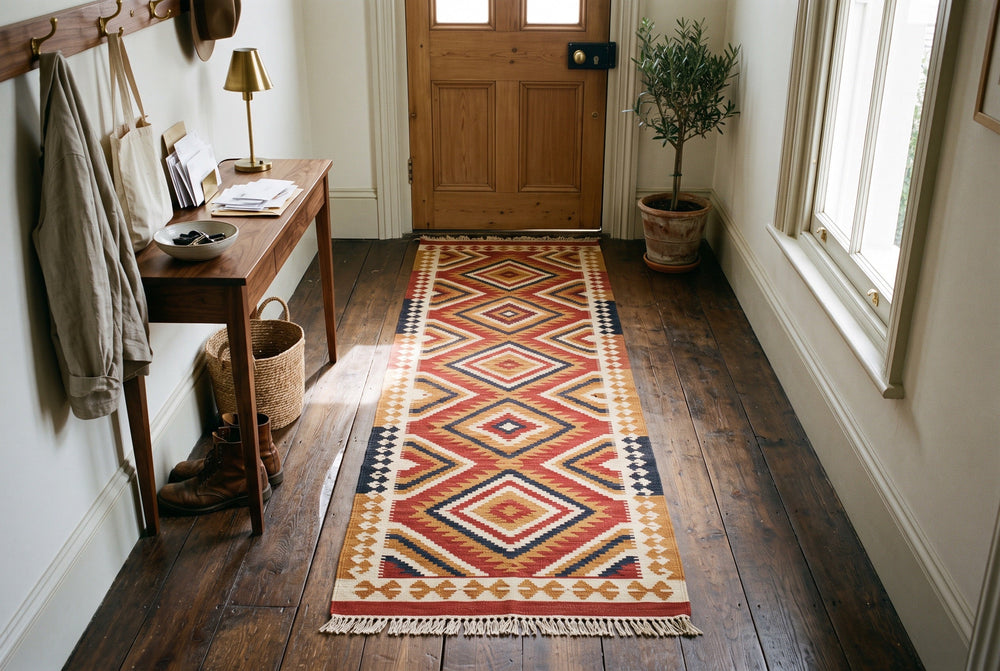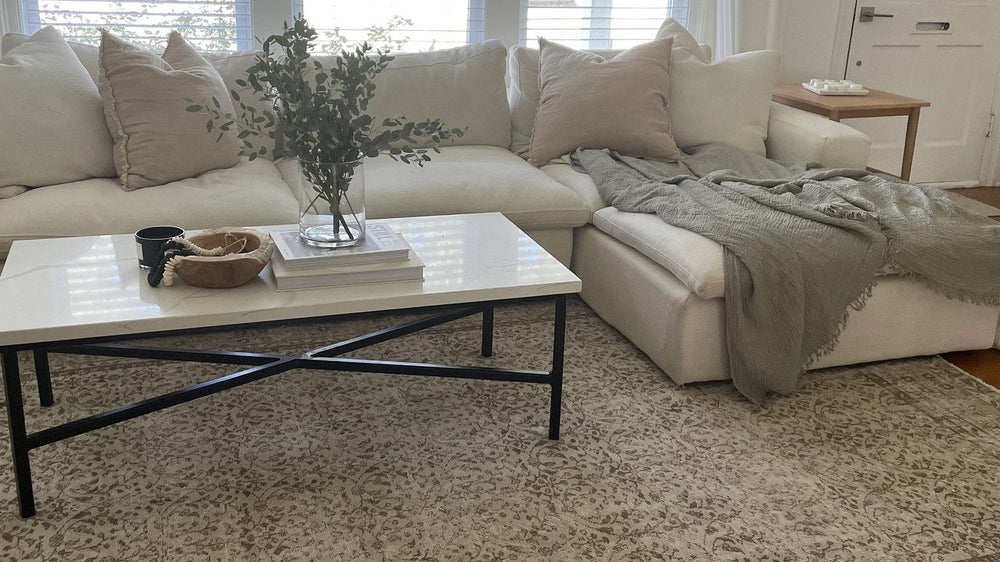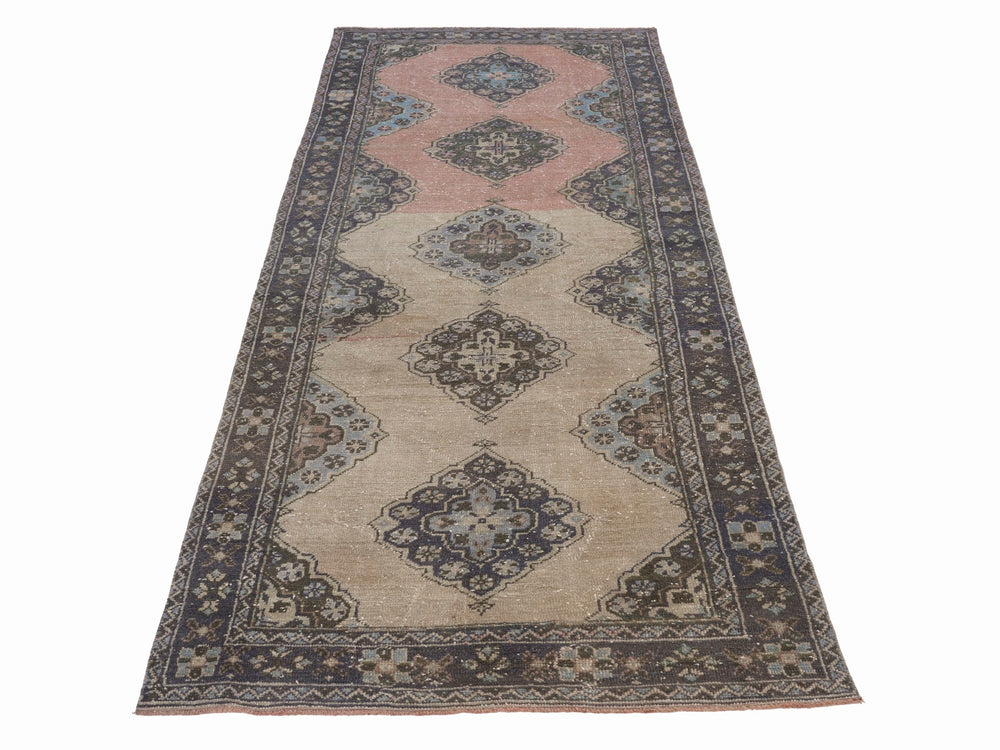
Anatolian is the smallest group on the Turkish side of our catalog and the least tidy one. It is not a town or a workshop; it is the label a rug gets when it was woven on the Anatolian plateau and nobody recorded which village it came from. We hold fourteen of them.

What the name actually tells you
Our Turkish side is 794 rugs. Of those, 577 are Isparta and 203 are Manisa, both workshop towns with a house style you can recognize across a room. The remaining fourteen are cataloged as Anatolian, which is honest rather than vague: they were made inland, on home looms, by weavers working from memory instead of a drawn plan. Where a town name would be a guess, we do not make one.
That is also why no two look alike. A workshop repeats itself on purpose. A village loom does not.
Geometry instead of flowers
The Turkish knot is symmetrical, looped around two warps, and it gives a clean upright edge to anything drawn with straight lines. Anatolian weavers leaned into that. Expect stepped medallions, hooked lozenges, star shapes and blunt borders rather than the curling vines of a city carpet. The drawing tends to drift a little as the rug grows, because the weaver is remembering a pattern, not copying one. That drift is most of the character.

The color is quiet, and that is the point
Across the fourteen, the grounds we measured run to muted pink, taupe, beige, dusty rose, stone and cream. There is no bright red in this group and no deep navy. Fifty years of light and use have taken whatever the original dyes were and settled them into something you can put next to almost any wall color. If you want a rug that does not argue with the room, this is the shelf.
All fourteen are low pile. They clear a door, sit flat under a chair and suit underfloor heating.
Sizes and what they cost
This is a small and medium group, and it does not pretend otherwise. The fourteen run from twenty-five to forty-seven square feet, with the middle around twenty-nine, so there is no room-size Anatolian here at all. Seven are medium, four are runners and three sit at the large end of small. Prices run from $425 to $545, with the middle around $488, which makes this the most predictable shelf we have: no bargain end and no expensive end, because there is no workshop grading behind the name.
In practice they work as hallway runners, kitchen rugs, bedside pieces and the rug under a reading chair. If you need something that has to hold a living room together, look at Isparta instead, where the large sizes actually live.
Where to go next
The whole Turkish picture, region by region and what each one costs, is in the ultimate guide to Turkish rugs. If you are still working out whether a rug is Persian or Turkish at all, how to tell them apart goes through the tells, from knot to palette. The fourteen themselves are in the Anatolian collection, and when one sells it is not restocked.