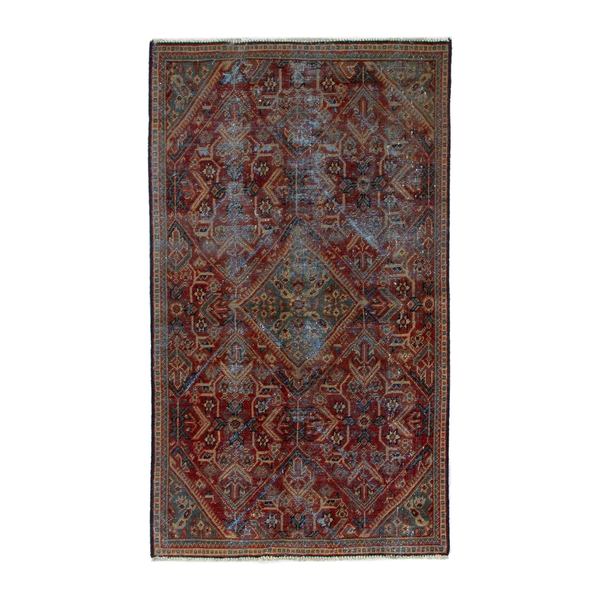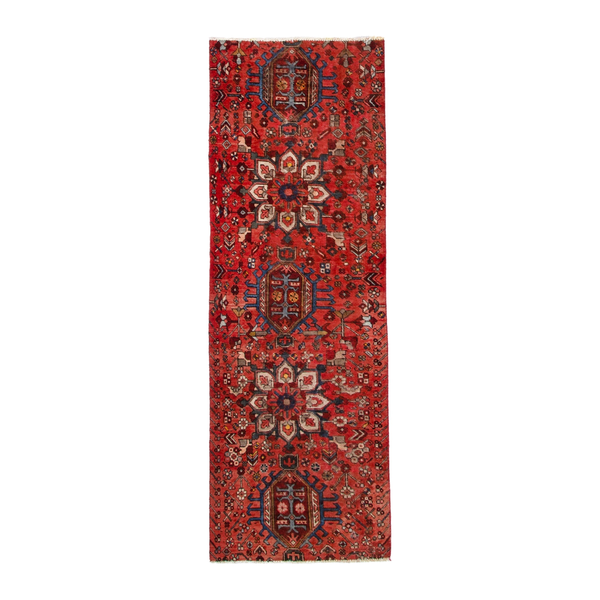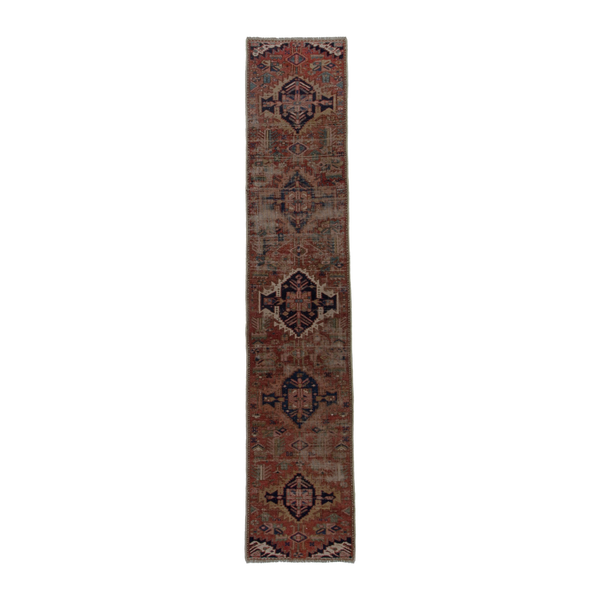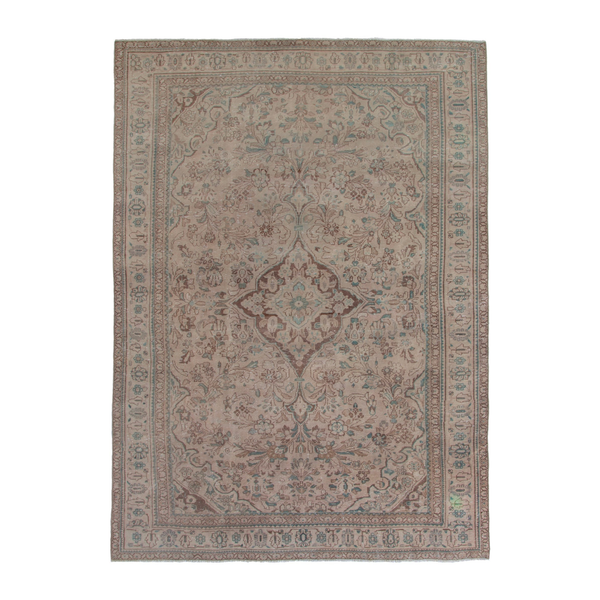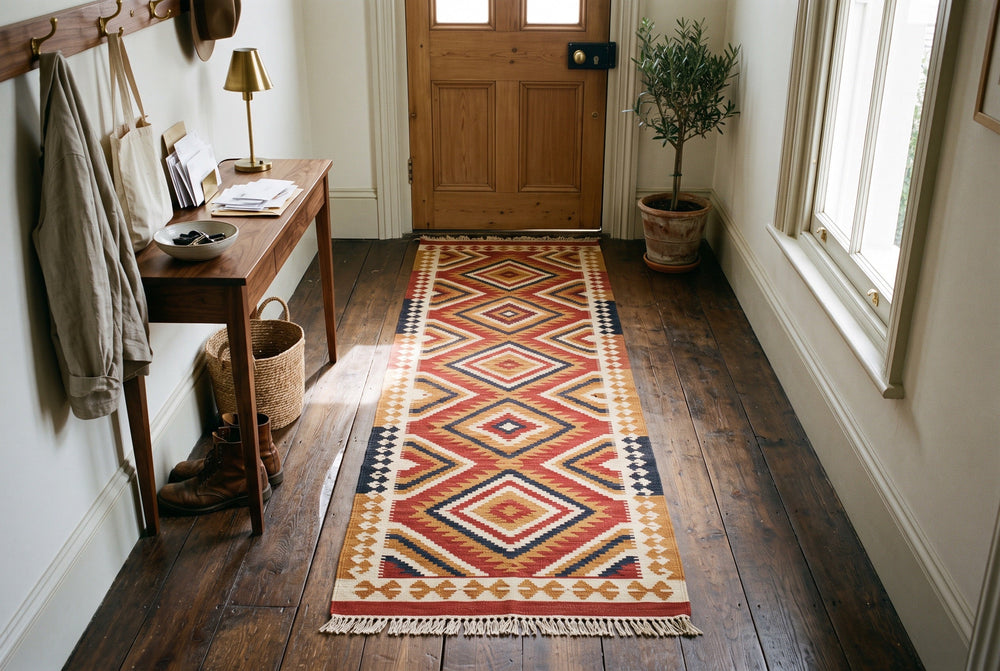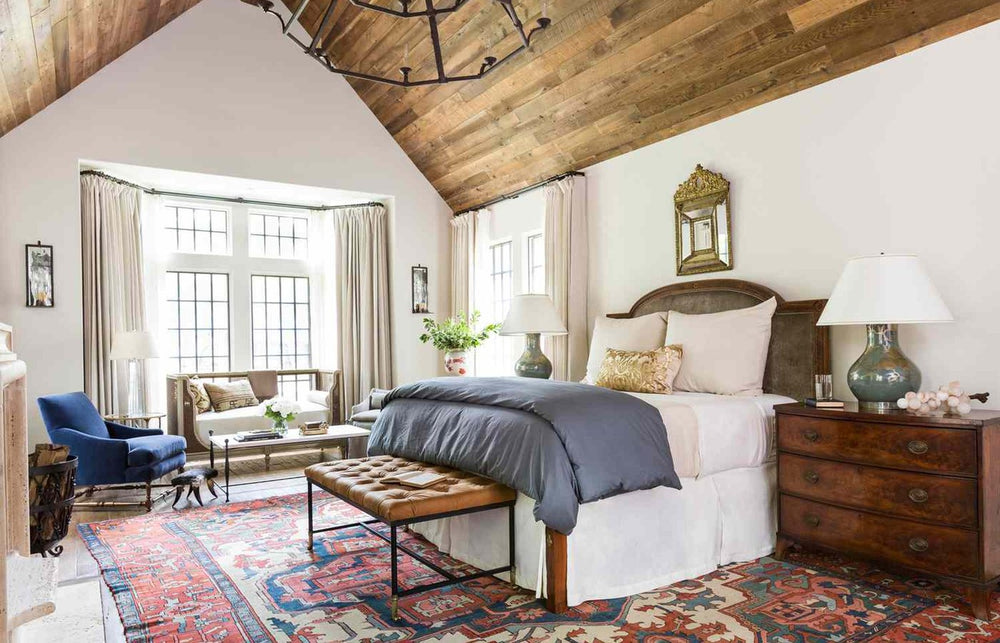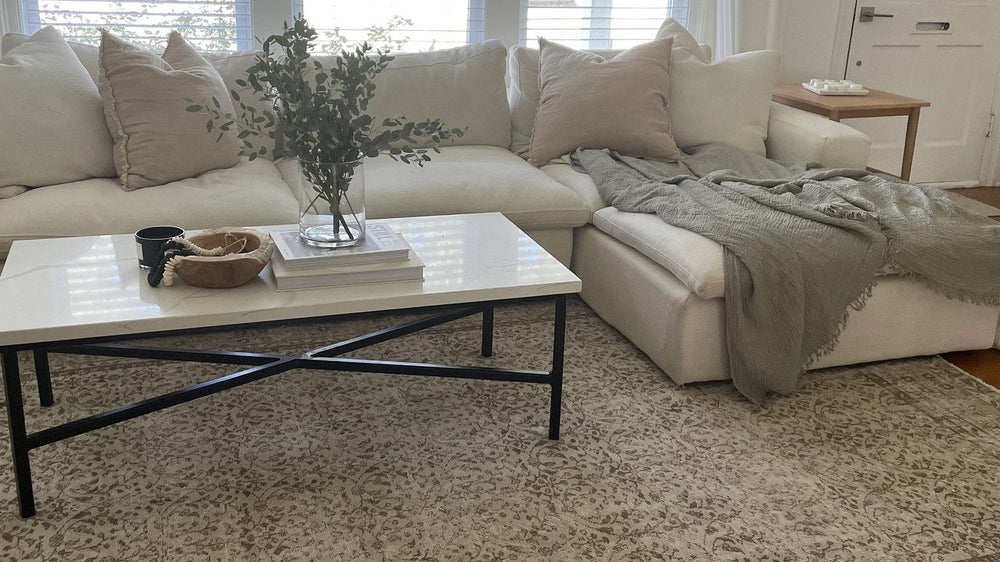
We do not hold a single Oushak rug. Not one, out of 2,828. You deserve to know that in the first line rather than after twenty minutes of searching. The rest of this is still worth your time, because the word “Oushak” now means two very different things, and one of them is sitting in our catalog under a different name.
What an Oushak actually is
Uşak is a town in western Anatolia, and it has been a weaving center for something like five hundred years. What made its rugs famous was never fineness. Oushak weavers worked at a fairly coarse knot count with long, lustrous local wool, and they used that coarseness deliberately: it let them draw enormous motifs, leave the field open, and produce rugs in true room sizes at a time when most weaving was small.
The look that came out of it is the one people mean today. A soft, chalky palette built on saffron and old gold, terracotta, powder blue and ivory. One or two very large medallions, or an all-over pattern so widely spaced that the ground reads as much as the drawing does. Long wool that takes light and gives it back. By the late nineteenth century these were being woven in quantity for European and American houses, which is why so many of them are eight by ten and larger.

The word means two things now, and only one of them is old
A genuine antique Oushak (woven in or near that town before the trade changed, wool worn down to a sheen, colors moved by a century of daylight) is an auction object. Those rugs are bought by collectors and by dealers who specialize in one thing. We are not that kind of shop, and if a real antique Oushak is what you want, a specialist dealer or a rug auction is where to spend your afternoon. We would rather send you there than sell you something adjacent and let you find out later.
The other meaning is the one you meet almost everywhere online. “Oushak” has become a style label attached to new production; rugs made recently, in Turkey or India or Pakistan, in that palette and that scale. Some are hand-knotted and perfectly decent. Many are power-loomed. A great number of both are chemically washed to look faded, because the soft, sun-bleached quality is the whole appeal and nobody wants to wait fifty years for it.
That last part is worth sitting with. When a new rug looks like an old one, something was done to it. Stripping color out with a bleach wash also strips wool of the lanolin that makes it feel like wool, which is why a lot of “antique-washed” rugs feel slightly dry and papery in the hand. Age does the same job from the other direction and leaves the fiber alone. We wrote about how that happens in why vintage colors age so beautifully.

Where the trade went
The export weaving that Oushak was built on did not stop in the twentieth century; it moved. Isparta, in south-west Turkey, became the volume center for exactly the same business; workshop production, room sizes, soft palettes, woven for houses abroad rather than for the village it came from. American dealers sold them for decades under the trade name Sparta.
That is the rug we buy. We hold 577 Isparta rugs and 203 Manisa, plus 14 listed simply as Anatolian: 794 Turkish rugs in total, and the full picture is in our guide to Turkish rugs.
They are not Oushaks and we do not describe them as Oushaks. What they share is the part most people are actually shopping for: western Anatolian wool, a pale open field, a single large medallion more often than not, and fifty years of real light on the surface.
Why the palette lines up so well
Across our Isparta rugs, cream leads with 382, then greige at 217, taupe 198, muted pink 145, dusty rose 102 and sage 100. Those are measured counts from our own catalog, not an impression. Two things put them there. Central and western Anatolian wool carries a lot of undyed cream, so even a saturated dye sits softer on it than it would elsewhere. And these rugs have spent half a century in daylight, which walks a clear red steadily toward rose and a strong green toward sage.
The result is the quality people go looking for under the word Oushak: a large rug that does not fight the room it lands in.

Every one of them is low pile
All 794 Turkish rugs we hold are low pile. Not most; all of them. Oushaks were known for a longer, shaggier handle, so this is a genuine difference rather than a small one, and for a modern house it usually falls on the right side. The drawing stays legible, a door clears the rug, and a dining chair pushes back without catching.
What it costs
Our Turkish rugs run from $150 to $850, median $450. An antique Oushak in good condition at room size is a four- or five-figure purchase, and a new Oushak-style rug from a furniture retailer will often land in the same band as ours while being a fraction of the age. That is the whole trade-off in one line, and we set it out in more detail in the cost of rugs explained.

How to shop for the look here
If it is the Oushak feeling you are after rather than the name, three filters get you most of the way. Start in cream or neutral, because the open pale ground is the signature. Go up in size (large or extra large) since the scale of the drawing only reads when the rug is big enough to carry it. Then stay on the Turkish side, where the wool and the fading are the western Anatolian ones.
If you are still deciding between the two halves of this catalog, we compared them directly in Persian and Turkish rugs: how to tell them apart. And if the room is the real question rather than the rug, start with size.