A 5x7 rug is 5 feet wide and 7 feet long: 60 by 84 inches, about 152 by 213 cm, and 35 square feet. That is big enough to hold a loveseat and a chair, to lie across a twin bed or to sit under a small desk, but too small for an average living room, a queen bed or any dining table. Among vintage hand-knotted rugs a true 5 by 7 is uncommon, and most rugs near this size are a little longer, so it pays to look at the 5x8 rugs as well.
How big is a 5x7 rug?
A foot is exactly 30.48 cm, so a true 5 by 7 measures 152 by 213 cm.[1] The metric sizes you will meet near it are 140 by 200 cm, about 4 feet 7 inches by 6 feet 7 inches, and 160 by 230 cm, about 5 feet 3 inches by 7 feet 7 inches. Neither is exactly 5 by 7, and rug sizes in centimeters converts the others.
Is a 5 by 7 pretty big? It covers more than twice the floor of a 3 by 5, which is 15 square feet. It is still less than half of an 8 by 10, the size most living rooms are planned around. It is the largest of the small rugs, not a room-size rug.
Why a true 5x7 is hard to find in a vintage rug
Hand-knotted rugs were woven to the loom and to older formats, not to retail sizes. No traditional Persian size name matches 5 by 7 exactly. The nearest, the dozar, is about 4 by 6½ feet, and the next names up are long carpets and room-size ones, as our post on standard Persian rug sizes explains.
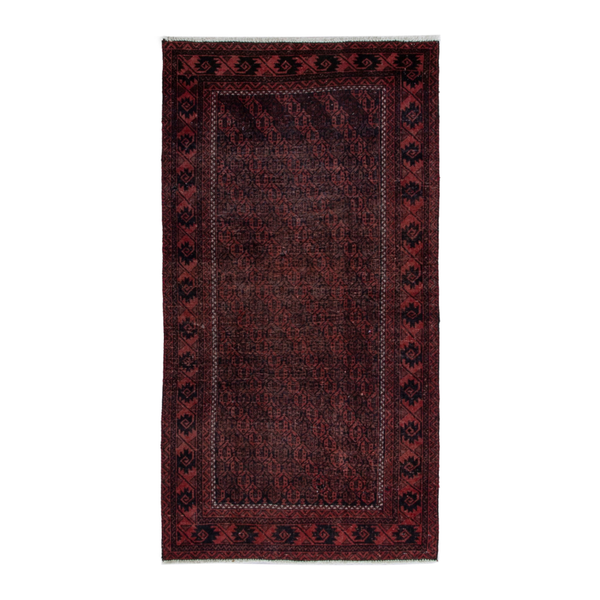
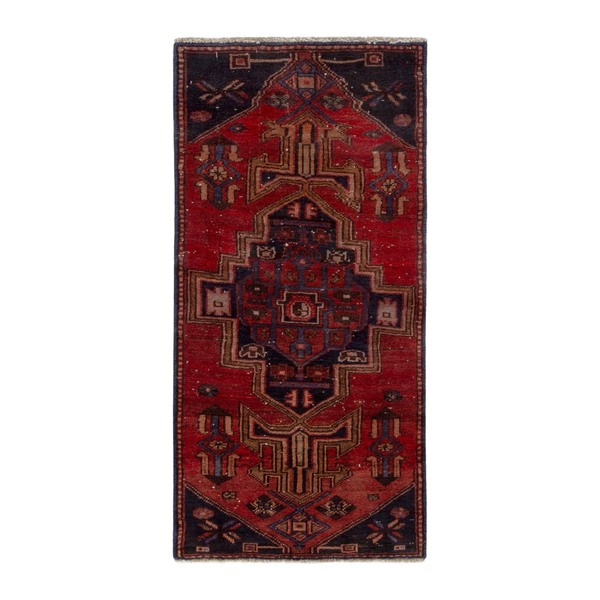
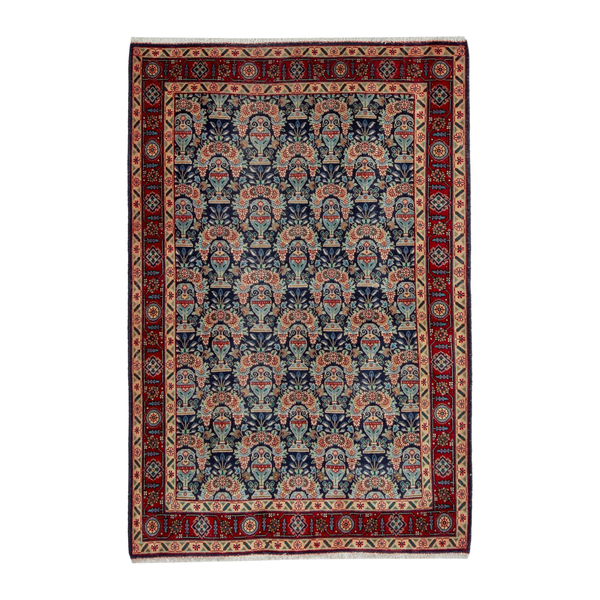
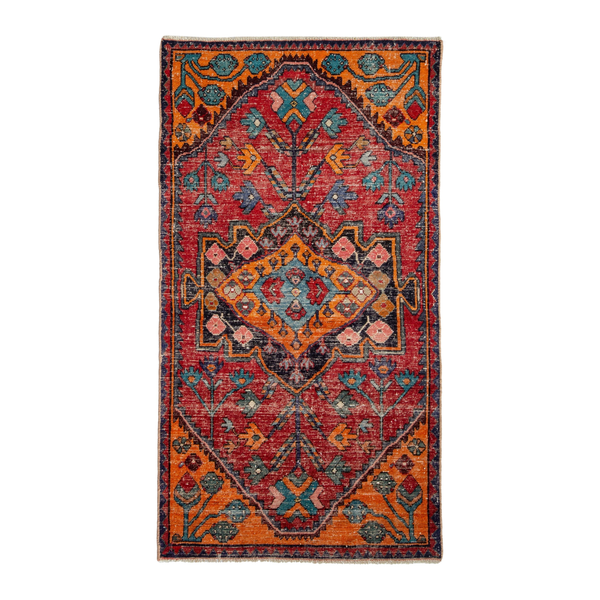
That shows in our own stock. Only a few of our rugs are sold as a 5 by 7, all of them Persian and most in deep red. They run from about 4 feet 6 inches to 5 feet 4 inches wide, and from 6 feet 8 inches to 7 feet 6 inches long. They cost from about $530 to $1,050, and they have no collection of their own, so we link two of them below. Far more of our rugs near this size are a little longer and are sold as 5 by 8s and 5 by 9s.

Where a 5x7 rug works
A small sitting area
Lay the 7-foot side along the seat. A rug should run at least half a foot past each arm, so a 5 by 7 suits a loveseat or a sofa up to about 6 feet long. Designers ask for at least the front legs of the sofa and chairs on the rug.[2] With only 5 feet of depth, that works when the chairs are pulled in close, as in a den or a reading corner.
Across a twin bed
A twin mattress is 38 inches wide.[3] A 5 by 7 laid across the lower part of the bed shows about 23 inches of rug on each side. Designers ask for at least 18 inches at the sides, so it passes comfortably.[4] The full and twin bed guide covers the other layouts, including a bed against a wall.

Under a small desk, or inside a foyer
A desk chair has to stay on the rug when you push back, and our post on a rug under an office chair works out the depth. A 5 by 7 covers a small desk against a wall with room to spare. In a foyer of about 8 by 10 feet, a 5 by 7 or a 5 by 8 sits well inside the walls, as long as it clears the door’s swing. Entryway rug size has the rules for wider doors.
It also works as the top rug in a layered room, on jute or wall-to-wall carpet. For a spot beside a door or a bed, the smaller sizes in where to put a small rug usually do the job better.
Is a 5x7 rug too small for a bedroom or a living room?
For most beds, yes. A full mattress is 54 inches wide and a queen 60.[3] Laid across a full, a 5 by 7 shows only about 15 inches of rug on each side, and across a queen about 12. Both fall short of the 18 inches that looks right. In those rooms, choose a 5 by 8 for a full, a 6x9 rug for a queen, or a pair of runners.
In an average living room it is too small. As one designer put it, what you want to avoid is a rug that only fits a coffee table.[2] If the sofa is longer than about 6 feet, or the chairs stand more than an arm’s length from it, the room needs a bigger rug. Rug placement in a living room shows the layouts that work.
A 5 by 7 also cannot go under a dining table. A dining rug should run at least 24 inches past the table on every side, so the chairs stay on it when pulled out.[2] On a rug 5 feet wide, that leaves no room for the table itself. What size rug goes under a dining table gives the right sizes.
5x7 vs 5x8 vs 4x7
A 5 by 8 adds a foot of length and covers 40 square feet instead of 35. That foot lets it run past a slightly longer sofa, or past the foot of a full bed. Ours run from about 4 feet 6 inches to 5 feet 6 inches wide, most are Turkish, and most cost between about $380 and $440. If a 5 by 7 was your plan, start with the 5x8 rugs, then the longer 5x9 rugs if the room allows.

A 4 by 7 keeps the length and loses about a foot of width. It is close to the old dozar, and it suits a bedside, a wide hall or a foyer better than a seating group. Our 4x7 rugs are a mix of pale Turkish Isparta rugs and Persian village rugs, and most cost between about $245 and $430.
Measure before you choose
A vintage rug rarely matches its size name, so compare the measured size with the spot, not the label. Designers suggest marking the outline with painter’s tape to see the scale before you buy.[5] Leave it down for a day and walk around it. How to choose the right rug size goes through the method room by room.
Every rug we list gives its width and length in feet, inches and centimeters, and the size guide converts between them. Like every rug we sell, each is hand-knotted wool on a cotton foundation and about fifty years old.
Sources
- U.S. Survey Foot. National Institute of Standards and Technology.
- How to Choose the Right Rug Size, According to Designers. Country Living, 2026.
- Mattress Sizes 101: Finding Your Perfect Fit. Sleep Foundation, 2025.
- How to Place a Rug in a Living Room, According to Designers. House Beautiful, 2024.
- Rug Sizes: How to Figure Out the Best Area Rug for Your Space. Architectural Digest, 2024.