Rug No. has found its new home.
Every rug we sell is one of a kind, so that piece is gone. Here are others in the same spirit, or tell Rug Finder what you are looking for.
Obruk Rugs
Obruk rugs on this page come from Obruk, one of the weaving centers of Konya Province in central Turkey. The area is known for its floor covers, prayer kilims and cicims. Each piece in this collection is one of a kind.
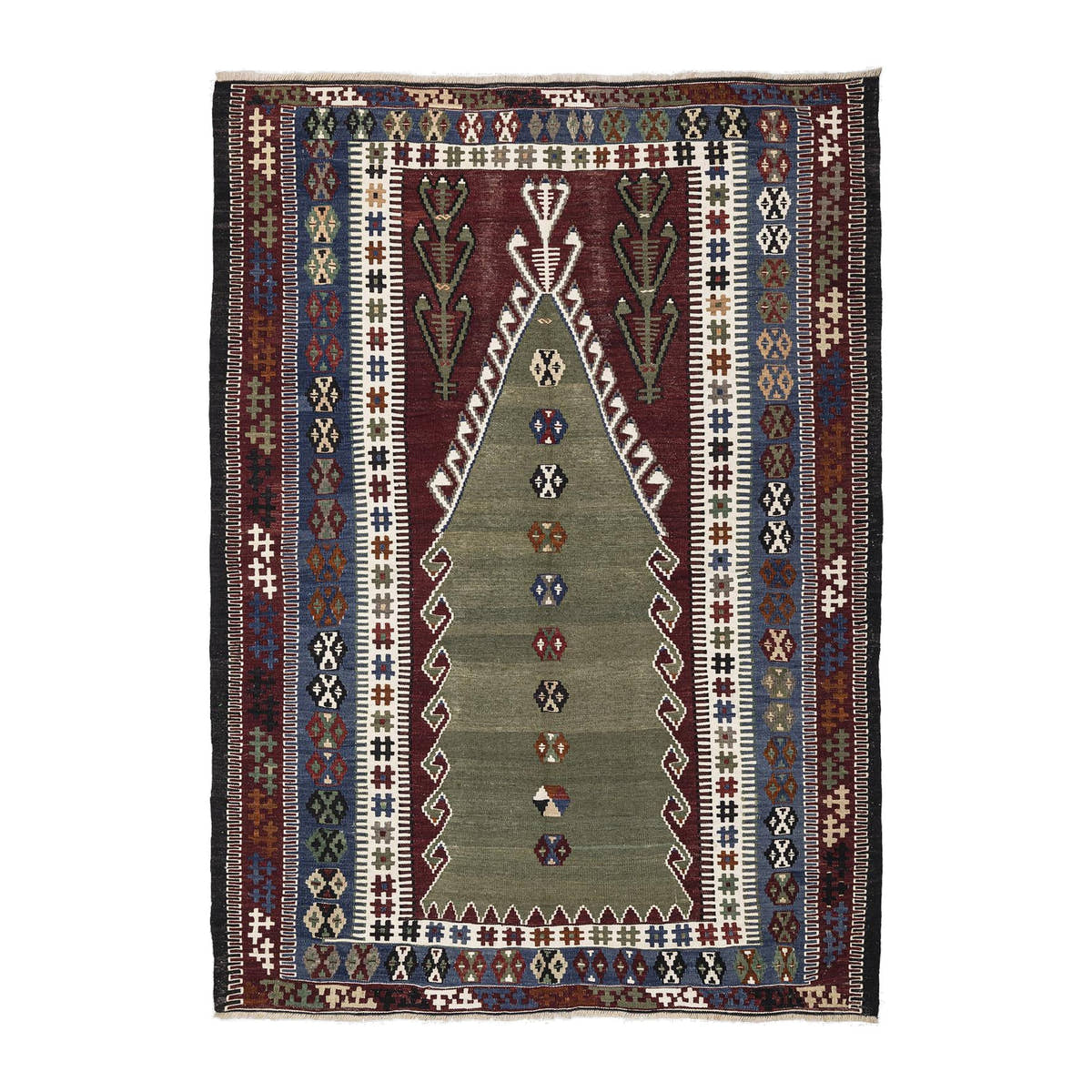


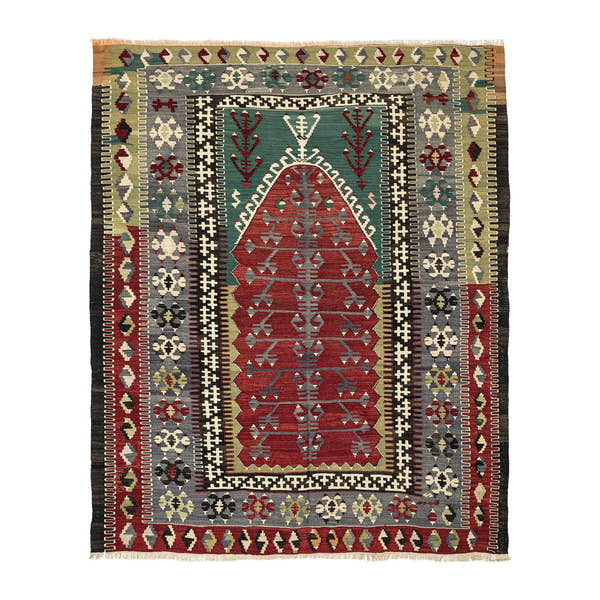
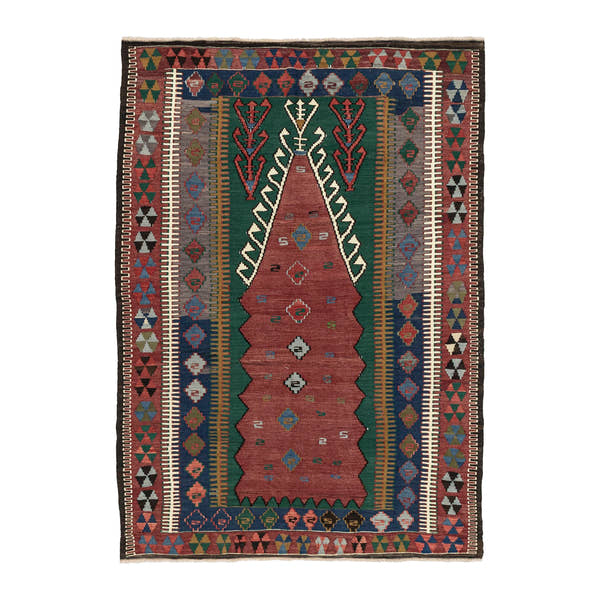

Obruk rugs: prayer kilims of Konya
Konya has been an important weaving center since Seljuk and Ottoman times. In a 2011 study of weaving in the province, Meral Akan and H. Melek Hidayetoglu list Obruk among the places where weaving has gone on from the past to the present, with Ladik, Karapinar, Kecimuhsine and Cumra. They write that widespread herding and a great variety of dye plants helped weaving grow and last in these centers.
What Obruk is known for
- Three kinds of weave: the authors write that the Obruk area is known for its floor covers, its prayer kilims and its cicims, a flat weave with extra patterning yarns worked into the ground.
- A busy period: they name Obruk among the Konya centers that wove heavily in the 1980s, when weaving made a real contribution to the economy of the province.
- A known type: a Konya rug firm has since rewoven recognized kilim types of the province, Obruk among them, and says it kept to the regional features.
The word obruk means a sinkhole in Turkish, a name the place shares with the deep pits found in the Konya basin.
What to look for in a flat weave
In a flat weave the colored wool runs through the weave itself, so motifs are built from straight edges and small steps. Diamonds, stars and bands come out bold, the back usually shows the same design as the front, and with no pile the piece lies thin and light on the floor.
Obruk among the Turkish weaves
See the wider province in our Konya rugs, and compare the town and village weaving of central Turkey in our Aksaray rugs and Anatolian collection.
For flat weaves in general, browse our kilim rugs and read the guide to kilim rugs, and for the names and meanings of the common shapes, see reading a rug: motifs and what they mean.
Choosing a size
- Runners: a hall or a galley kitchen. See choosing a runner length.
- Small rugs: an entry, a bedside or a bathroom. See where to put a small rug.
- Room sizes: a living room seating group or a dining table. See choosing the right rug size.
What each listing shows
Every rug page gives the exact size in feet and centimeters, the main colors and a set of photos, including close views. Read the size against the space before you choose, and look at the close views for the small marks of use that come with a handmade rug. If a question is left, we answer by email or phone.
Caring for it
Vacuum gently, turn the rug every few months so sun and traffic reach every side, and blot spills straight away rather than rubbing them. A thin rug pad keeps a rug in place on a hard floor. Our guide to cleaning a wool rug at home has the details.
Related collections
Browse all Turkish rugs, kilim rugs and Anatolian rugs.