Cream Rugs
Cream is the quietest ground a hand-knotted rug can have. In these vintage Persian and Turkish pieces the field reads as unbleached wool rather than white, warmed by decades of use and by the lanolin still in the fiber.
Because the base is soft, the drawing carries. Borders, medallions and small motifs sit clearly against it, and the rug lightens a room without erasing what is already in it.
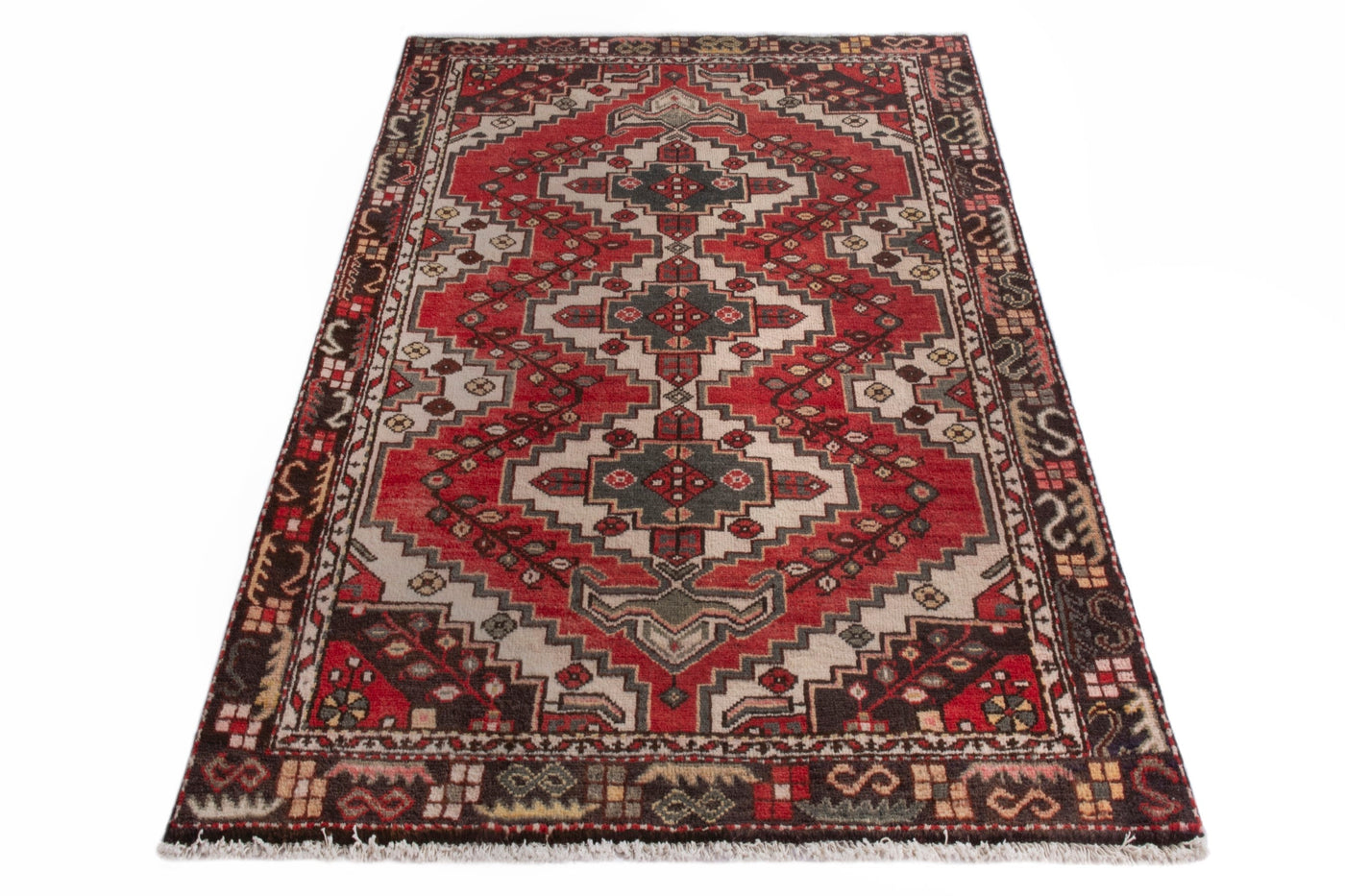


Cream, the ground that lets everything else speak
A cream field in a hand-knotted rug is rarely a dyed color at all. It is the wool itself, spun from undyed fleece and left as it came off the sheep, which is why no two cream grounds match and why the tone is warm rather than clinical. Sheep in different valleys produce different whites, and a weaver working from one flock's clip produced a field with a faint, living variation across it that no bleached or printed textile reproduces.
Why cream carries the drawing
Against a dark ground, a border has to fight to be seen. Against cream, every element of the design sits clearly: the guard stripes, the medallion, the small filler motifs a weaver added to occupy the field. Workshops in Kashan, Isfahan and Tabriz understood this and used ivory and cream grounds for their most intricate drawing, knowing the pattern would carry across a room. Village weaves use it differently, as breathing room around a bold central motif.
What age does to it
Undyed wool does not fade, it deepens. Decades of light and lanolin turn a cold new white into something closer to parchment or raw silk, and the change is uneven, warmer where the rug has seen the most sun. This is the quality that makes a vintage cream rug so difficult to imitate: the tone is a record of where the rug has been.
Living with a pale rug
The honest answer is that a cream rug shows more than a red one, and that is the trade. In practice it matters less than people expect, because a hand-knotted wool pile holds dirt on the surface rather than absorbing it, and because the natural variation in the ground disguises a great deal. Vacuum regularly, blot spills promptly, and have the rug professionally washed every few years. In a low traffic room, a bedroom or a study, a cream rug will look better in ten years than it does today.
Where it works
Cream is the most forgiving ground to build a room around. It sits comfortably with warm woods, with linen and with almost any wall color, and it makes a small or dark room read larger. In an open plan space, a large cream rug is the cheapest way to define a seating area without adding another color to the room.