Birjand Rugs
Birjand, in eastern Persia's Khorasan, weaves finely and sensibly: neat all-over Herati fields, controlled color and a durable, tightly-knotted structure that lasts.
They suit rooms that want pattern without fuss. Each Birjand here is a genuine vintage rug, cleaned and repaired, and the only one of it.

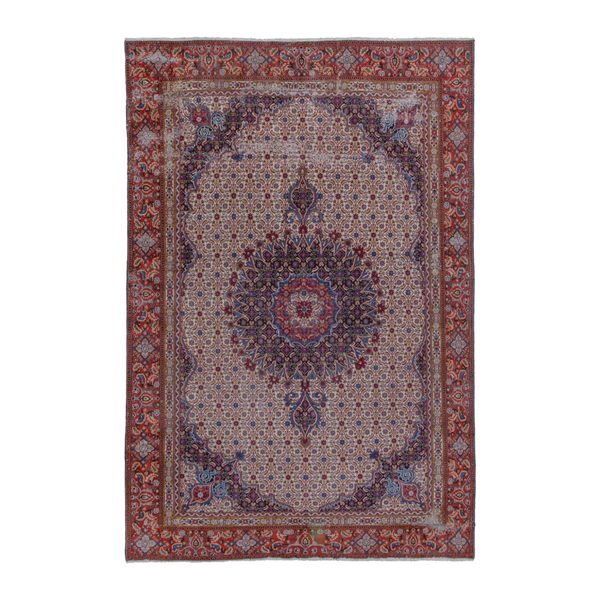


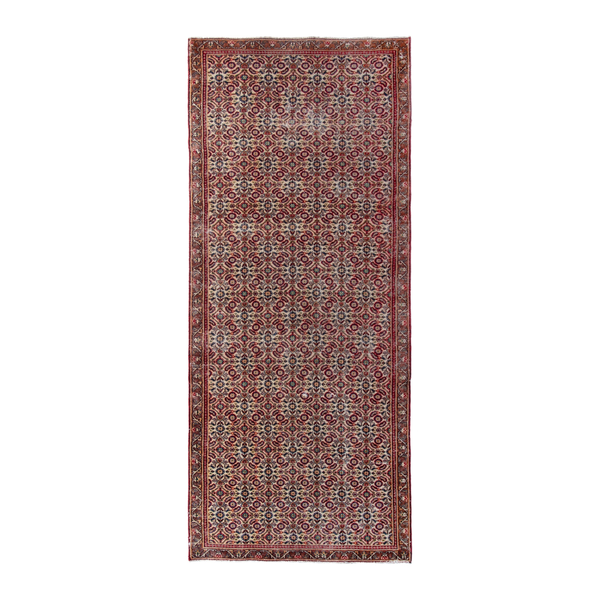


Birjand: fine, restrained weaving from eastern Iran
Birjand sits in eastern Iran, south of Mashhad, and its carpets sit at the more refined end of the region's output. The knotting is fine, the drawing restrained, and the palettes tend toward soft and liveable rather than dramatic. Ivory, soft rose, muted blue and gentle green are common.
They are quietly good carpets: not showy, well made, and very easy to live with.
What to look for
- Drawing: fine floral and medallion work, often with generous open ground.
- Color: soft and liveable; ivory, rose, muted blue, gentle green.
- Knotting: fine, on cotton, with a neat and even surface.
- Sizes: mid sizes and larger pieces.
Where they work
Birjand is a good choice for a living room or bedroom where you want a proper Persian carpet that stays in the background. The fine drawing rewards close attention but does not demand it from across the room.
How they age
Evenly and gently. The fine, even weave means wear spreads rather than concentrating, and the soft palette shifts very slowly.
Birjand rug questions, answered
How does Birjand compare to Mashhad?
Both are eastern Iranian. Mashhad tends to be bolder and larger in scale; Birjand is finer, quieter and more restrained.
Are they hard wearing?
Reasonably, though a fine low pile suits living rooms and bedrooms better than hallways.
Placing a finer carpet
A Birjand has fine drawing that deserves to be visible, so think about how much of the field will still be showing once the furniture is in. In a living room, a larger rug with the seating standing on the edges usually shows more of the pattern than a smaller one lost under a coffee table. In a bedroom, running the rug across the foot of the bed, or placing it so it emerges on three sides, keeps the drawing in view while giving you wool underfoot when you get up.
Caring for a fine weave
Fine, low pile carpets want gentle treatment rather than special treatment. Vacuum with the beater bar off, use a good underlay, and rotate the rug annually. Avoid placing a fine Persian carpet in direct, unfiltered sunlight for years on end; some mellowing is desirable, but even light exposure across the whole rug is better than a hard line where a shaft of sun falls.
What to check before you buy
On a finer weave, look at the evenness of the pile across the field and at the condition of the ends and selvedges. Each rug here has been washed and inspected before listing, and any repairs are noted. Photographs show the piece as it is, including honest wear.
Choosing your Birjand
Look at the evenness of the weave and how the border relates to the field. Each rug is one of a kind.