Blue Rugs
Blue rugs are the cool head to red's warm heart, and indigo is the dye behind almost all of them. These vintage Persian and Turkish weaves run from near-black navy through worn denim to a chalky, sun-softened slate.
Blue recedes rather than shouts, so it settles a busy room and quietly makes it feel a little larger. Think of one as the calm your floor has been missing.
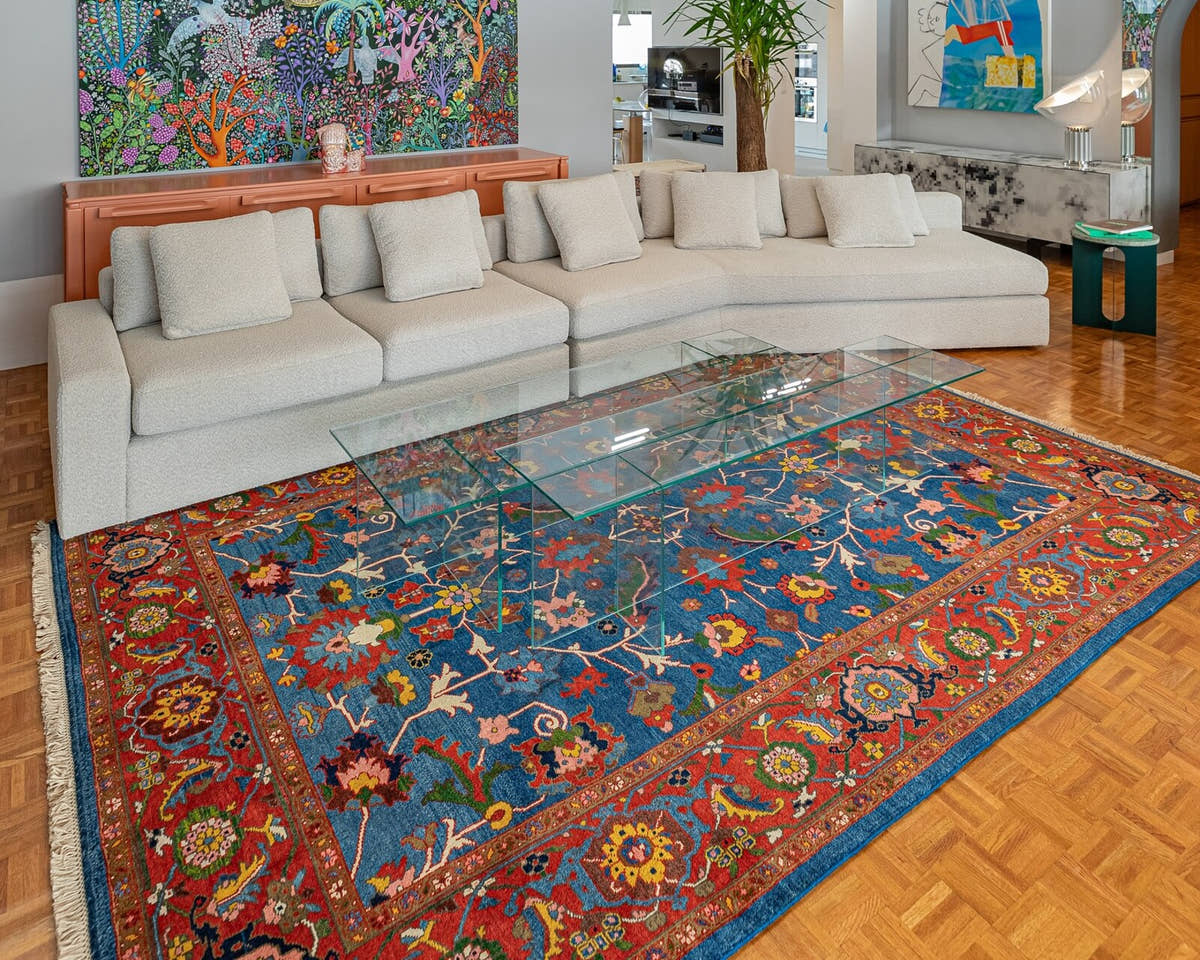


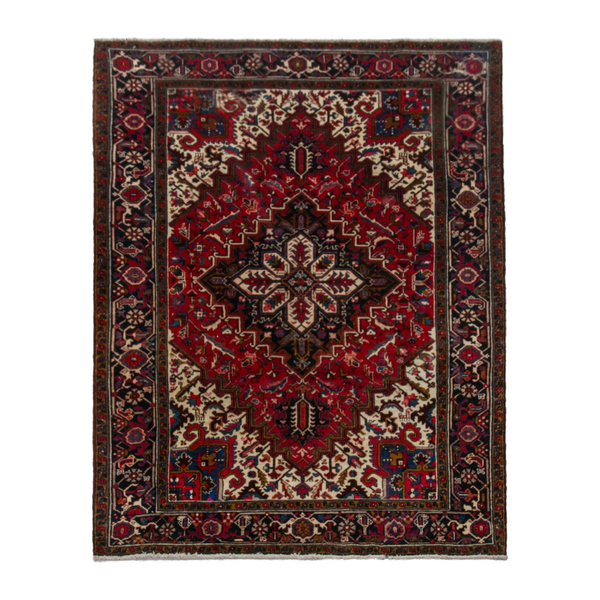
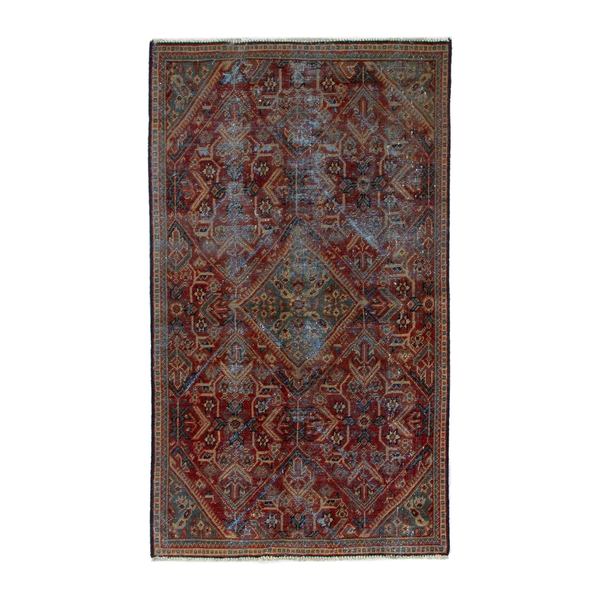
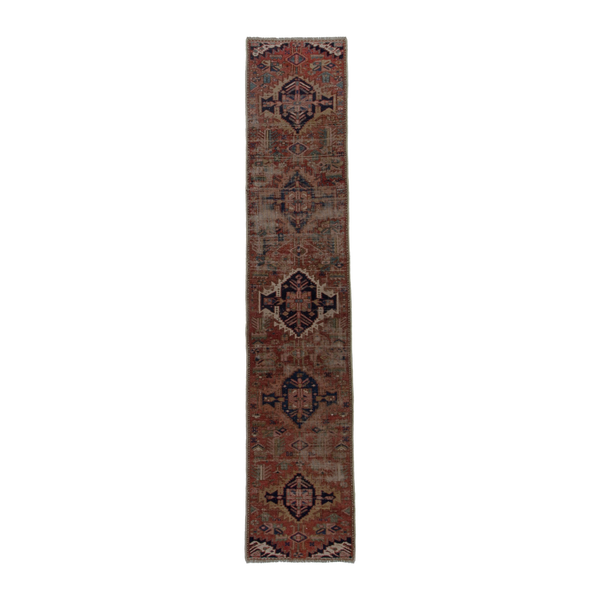
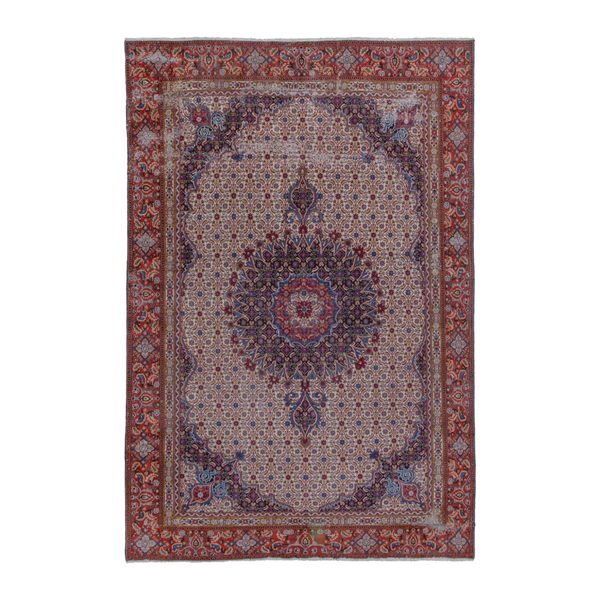
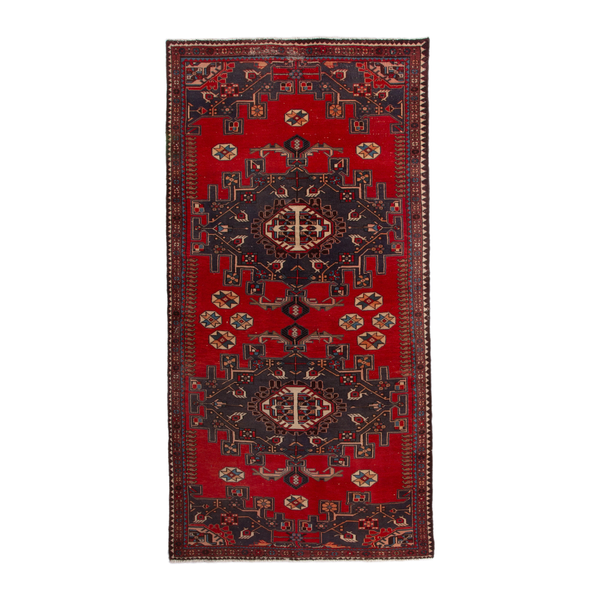
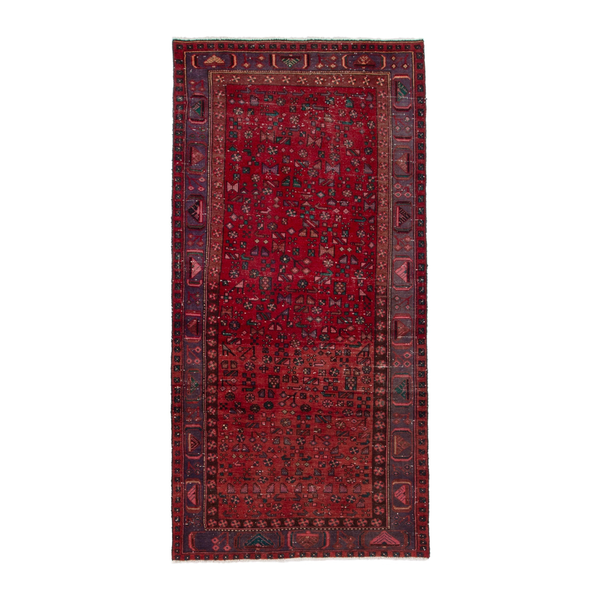
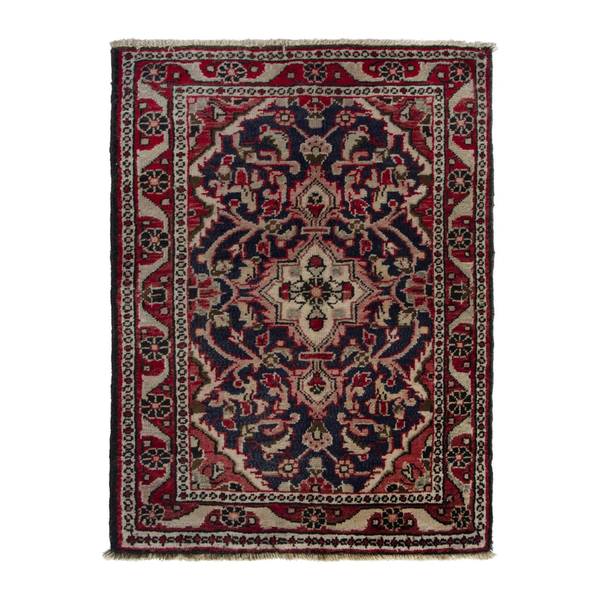


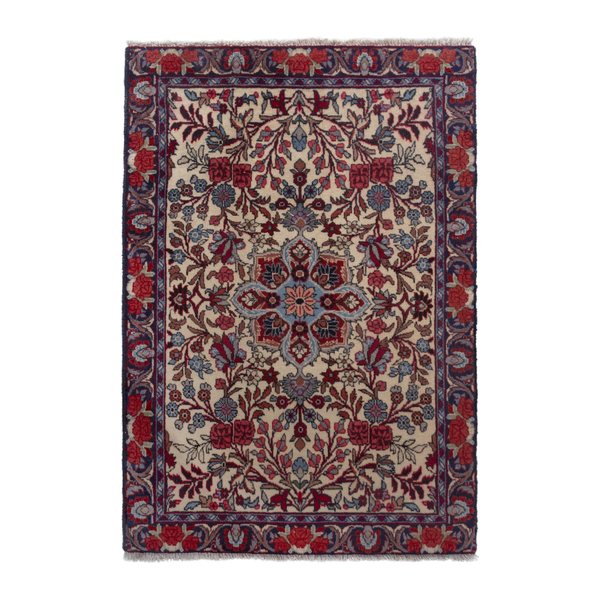


Blue rugs: the most adaptable floor in the house
Blue rugs get along with almost any room, which is exactly why they are worth owning, and every piece in this collection is a vintage Persian or Turkish weave colored with natural indigo. Indigo was among the most valued dyes of the old trade routes, worked in vats rather than boiling pots, and it produces a blue with real depth – one that pools dark in the pile and lightens where daylight has reached it over the years. That range, from ink to haze, is what makes these rugs so easy to place.
The indigo story in a single field
Because indigo builds its color in layers, one vintage rug can move from deep navy in the shadows to soft, worn denim along the walked paths. Weavers across Persia and Turkey relied on it for centuries, usually setting it against undyed ivory wool for contrast, which is why so many blue rugs feel crisp and graphic even when the tone itself is calm.
From midnight navy to faded slate
Blue is a wide territory, and it helps to know roughly which part of it you are after:
- Navy & midnight – formal and grounding, ideal beneath pale furniture
- Denim & mid-blue – relaxed and easy in a family room
- Slate & dusty blue – softened by sun, quietly sophisticated
- Powder & ice – the palest, airiest end of the range
Keeping a cool color warm
The one thing blue asks for is a little warmth in the room, or a scheme can tip chilly. The fix is simple: bring in oak, walnut or rattan, a touch of brass or gold, and plenty of cream. A navy rug anchors a light sofa; a faded slate piece keeps a bright room feeling unhurried. Layered with soft grays and other blues it turns tonal and serene, the sort of scheme that never looks tired. If you want a truly restful pairing, set a blue against the sandy tones of our neutral rugs.
Where a blue rug does its best work
Blue's calm makes it a natural in a bedroom, where cool tones genuinely help a space feel restful. It grounds a living room without competing with the view or the artwork, and a long indigo runner brings a hallway to life while quietly hiding the traffic a corridor takes. Because blue recedes rather than advances, it also has a useful trick of making a smaller room read a touch larger than it is.
How the color holds up
These rugs are already decades old, so their blues settled long ago; there is no fresh dye left to run or shift. Indigo is one of the more lightfast natural dyes to begin with, which is why antique blues survive so well. Give the rug a good pad, turn it end to end once or twice a year to even out the light, and it will keep its depth for another generation.
Pattern makes the blue
Blue rarely arrives plain. Against it, weavers set ivory medallions, brick-red borders and small tribal motifs, and that interplay is a large part of why an indigo rug can carry a whole room on its own. A busy geometric pattern in blue and cream feels lively and informal; a single large medallion on a navy ground feels calm and grand. When you are comparing pieces, look past the color to the drawing – the amount of ivory in the field tells you at a glance whether a rug will read light and graphic or deep and quiet. As a rule, the paler the pattern, the more forgiving the rug will be in a bright, modern room.
Finding your blue
Every blue rug here is one of a kind, cleaned and restored by hand, and sent out fully insured, free in the US and Canada. If you are weighing up dimensions, our size guide takes the guesswork out of it – and once a particular indigo catches your eye, it is worth moving quickly, since each of these rugs exists only the once.