Dining Room Rugs
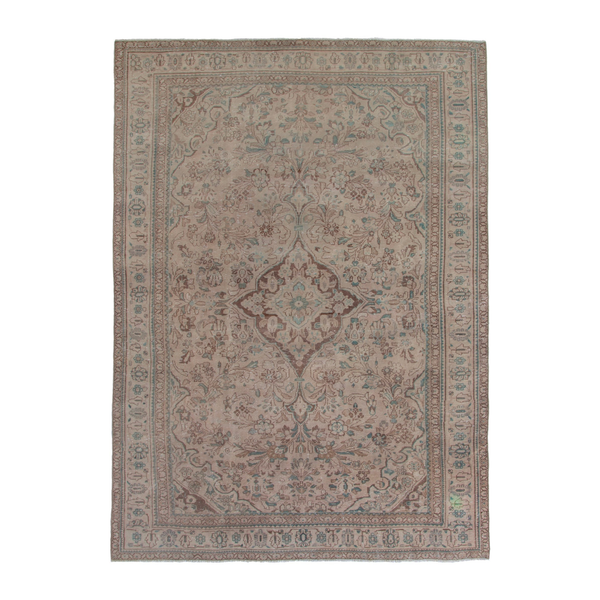
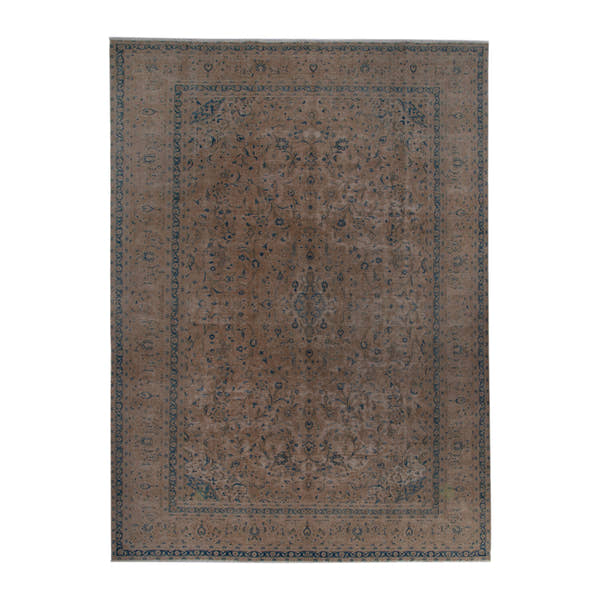
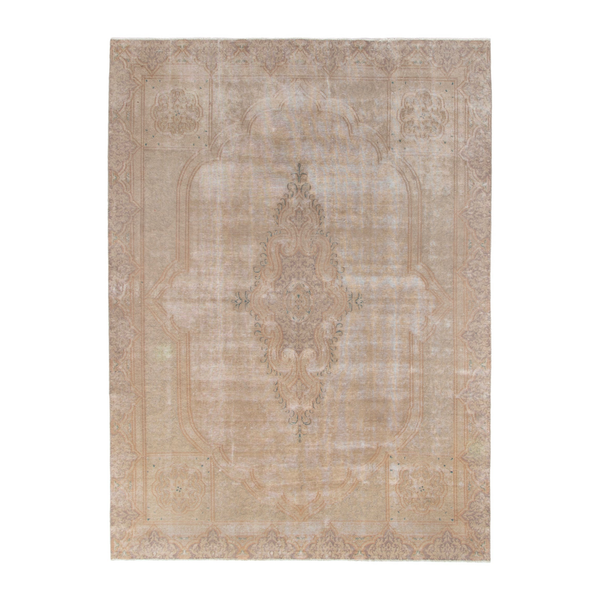
Dining room rugs warm the table and, with an all-over pattern, quietly shrug off the crumbs and drips that come with shared meals. All are hard-wearing hand-knotted wool, decades old and restored by hand, and every one is singular.
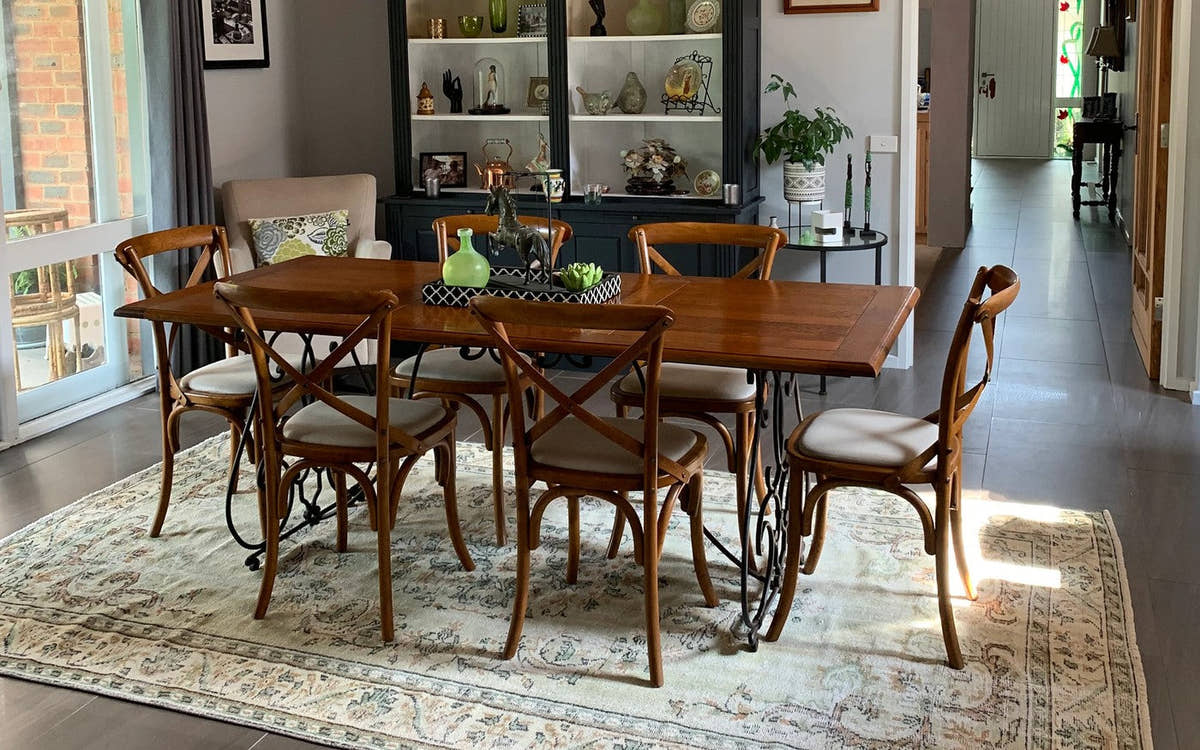
The one rule that matters: size the rug so chairs stay on it even when pulled out, which means around 60cm (24in) of rug beyond the table on every side. Set your table on a floor with real character.





Sizing and choosing dining room rugs
Dining room rugs do two jobs at once, they define and warm the space around the table, and they cope, uncomplainingly, with everything a shared meal drops on them. The pieces here are hand-knotted wool between 40 and 80 years old, cleaned and restored, and each is one of a kind. For this room in particular an all-over patterned rug is the practical favorite, because a busy field of color hides crumbs, splashes and the odd spilled glass far better than any plain weave until the next clean.
The one rule: chairs stay on the rug
Everything about sizing a dining rug follows a single principle: a chair should stay fully on the rug even when it is pulled out to sit down. If a back leg drops off the edge as a guest leans back, the chair rocks and the rug bunches. To avoid it, add roughly 60cm, about 24 inches, of rug beyond the table on every side, which is the depth a chair travels when pushed back. For a longer table, closer to 75cm makes movement easier still. It is worth measuring with the chairs actually pulled out and someone seated, since the point where a back leg lands is what the rug has to reach; a tape laid on the floor around a mocked-up setting removes the guesswork before you choose a size.
Working it out for your table
Measure your table top, then add that margin to all four sides:
- A table for four to six usually wants a rug from the larger end of our area rugs.
- A long table for eight or more often needs an oversized rug to keep every chair on the pile.
- A round table can take a round or a generous rectangular rug, measure the diameter and add the same margin all round.
Every rug lists exact dimensions, and the size guide shows how each footprint sits under a table.
Why pattern is the smart choice here
Dining rooms are where spills happen, which makes a densely patterned rug the low-stress option rather than merely the pretty one. A rich, all-over design absorbs the visual noise of a dropped morsel or a ring of red wine until you can deal with it, so the floor keeps looking good between washes. Old wool helps on its own account too: the natural lanolin in the fiber resists staining, and dyes this age have long since stabilised. A flatter, lower pile is also worth seeking out, since chairs glide over it instead of catching.
Keeping a well-used rug fresh
A dining rug earns its keep, and a little routine keeps it at its best. Vacuum regularly to lift crumbs before they are trodden in, and blot spills the moment they happen, press, never rub. A gripper pad underneath holds the rug flat so chairs slide rather than snag, and stops it creeping under the weight of the table. Rotate it once or twice a year so the seats people favor do not wear a patch, and treat it to a professional clean every few years.
Dining shoppers often ask
What if my dining space is open-plan? Size the rug to the table rather than the room. A rug that reads clearly as the dining zone helps separate it from an adjoining living area, especially if that space already has its own rug.
Low pile or thick and plush? For a dining room, lower and flatter wins. Chairs move over it easily, crumbs sit on the surface for the vacuum, and the rug stays stable underfoot.
Is a round rug worth it under a round table? It echoes the table nicely, but a rectangular rug is easier to size and to reuse elsewhere later. Either works, just keep the chair margin.
When a rug fits your table and your taste, claim it, each one is the last of its kind.