Torkaman Rugs
Turkmen (Torkaman) weavers are known for discipline: rows of repeating guls, small, octagonal tribal emblems, across deep red-brown grounds, finely and evenly knotted.
The look is quiet, rhythmic and unmistakable. These are original vintage pieces, decades old, each with its own subtle shift of color and hand.
Torkaman, or Turkoman, rugs come from the Turkmen tribes of north-eastern Iran and Central Asia. They are the most recognisable of the tribal weavings: a field of repeating guls, the octagonal tribal emblems, set on a ground of deep red, with borders drawn in ivory, brown and near-black.
The weave is fine and the pile is low, on a wool foundation, and the rugs were originally made for tent life: bags, door hangings, and small floor pieces that could be rolled and moved. Colours were traditionally natural dyes, so vintage examples have mellowed to a rust or brick red rather than staying bright.
In our collection Torkaman pieces are mostly accent sizes and small runners. Their strict geometry and single dominant colour make them easy to place in modern rooms, where they read almost like a pattern tile.
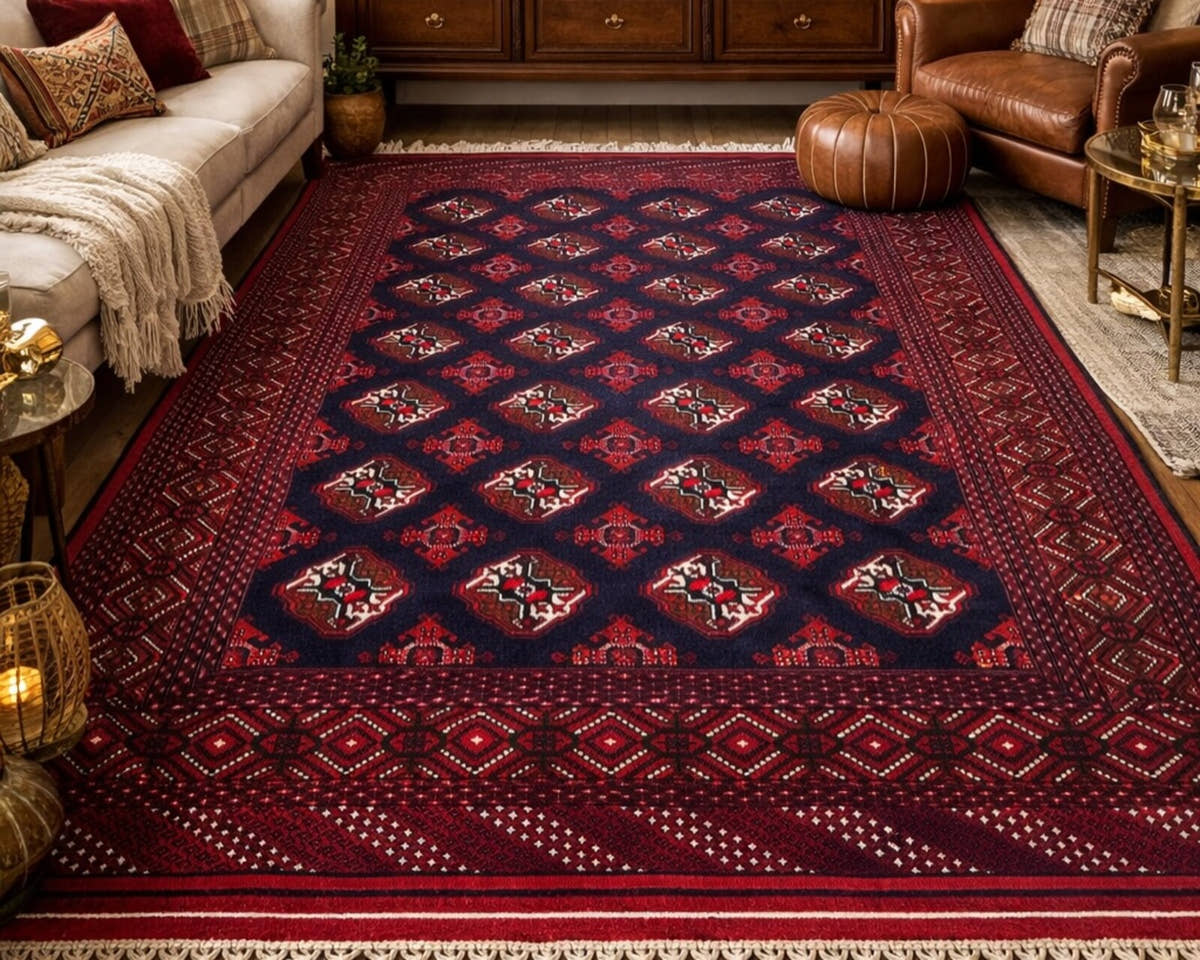
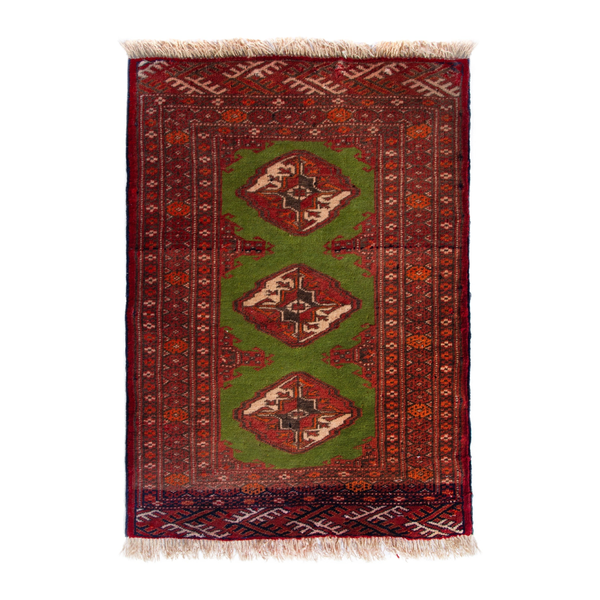


Torkaman: repeating guls in deep madder red
Torkaman weaving, sometimes written Turkoman, is one of the most instantly recognizable traditions in the rug world. The field is filled with a repeating octagonal motif called a gul, set out in strict rows across a ground of deep madder red that ranges from brick to something close to liver. It is a design language that has barely changed in centuries, because it did not need to.
These are tribal weavings, made in hand spun wool with a fine, tight knot and a low pile. The precision is remarkable given they were woven without a drawn cartoon; the rows hold their spacing the whole length of the carpet.
What to look for
- Field: repeating guls in ordered rows, sometimes with a secondary minor gul between them.
- Color: madder red dominating, with dark blue, ivory and occasional green or gold in the motifs.
- Pile: typically low and dense, giving a hard, flat surface.
- Ends: often finished with a plain or patterned kilim skirt.
Where they work
The repeating field makes a Torkaman unusually easy to place. There is no medallion to center, so the rug can sit under furniture, run down a hallway, or be cut off at a doorway without the design looking wrong. That flexibility is worth a great deal in a real house.
The low, dense pile also makes them excellent in high traffic areas. A Torkaman in an entrance hall or a corridor will take years of use, and the strong red ground is forgiving of everything a busy house does to a floor.
Reading the color
Torkaman red is not a flat red. Across a single carpet it moves between brick, rust and a deep brownish crimson, partly from dye lots and partly from decades of light. On older pieces the ivory in the guls warms toward cream and the dark blue can read almost black until you catch it in sunlight. That layering is what stops a strongly patterned rug from feeling mechanical.
Torkaman rug questions, answered
Is the repeating pattern too much for a whole room?
Less than a bold medallion would be, in practice. A regular repeat becomes texture at a distance, whereas a single large motif always draws the eye. Torkaman rugs often read calmer in situ than they do in a photograph.
What is a gul?
It is the octagonal medallion repeated across the field. Different Turkoman groups used different gul forms, and the shape is one of the main ways these carpets are attributed.
Why is the pile so short?
Because the knotting is fine and the design needs the definition. It is a construction choice, not wear, and it is a large part of why these carpets last so well.
Choosing your Torkaman
Judge the red first, since it will set the temperature of the room, then look at how crisply the guls are drawn and how well the rows hold their line. Each rug here is one of a kind.